How the Minneapolis City Council voted — and what it means for the mayor

Add Axios as your preferred source to
see more of our stories on Google.
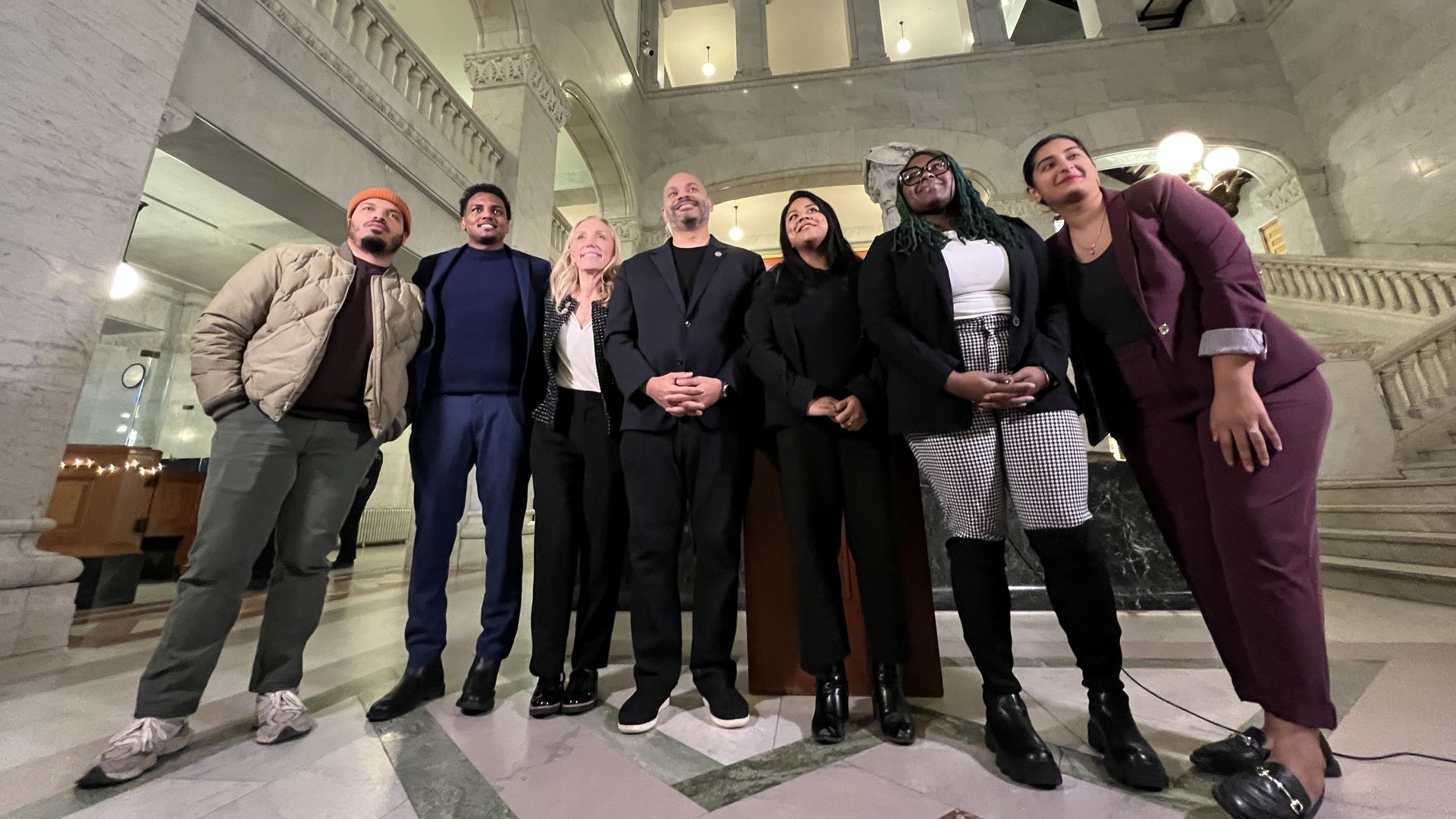
A group of Minneapolis City Council members, including President Elliott Payne (center) and Emily Koski (third from left), pose for a photo in City Hall's rotunda. Photo: Kyle Stokes/Axios
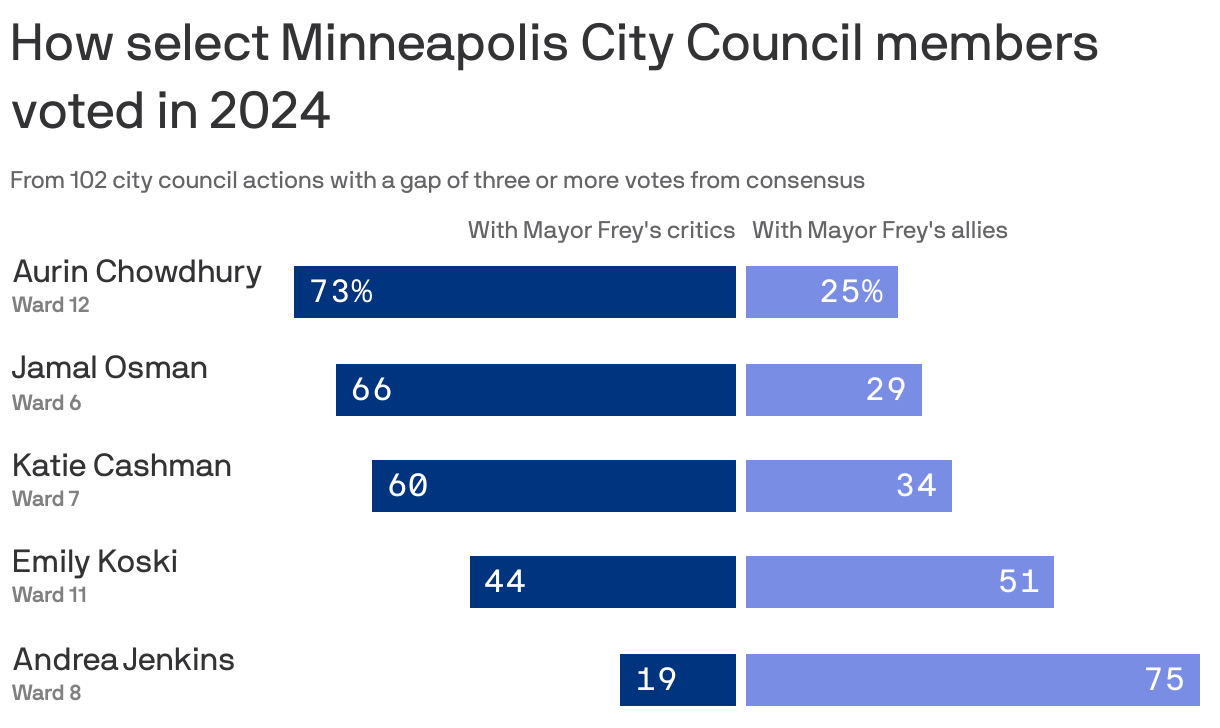
Emily Koski was the Minneapolis City Council's only regular swing vote last year, dividing her support evenly between Mayor Jacob Frey's allies and his left-wing critics on the 102 closest votes.
Yes, but: Most other council members sided with Frey less often.
Why it matters: Three years after Minneapolis residents voted to give more powers to their mayor, a coalition of Frey's critics showed it can muster the votes to block the mayor's agenda and make policy without him.
- That's according to an Axios analysis of more than 3,000 council actions last year.
Zoom in: The swing vote from Koski, who's challenging Frey for mayor this year, was crucial to some of the left-wing majority's biggest wins, including:
- Delivering the pivotal ninth vote to override Frey's veto of the city budget.
- Overriding Frey's veto of a rideshare driver pay ordinance that ultimately forced a statewide deal with Uber and Lyft.
What they're saying: "It shows the mayor's not doing the hard work to build consensus," Koski told Axios late last month. "A true leader works through differences and treats the legislative body as a partner in policymaking."
Context: Koski voted more often with Frey's allies early in her first term but has since become more vocally critical of the mayor.
- Asked if she had shifted ideologically to bolster her mayoral run, Koski said, "I don't think so … I approach [every vote] thinking about what the city needs."
The other side: Frey, who's running for reelection, told Axios the council majority has spurned dealmaking to score political points at his expense.
- Frey said he would've been open to approving a controversial labor standards board he wound up vetoing. (Frey's critics countered the mayor wanted wholesale changes to the proposal, not a compromise.)
- Another example: "They're going to try and say, 'Mayor Frey is against carbon fees,'" Frey said, adding he had to veto the council-approved fee on polluters in October for legal reasons, not because he opposes the idea.
- The mayor noted he attempted to offer a compromise on Uber/Lyft. When state lawmakers intervened, they set driver pay at similar rates to those Frey originally pitched.
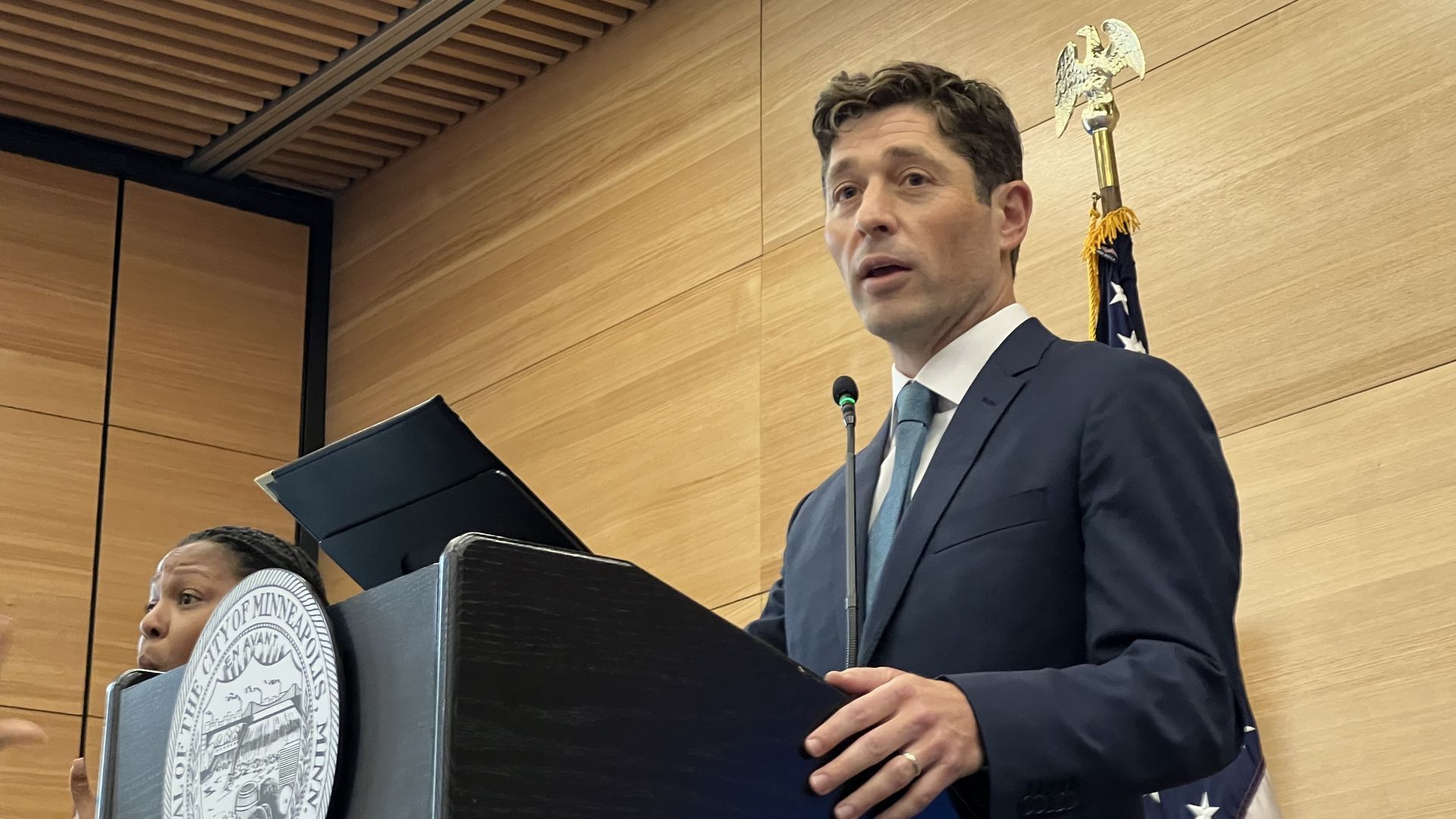
Friction point: Council Member Katie Cashman pushed back on partisan analysis of the votes, telling Axios she often hopes to vote yes "because I came to City Hall to be productive and to … develop investments that serve the community."
Inside the room: Council members lean on nonpartisan staff to help them craft policy — and under Minneapolis' relatively new "strong mayor" system, most of them ultimately report to the mayor.
- "It's very hard for us to tell when things are getting slow-walked by [Frey administration] staff, and when things are actually just legitimately complicated," Council President Elliott Payne told Axios, noting the carbon fee proposal was one of those difficult-to-decipher issues.
- Payne said that may help explain the cohesiveness of the majority: Council members may find it more straightforward to work with each other to build veto-proof majorities than to work with the mayor.
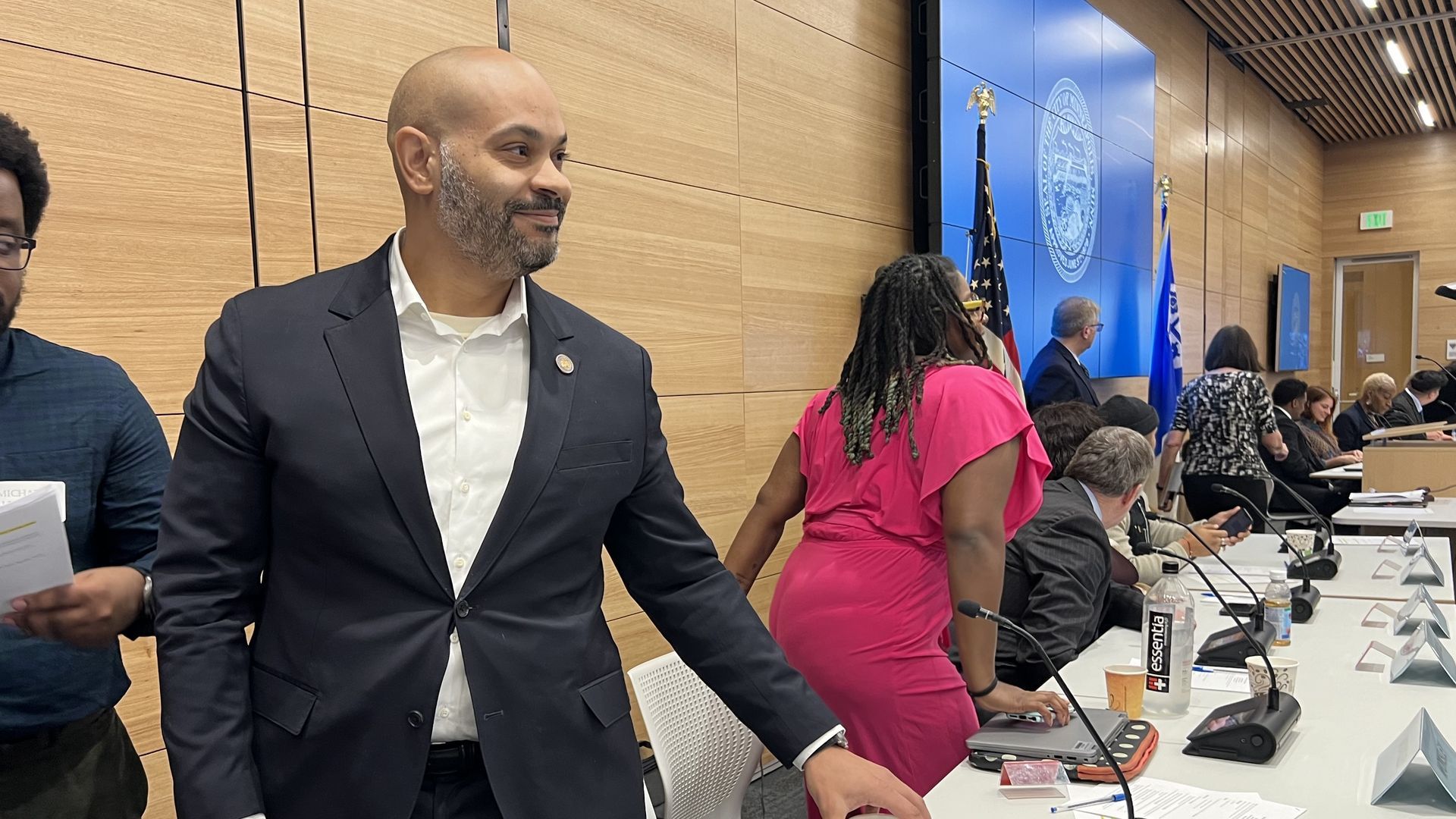
Frey said his office has "worked hard to find the project that we can work on with every council member, no matter how much disagreement there is between us."
- And the vast majority of the votes that council takes end up being unanimous.
- But he added the political reality on the council is "simple," saying, "They have the votes."
Between the lines: Our analysis reflected what most frequent City Hall-watchers have noticed: When the chips are down, two voting blocs tend to emerge on the City Council.
- Payne, Council Vice President Aisha Chughtai, Jeremiah Ellison, Jason Chavez and Robin Wonsley often vote against Frey's position.
- Council Members Linea Palmisano, Latrisha Vetaw and Michael Rainville more frequently support Frey's position.
How our analysis works
Axios analyzed council records to identify the actions on which at least three council members voted no or abstained.
- Then, we examined this list of 102 "divided" votes to identify when the two blocs above held together, and how many times the remaining five members — Cashman, Koski, Aurin Chowdhury, Andrea Jenkins and Jamal Osman — sided with either of them.
- The voting data only reflects the council's final action on most items, or the actions of a committee where the full council was present.
- The only amendments included in this dataset were the council's votes on edits to the city budget, which we added manually, along with veto override votes.
The fine print: Our count is skewed by 33 cases where one of the two blocs didn't hold together.
- For example, Chavez, Chughtai and Wonsley cast two dozen votes against legal settlements for workers' compensation claims, dividing the bloc of Frey's critics.
- Counting only the 69 votes that pitted two united blocs against each other would show Council Members Koski (55%), Cashman (78%), Chowdhury (94%) and Osman (89%) as more likely to side with Frey's critics.
Caveat: Cashman pointed out that Axios' analysis has a key blind spot: It doesn't recognize any unanimous votes that resulted from difficult compromises, like the council's vote on a limited expansion of ShotSpotter.
Editor's note: This story was updated with additional detail on Frey's role in the rideshare debate.