Uber, Lyft agree to stay in Minnesota after top Democrats reach statewide driver pay deal

Add Axios as your preferred source to
see more of our stories on Google.
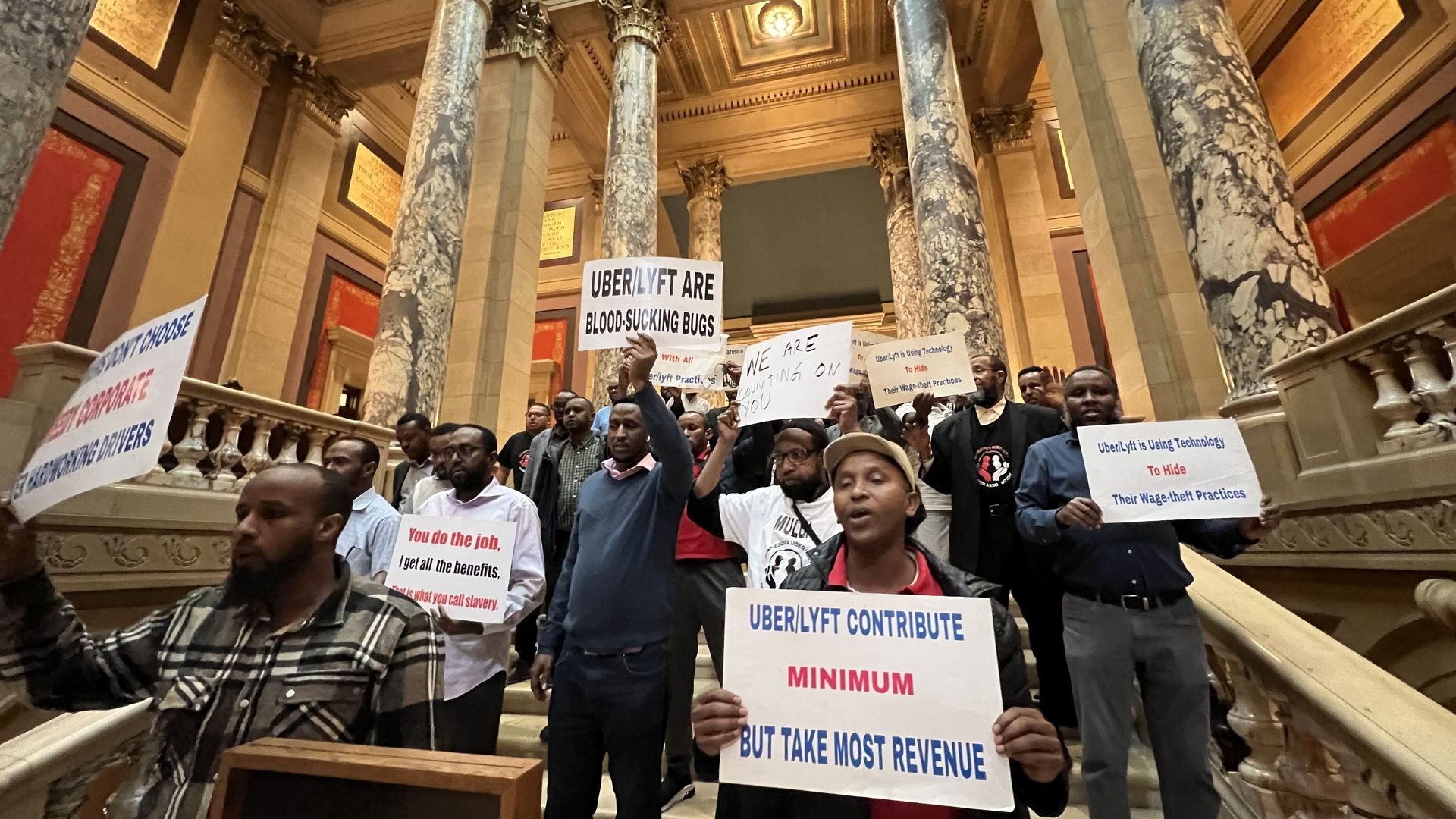
Uber and Lyft drivers rallied at the Minnesota State Capitol as lawmakers negotiated a statewide rideshare bill. Photo: Kyle Stokes/Axios
Uber and Lyft would stay in Minnesota — and many drivers would get a pay raise — under a new deal on statewide rideshare legislation Gov. Tim Walz and DFL lawmakers announced late Saturday night.
Why it matters: If Walz signs it into law, the deal would culminate two years of relentless activism by a group of committed rideshare drivers.
- Many of them are working-class immigrants who say their compensation from Uber and Lyft often doesn't cover their expenses.
Catch up quick: The rideshare services had threatened to leave Minnesota over proposals to set a minimum pay rate for rideshare drivers statewide.
The latest: Uber withdrew their threat after state DFL leaders agreed to a rate increase that — according to the company's math — was roughly half as large as initially proposed.
- "While the coming price increases may hurt riders and drivers alike, we will be able to continue to operate across the state under the compromise brokered by the governor," Uber spokesperson Josh Gold told Axios in a statement early Sunday morning.
- A Lyft spokesman confirmed the company would stay late Sunday night, after the House and Senate passed the legislation: "We have found enough common ground."
The big picture: The agreement averts what business leaders had feared would be a disaster for local tourism — and a chaotic scramble among upstart rideshare companies to fill the void Uber and Lyft would leave.
What's inside: Under the legislation, rideshare companies will have to pay drivers a minimum of $1.28 per mile and 31 cents per minute.
- That rate is lower than the rate the Minneapolis City Council adopted earlier this year by 12 cents per mile and 20 cents per minute — but still enough to give drivers a "20% raise," DFL lawmakers said.
Uber and Lyft won a big concession of their own: The new legislation would override Minneapolis' driver pay ordinance and also limit local governments' ability to demand data from the rideshare companies.
- "Pre-empting" Minneapolis' ordinance had emerged as Uber and Lyft's top priority as negotiations progressed.
What they're saying: "This was only possible because Minneapolis [council members] held firm in passing comprehensive protections for drivers last year, and held firm on wages this year," council vice president Aisha Chughtai said in a statement on X.
- The council "forced the issue at the State Capitol," House DFL Majority Leader Jamie Long said at a press conference backed by Walz. "They set a high bar for what we wanted to talk about — for wages for drivers and they made sure that we were standing strong."
- "It's been two long years," the legislation's sponsor, a visibly emotional Sen. Omar Fateh (DFL-Minneapolis) added.
- Minneapolis Mayor Jacob Frey praised lawmakers for "arriving at a workable figure" that gives drivers a raise while keeping Uber and Lyft in town.
Between the lines: Minnesota is poised to join states including Washington and New York in setting statewide pay standards for drivers.
- The companies use complex algorithms to set fares, but they've previously said a new pay floor would likely increase costs to passengers. Uber says that's what happened under a similar law in Seattle.
The fine print: If enacted, the new law would also limit rideshare companies' ability to lock a driver out of their app.
- Drivers would also have the right to appeal their deactivation.
- The companies have also previously agreed to provide additional insurance coverage for drivers.
This story has been updated.