Uber, Lyft still threaten to leave as Minneapolis, state lawmakers announce rideshare deal

Add Axios as your preferred source to
see more of our stories on Google.
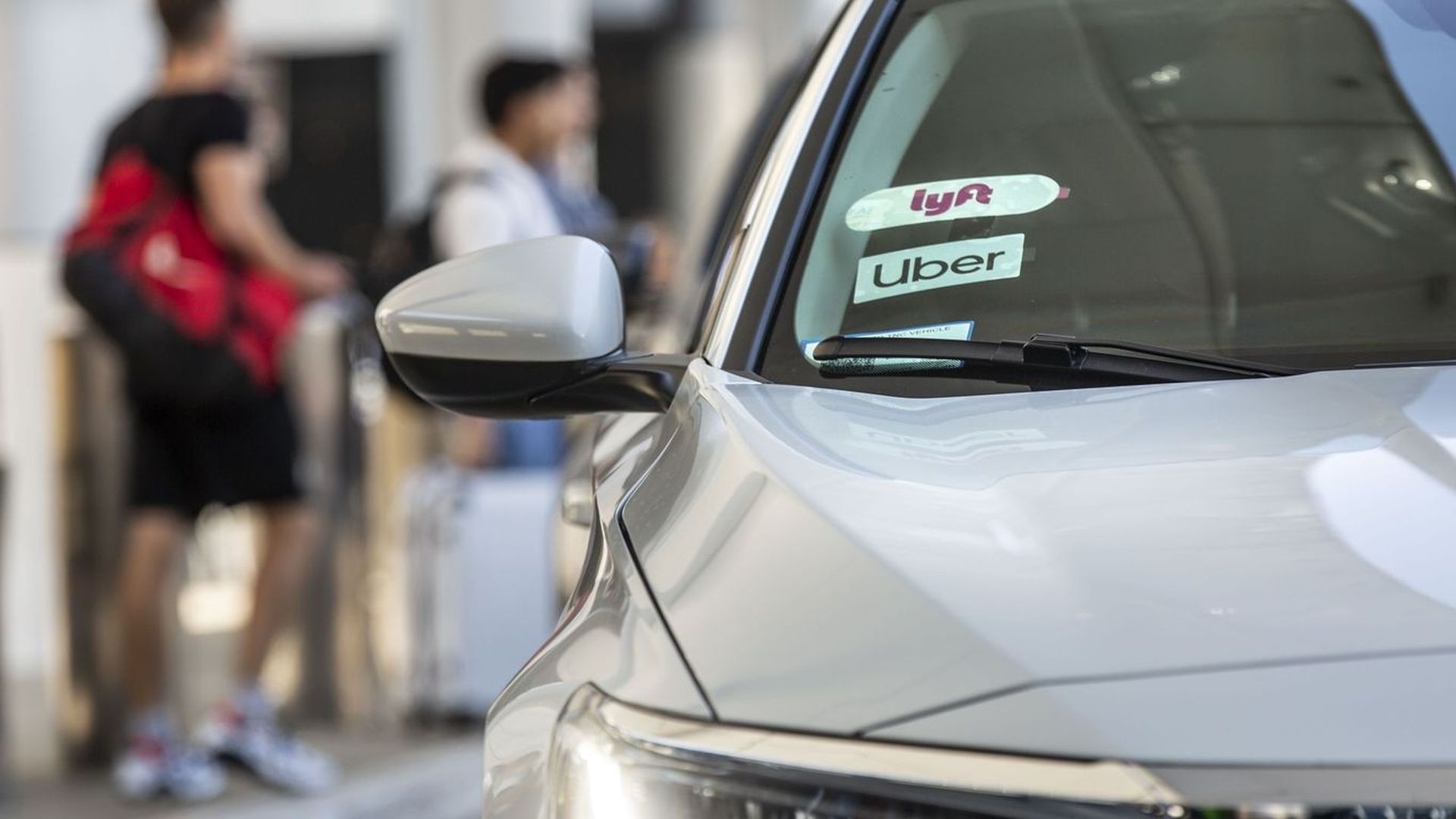
Photo: Allison Zaucha/Bloomberg via Getty Images
Minneapolis council members and top DFL legislators have announced a "compromise" to create a statewide pay floor for rideshare drivers. But rideshare companies aren't on board.
Why it matters: A spokesperson for Lyft — which had previously only threatened to leave Minneapolis — said the company would be forced to end operations "throughout the state" if the deal became law.
- Uber has threatened to leave since Minneapolis' ordinance increasing driver pay passed in March.
Yes, but: House Majority Leader Jamie Long told reporters he thinks the companies are "bluffing."
- If he's right, officials may have secured huge raises for more than 8,000 Twin Cities drivers — most of them working-class immigrants.
Catch up fast: For a year-and-a-half, Minneapolis City Council and the state Legislature have been debating new rideshare pay standards under intense pressure from the companies. Gov. Tim Walz vetoed a past state proposal last year.
- Minneapolis passed its own pay ordinance in March, but agreed to continue working with the Legislature on a statewide minimum.
- Uber and Lyft were not involved in the talks, Long told reporters on Monday.
By the numbers: Per Monday's deal, Minneapolis leaders agreed to lower their ordinance's pay rate to $1.27 per mile and 49 cents per minute.
- The city's rule, set to take effect July 1, had set a $1.40 per mile and 51 cents per minute minimum.
The big picture: Minneapolis Mayor Jacob Frey and business leaders have hoped the Legislature would salvage a compromise and keep the rideshare companies in the market. Uber and Lyft's reactions to this news dampen those hopes.
The intrigue: The governor has previously urged lawmakers to use a state-backed economic analysis as the basis for their driver pay rate. However, lawmakers' new rate is just outside the study's range for metro-area drivers.
- The study had proposed between 89 cents and $1.21 per mile for metro drivers.
- In a statement to Axios, a Walz spokesperson did not confirm whether the governor would sign Monday's deal into law but called it "a positive step in the right direction."
What they're saying: Uber spokesperson Josh Gold called the deal "disappointing," saying the company hopes "we can still work with the Governor and Legislature on a statewide solution that allows rideshare to remain in the state."
The other side: Minneapolis City Council President Elliott Payne told Axios that rideshare platforms should not "have the flexibility to pay drivers sub-minimum wages."
Between the lines: Monday's deal averts what would have been the awkward scenario of state DFLers passing legislation to override a DFL-majority city.
What's next: A Minnesota House committee will hear the proposal on Tuesday morning.
- The council will begin its amendment process next week.
- There are a few more weeks for dealmaking: The Legislature must adjourn on May 20.
Go deeper: What Minneapolis can learn from Uber and Lyft's year-long exit in Austin, Texas
Axios' Torey Van Oot contributed reporting.