Minneapolis could test Uber, Lyft's threats to leave over driver minimum pay

Add Axios as your preferred source to
see more of our stories on Google.
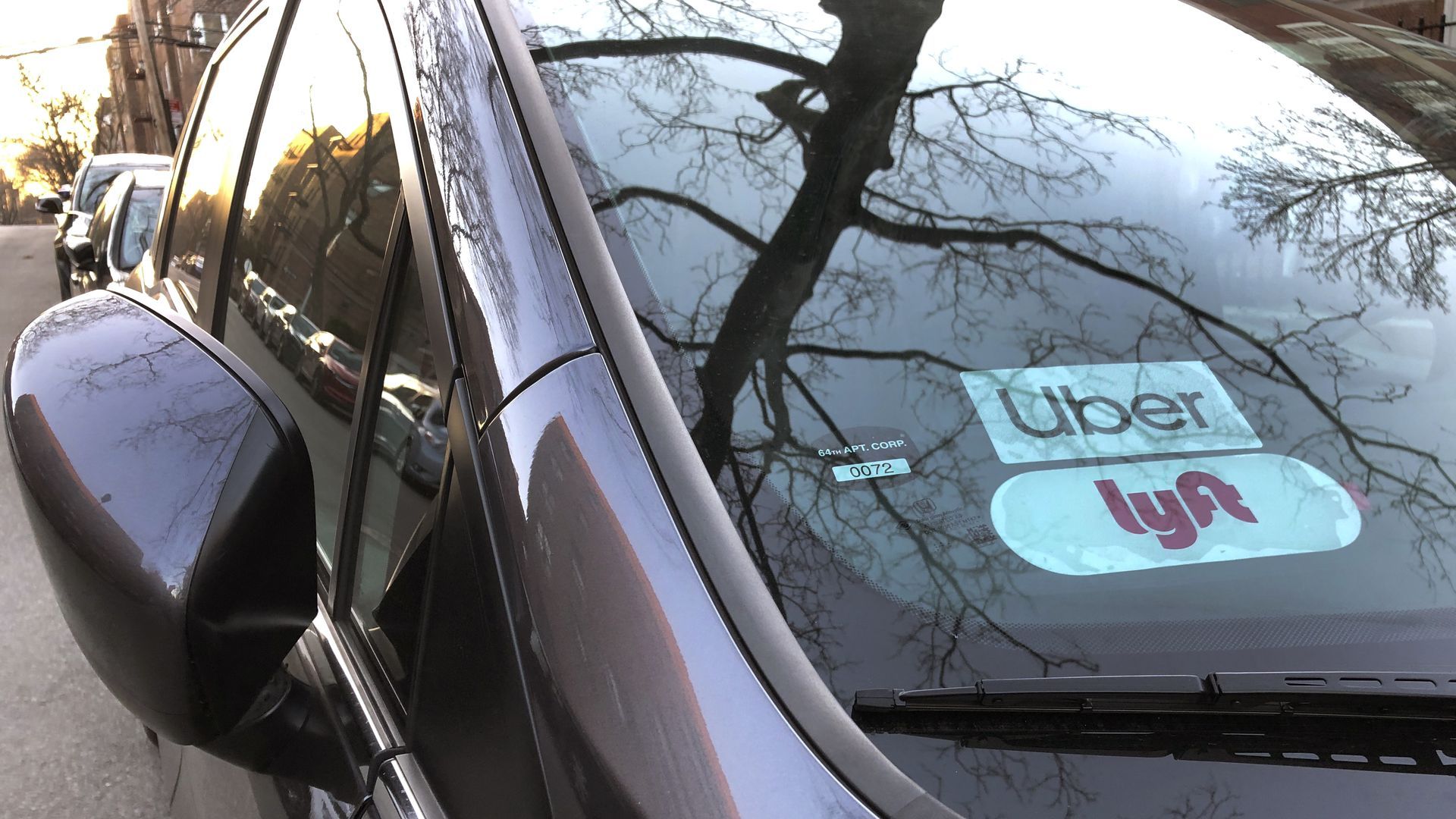
Uber and Lyft stickers on a car windshield. Photo: Lindsey Nicholson/Getty Images
A proposal to establish a pay floor for rideshare drivers likely has the votes to pass the Minneapolis City Council on Thursday.
- The big question is what happens next.
Why it matters: Uber has threatened to stop serving Minneapolis if the proposal takes effect. Lyft warned it could leave the state altogether.
State of play: Mayor Jacob Frey told Axios he would veto the current proposal — which sets a $1.40 per mile, 51-cent-per-minute minimum pay guarantee for drivers.
- Yes, but: Supporters may have the votes to override him.
The big picture: Driver advocates and legal scholars doubt Uber and Lyft's threats. They point out rideshare companies are still operating in New York City, New York state, and Washington state — all places where new rules or legal settlements require higher driver pay.
What they're saying: The ultimatums are "part of the corporate playbook," said Laura Padin of the National Employment Law Project.
- With limited access to rideshare data, "cities and states are not in a good position to assess the credibility of these threats — and they get scared," Padin said.
The other side: Uber spokesperson Josh Gold said it's "misleading" to suggest that just because rideshare companies have agreed to pay standards elsewhere, they'll be willing to stay in Minneapolis.
Zoom in: Consider Washington, where Uber and Lyft cut a deal on a new statewide law that pays Seattle drivers at rates similar to those Minneapolis is considering.
- As a result, rideshare driving "has become an occupation that actually gives drivers a living wage," said Kerry Harwin with the Seattle-area advocacy group called the Drivers Union.
- Harwin said rideshare companies talked tough about reduced service during the debate leading up to Washington's new law — but didn't pull out of the market.
The intrigue: Uber says demand for rides in Seattle has gone down, meaning drivers spend more time waiting to accept a trip — and not getting paid.
- Lyft says Minneapolis passengers are much less affluent than in Seattle, which suggests it might be harder to run a rideshare business here if passengers can't absorb the increased fares.
Friction point: Uber and Lyft live with these pay increases in Washington state, in part because the law gave them something big: Drivers would remain classified as "independent contractors" who cannot unionize and enjoy fewer rights than full-fledged employees.
- Lawmakers in Minneapolis and the Minnesota Legislature aren't interested in taking a similar step here.
Threat level: Sergio Avedian, who writes and consults for The Rideshare Guy, says the "only time" Uber and Lyft have made good on a threat to leave was in 2016 when the companies stopped operating in Austin, Texas, over new fingerprinting regulations.
- In their absence, new rideshare companies stepped into Uber and Lyft's void.
- Uber and Lyft lobbied the Texas Legislature to void the Austin ordinance, allowing them to reclaim the market in 2017.
"I'm calling it a bluff," Avedian said of the Minneapolis threats — and if Uber and Lyft do leave, it'll be as a pressure tactic to try and cut a new deal, he says.
What we're watching: Frey told Axios he's "not sure they're going to have the votes" to override his veto.
- The mayor has consistently called for a more modest pay increase, offering a compromise that he believes will keep the companies in town: a pay floor of $1.20 per mile, 34 cents per minute.
- "If this is not about politics," he said in an interview. He urged the council to "pass the ordinance that I will sign."
What's next: The full council meets Thursday morning at 9:30am.