Council to decide fate of South Howard flood project

Add Axios as your preferred source to
see more of our stories on Google.
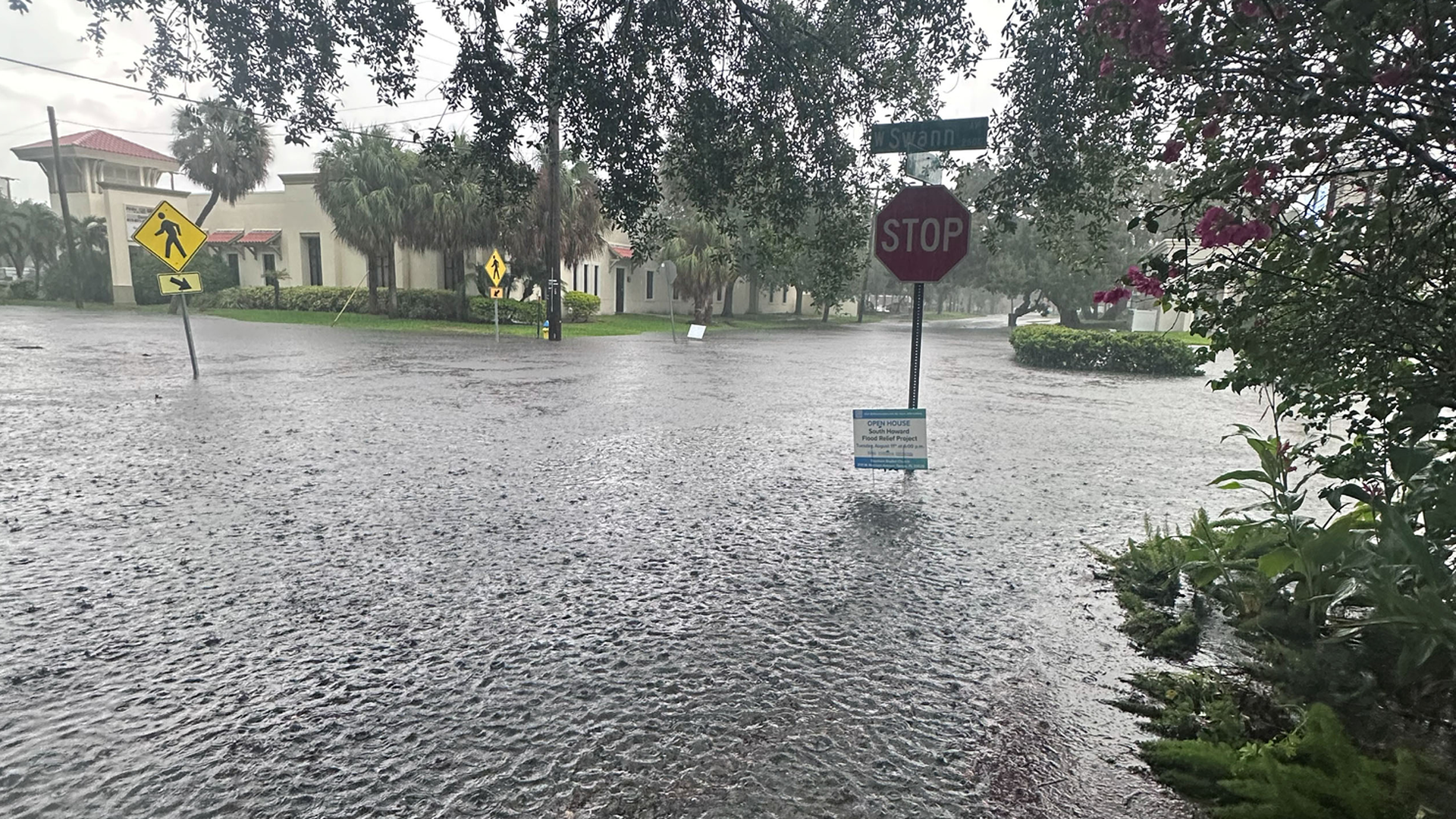
West Swann Avenue on Aug. 2. Photo: Courtesy of the City of Tampa
A long-awaited fix for South Tampa's flooding is nearing a make-or-break City Council vote.
Why it matters: Undersized storm drains have left the area vulnerable to flooding for decades, damaging homes and swamping streets.
- But the city's solution could come at a steep cost to local businesses, some of which say they might not survive years of construction, road closures and detours.
Catch up quick: The project is designed to relieve flooding along South Howard Avenue and West Swann Avenue and in surrounding neighborhoods, including Parkland Estates and Palma Ceia Pines.
- It involves building an underground drainage system to better move stormwater from the area toward Hillsborough Bay, with capacity for up to about 5 inches of rain over eight hours.
- Beyond drainage, the project would also improve the area's drinking water and expand sidewalks and street parking.
Friction point: It would be an expensive undertaking. The city estimates it might cost up to $100 million, which it intends to fund through bonds, stormwater assessments, state grants and other agencies.
- For some businesses, however, the concern isn't the project's price tag. It's how long they'd have to endure the construction.
- Work is expected to take about three years, according to the city, but it would be completed in phases to avoid shutting down the entire corridor at once.
What they're saying: Stephen Michelini, who represents the South Howard Business Alliance, says, "Small businesses will not be able to survive this, even if you phase construction."
- He adds that there are no parallel streets or rear access points to ensure businesses remain accessible during construction.
- "We don't want to stop every possible solution," he tells Axios. "We're just not in favor of this project."
The other side: The city has acknowledged that some driveways could be inaccessible for up to seven weeks during construction.
- To address this, the city has proposed off-site parking, golf cart shuttles and temporary walkways.
What's next: On Sept. 3, City Council will decide whether to lock in the project's maximum construction cost, a pivotal vote that could clear the way for construction or stop it in its tracks.