Tampa Bay backlash grows over Flock cameras


Add Axios as your preferred source to
see more of our stories on Google.
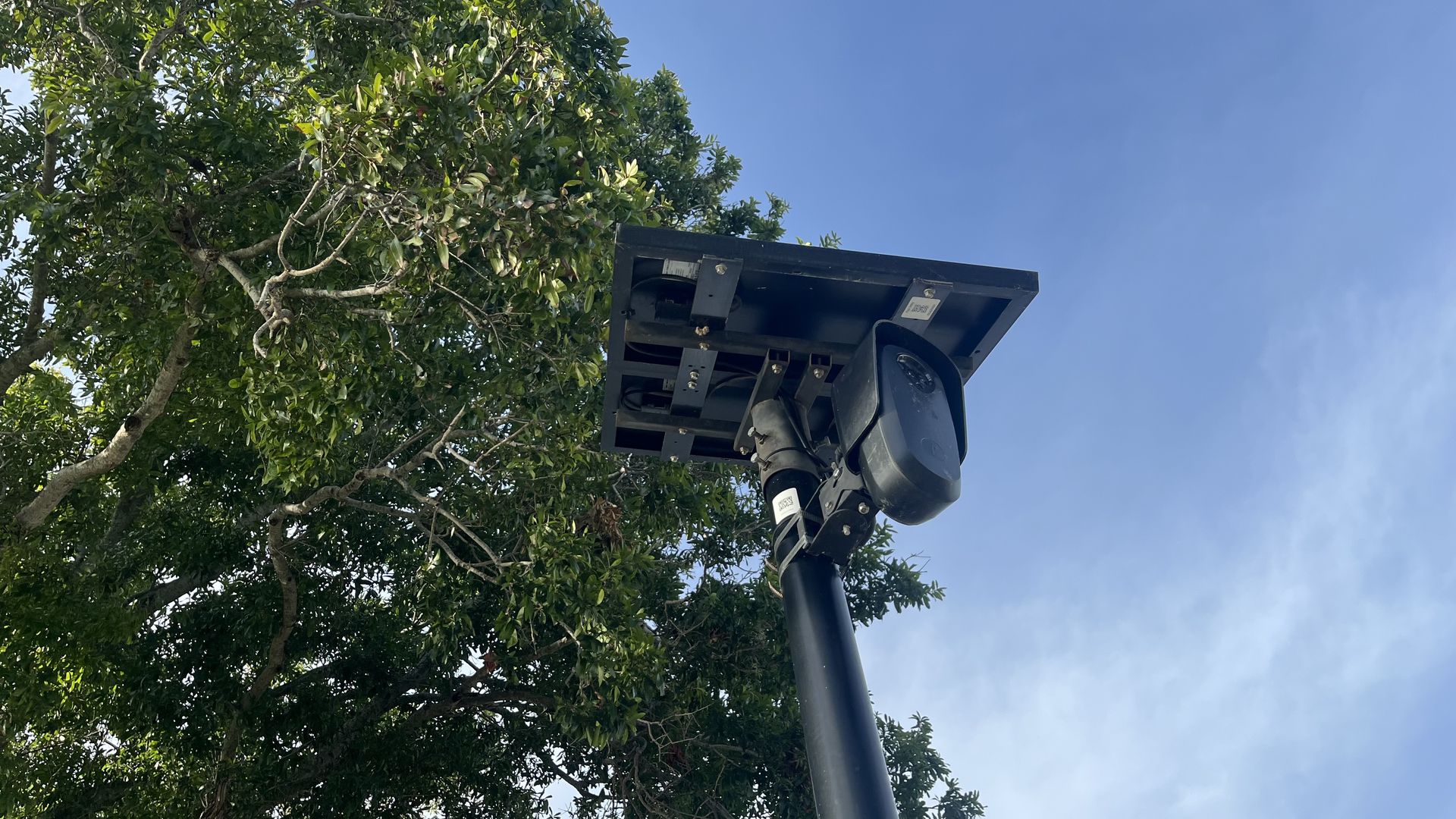
A Flock camera on Dr. Martin Luther King Jr. Street South in St. Petersburg. Photo: Kathryn Varn/Axios
Flock cameras are watching, but so are Tampa Bay residents.
Why it matters: From a viral one-man protest to resident groups organizing to "DeFlock" St. Petersburg and Tampa, the technology has fueled concerns over privacy and police misuse.
- It's also become an issue in the St. Pete mayor's race. Front-runner Charlie Crist said he supports a moratorium on the tech while incumbent Mayor Ken Welch said the city plans to continue using it.
How it works: Flock cameras and other automated license plate readers are typically black rectangular boxes placed on poles near roads, intersections and parking areas.
- The cameras use AI to scan and store information including license plate numbers, vehicle models, colors, car makes, scratches, dents and bumper stickers.
The big picture: Atlanta-based Flock has over 120,000 cameras across the country, the company told Axios.
- More than 800 cameras span Pinellas, Hillsborough and Pasco counties, according to DeFlock, a national organization that tracks and advocates against Flock.
Friction point: Advocates say the cameras help police quickly track down criminals and make cities safer, but opponents say they're a form of constant surveillance that infringes on residents' civil liberties.
- Those concerns have prompted some cities and counties around the country to end their use.
The latest: In St. Pete, where the inaugural DeFlock meeting this month drew 120 participants, that debate has made it to City Hall.
- Council member Richie Floyd put an item on this week's City Council agenda urging a discussion about the police department's contract with Flock.
Flashback: The city launched a pilot program in 2022 with 25 cameras.
- That number doubled in 2024, when City Council members approved a $730,000, five-year contract with the tech company, per meeting minutes.
Between the lines: Council members did not discuss the contract before approving it.
- "It deserves a discussion," Floyd, who was absent from the 2024 meeting, told Axios.
- With privacy concerns in mind, "it would be my preference for them not to be in the city," he added.
Zoom in: Police chief Anthony Holloway this month issued a statement on the technology, saying it's used in criminal and missing persons investigations and in urgent situations like Amber alerts.
- Access is limited to certain officers, who must document the reason for their search.
- Flock retains videos for 30 days, the statement notes, although the company has since said that it's cutting the default window to seven days.
Zoom out: Elsewhere, some police officers have been investigated over allegations they misused license plate reader data for personal reasons.
- A Haines City police officer was arrested earlier this month for allegedly searching his estranged wife's car 717 times in the Flock database between September 2024 and this past June.