Can Hillsborough's half-cent tax fund a new Rays stadium? Here's what we know

Add Axios as your preferred source to
see more of our stories on Google.
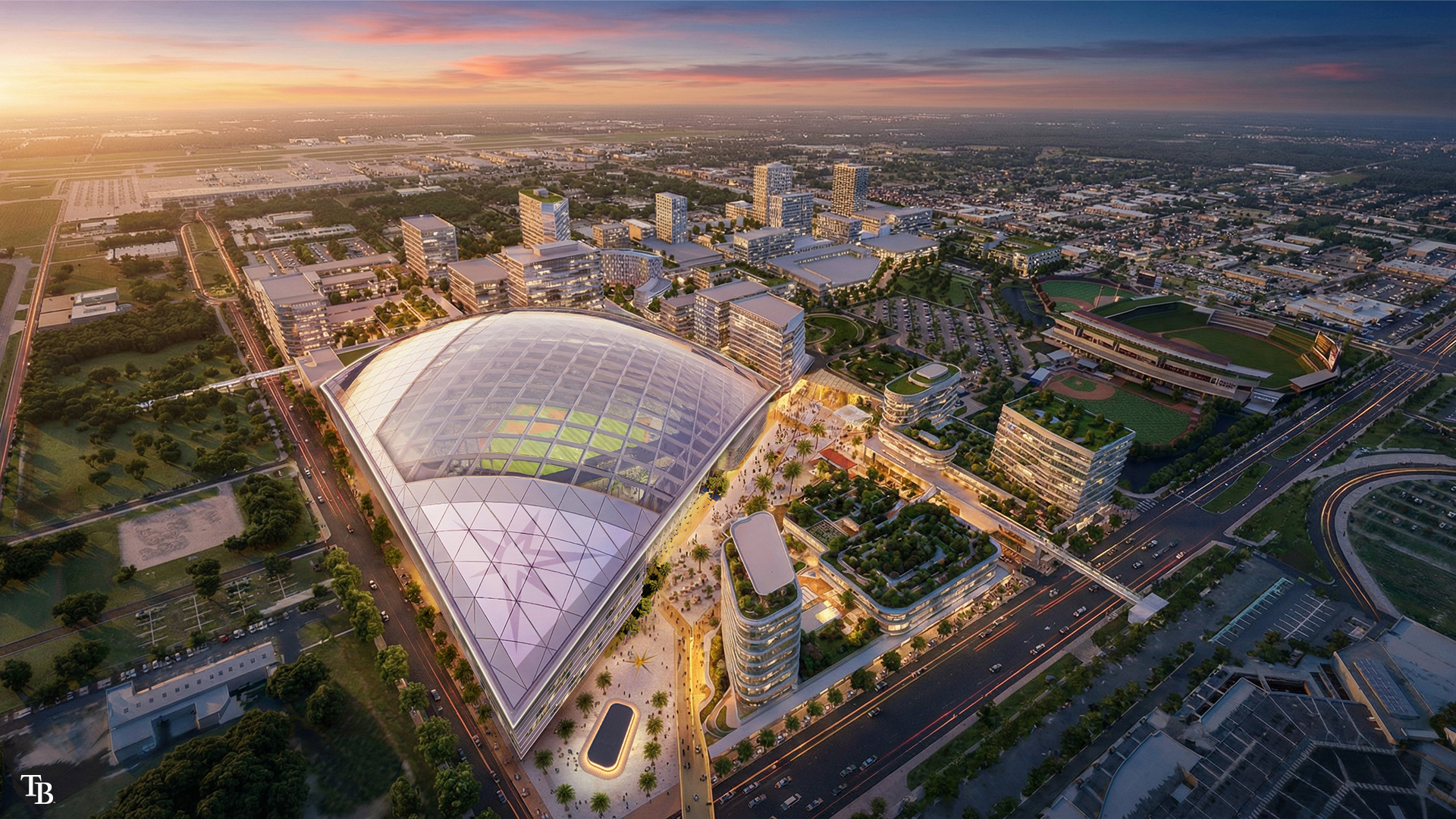
Rendering: Courtesy of the Tampa Bay Rays
At the center of a looming Rays stadium vote is a question: Can a half-cent sales tax that Hillsborough County voters approved for infrastructure be used for a new ballpark?
- Most commissioners have said on the record that it shouldn't be, but the tax's language and deliberations from before its passage suggest it can be.
Why it matters: Commissioner Ken Hagan made clear in February that the stadium plan isn't possible without revenue from the county's half-cent sales tax.
Driving the news: Hillsborough commissioners are expected to vote on a stadium deal — as soon as April 1 — in which the Rays will seek more than $400 million from the county's half-cent sales tax.
- A framework from Hagan's office outlines how the county could get there: through surplus revenue, funds initially planned for other sports facilities, or unallocated dollars.
Friction point: Commissioner Joshua Wostal told Axios that he expects a legal challenge to occur if money from the half-cent sales tax is used.
Catch up quick: The renewed Community Investment Tax — approved by voters in 2024 — will fund infrastructure for transportation, public works, safety, facilities, utilities and schools.
- Five percent will be shaved off the top for the school board each year. The rest will be split, relative to population, among Hillsborough County, the city of Tampa, Plant City and Temple Terrace.
- Hillsborough County is expected to receive $2.66 billion, $597 million of which is reserved for public facilities, including repairs at Stienbrenner Field, Benchmark International Arena and Raymond James Stadium.
Between the lines: The original Community Investment Tax explicitly allowed its revenue to be used for "a community stadium."
- That language wasn't carried over in the renewed tax, but the ordinance defers to state statutes for its definitions of infrastructure and public facilities, and those statutes include recreational facilities.
- That is how the county's existing stadiums will be funded by the tax.
Flashback: Wostal proposed language on April 17, 2024, barring the tax from being used for new stadiums, an idea that drew bipartisan support — including from Hagan.
- County attorneys acknowledged then that "public facilities" is broad enough to cover a county-owned stadium, but they said that commissioners could simply choose not to own a new professional sports facility.
- Wostal then withdrew his proposal. The interlocal agreement approved later did not prohibit the use of the tax revenue for a new stadium.