Florida leads nation in executing military veterans

Add Axios as your preferred source to
see more of our stories on Google.
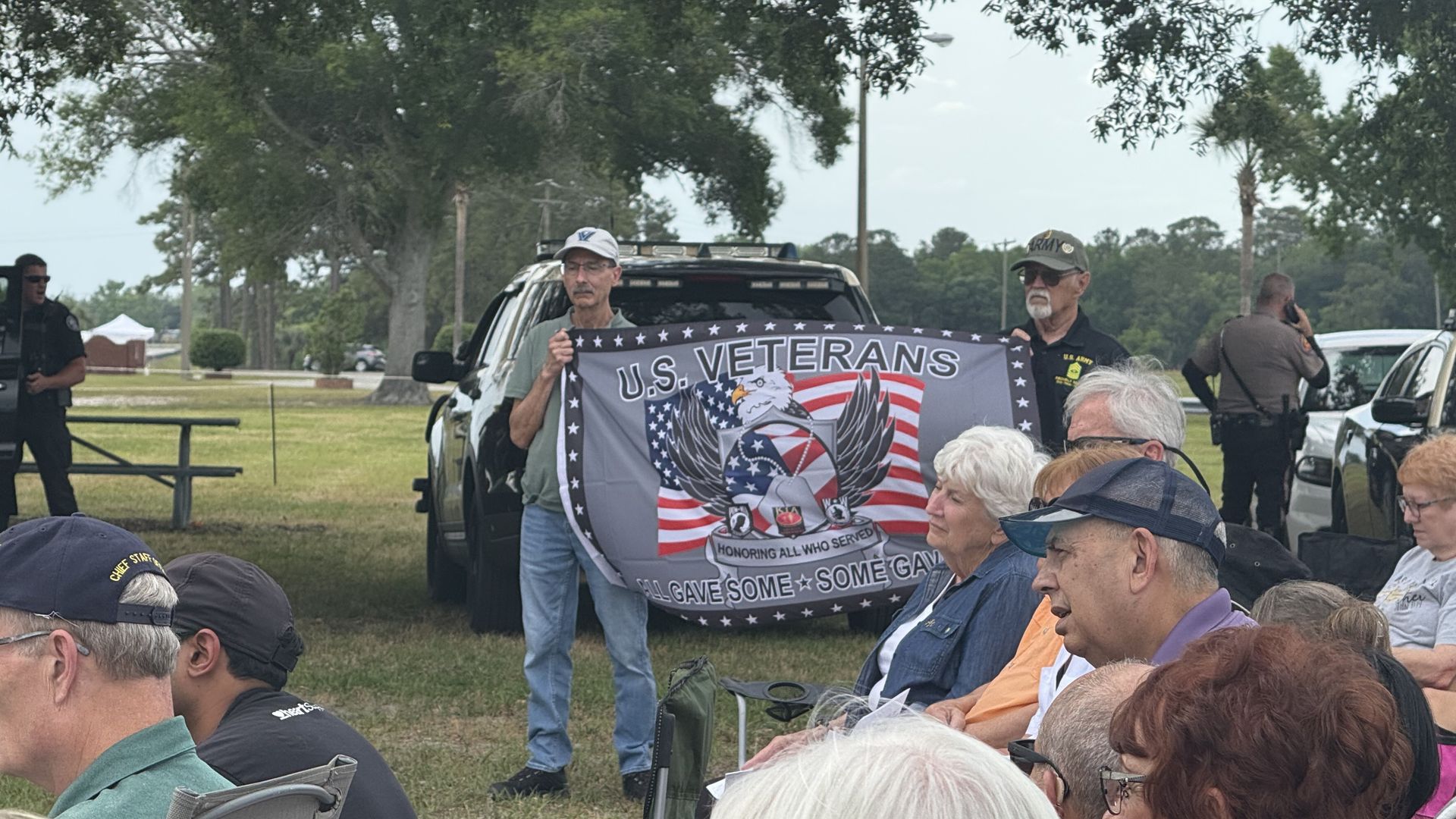
Veterans at a vigil for Army and Gulf War veteran Jeffrey Hutchinson, whom Florida executed in May. Photo: Floridians for Alternatives to the Death Penalty
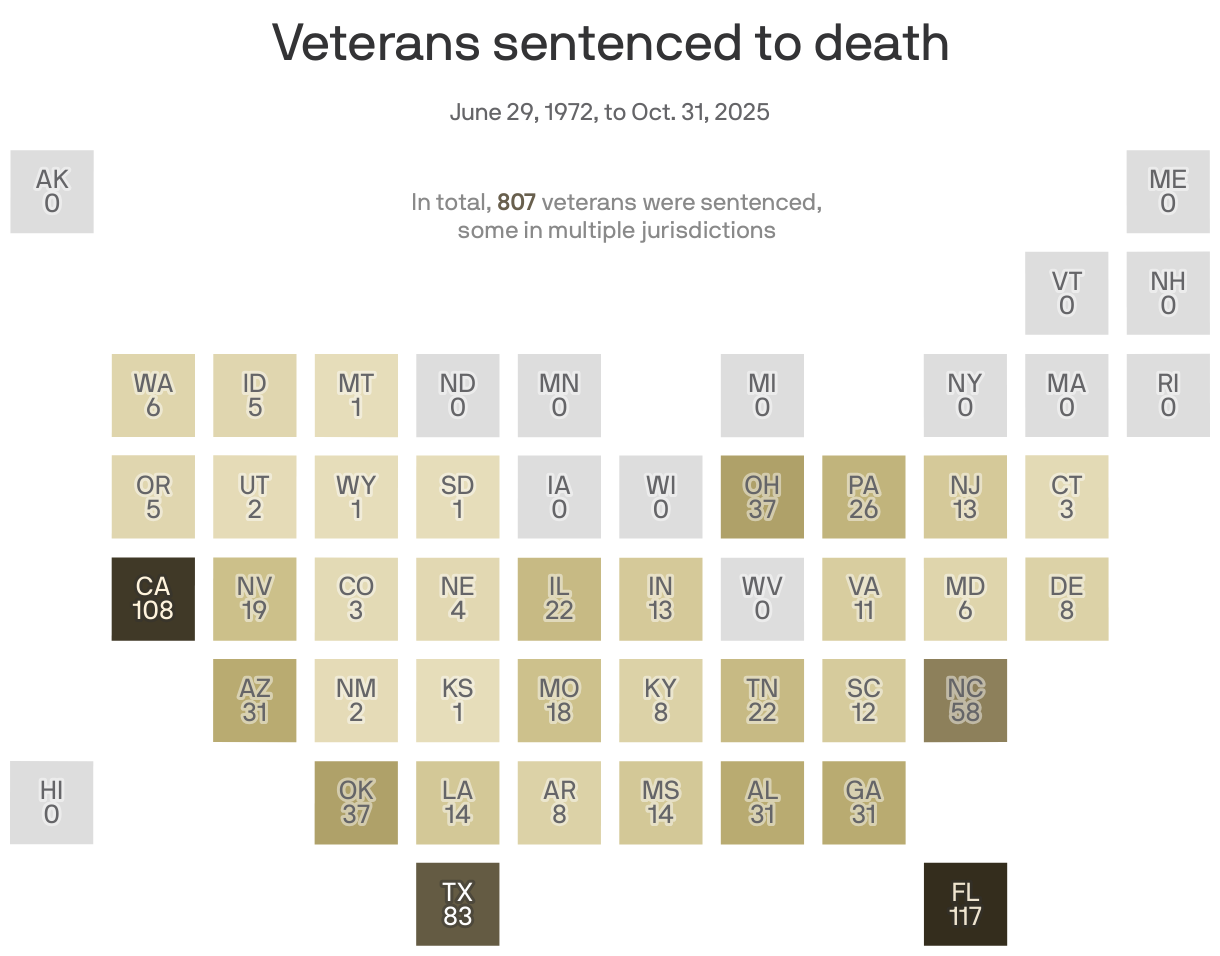
A third of the record 15 people put to death this year by Florida Gov. Ron DeSantis were military veterans, according to a new report.
Why it matters: Veterans are overrepresented on death rows across the country, with their military service and psychological and physical trauma often minimized or not mentioned at all to jurors.
- That's according to "Forgotten Service, Lasting Wounds: Military Veterans and the Death Penalty," a new report from the nonprofit Death Penalty Information Center.
- "This is a population that's deserving of more research and more scrutiny," executive director Robin Maher told Axios.
State of play: No state has sentenced more military veterans to death than Florida, per the report — and no state has executed more so far this year.
- That's despite pleas for mercy from veterans who have appealed to DeSantis' own military service and invoked his assertion that Florida is "the most veteran friendly state in the nation."
What they're saying: "We can never be a veteran friendly state when our leader is signing off on their deaths at the hands of the State," 160 veterans wrote to DeSantis in August.
The other side: A spokesperson for DeSantis didn't respond to Axios' questions about the letter, the report and how the governor is deciding which executions to carry out. More than 250 people are on Florida's death row.
- "My advice to those who are seeking to avoid the death penalty in Florida would be to not murder people," communications director Alex Lanfranconi said in a statement to Axios.
Yes, but: When considering whether to impose a death sentence or life in prison without parole, jurors are required to weigh the severity of the crime against certain life circumstances.
- Some circumstances, including military service, could lessen a defendant's culpability.
Case in point: The report zooms in on Jeffrey Hutchinson, whom the state executed in May in the murders of his girlfriend, Renee Flaherty, and her three children.
- The former Army Ranger and paratrooper fought in the Gulf War and was exposed to bombings and sarin gas, a toxic nerve agent.
- Hutchinson had post-traumatic stress disorder, brain injury and Gulf War Illness, a wide-ranging group of symptoms of which little was known when he was sentenced to death in 2001, per a court filing in his case.
Between the lines: Maher, of the Death Penalty Information Center, emphasized that the vast majority of veterans don't go on to commit horrible crimes.
- But some do, she said, and "their military service plays a major role in the crime they commit and has everything to do with whether they deserve a death sentence or a life sentence."
What's next: Florida is set to execute three more men today, next week and next month.
- Two of them are veterans.