How a Florida music teacher helped stop a Cold War-era anti-gay crusade

Add Axios as your preferred source to
see more of our stories on Google.
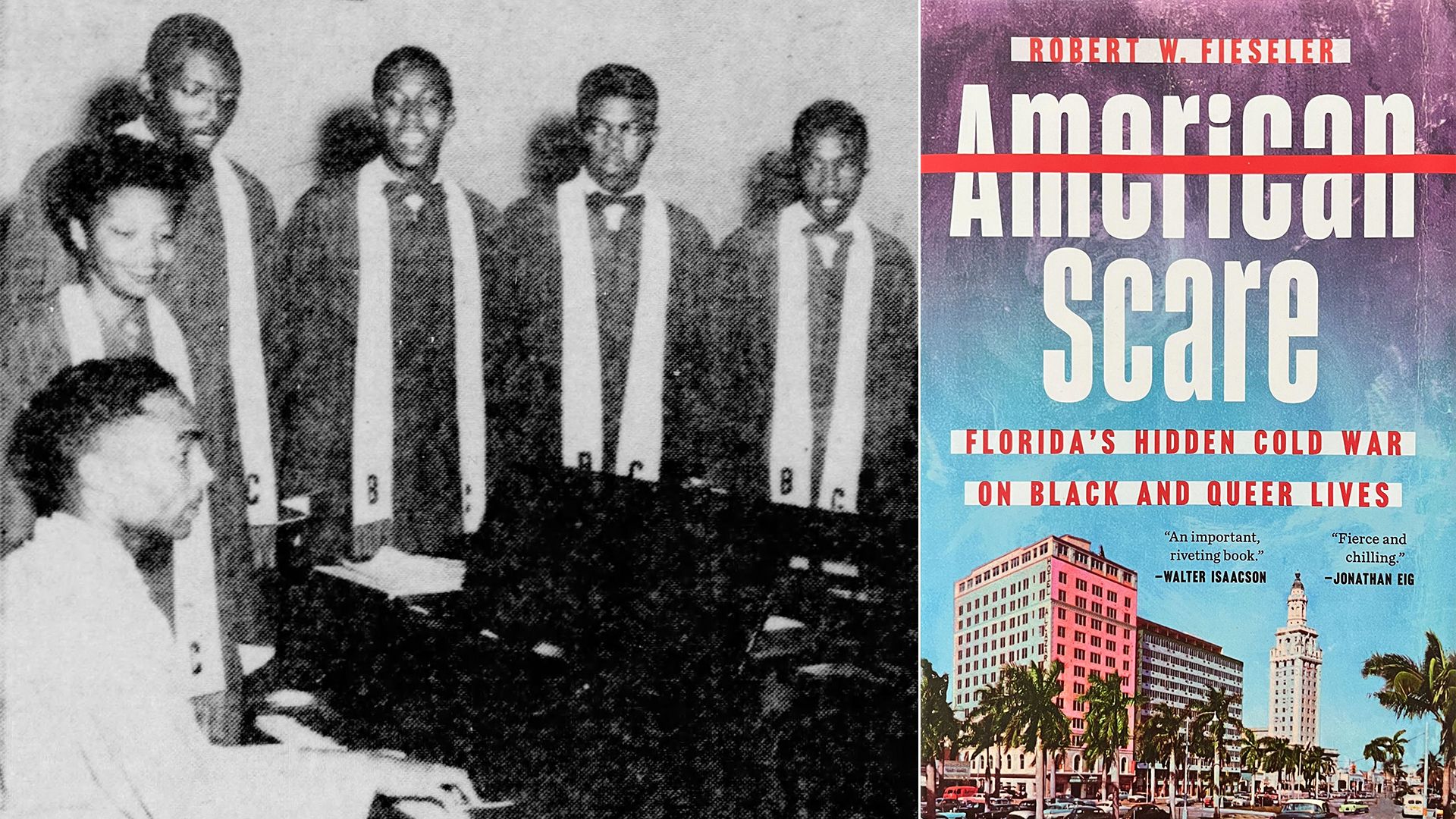
William James Neal directing choir students at Bethune-Cookman College (left). Photo: Newspapers.com. The cover of Robert W. Fieseler's new book, "American Scare" (right). Photo: Kathryn Varn/Axios
One of Tampa Bay's civil rights heroes is a Black gay music teacher you've probably never heard of.
Why it matters: William James Neal's legal victory over a state-funded committee "dealt an instant deathblow" to a ruthless purge of gay teachers and students in the 1950s and early 1960s, writes author Robert W. Fieseler.
- Fieseler's new book, "American Scare: Florida's Hidden Cold War on Black and Queer Lives," puts a fresh spotlight on Neal, a former choir director at the segregated Gibbs Junior College.
Flashback: In 1956, North Florida lawmaker Charley Johns spearheaded what became known as the Johns Committee, which investigated NAACP members and queer Floridians behind closed doors using aggressive, humiliating tactics — all in the name of rooting out communism.
- Nine years and $500,000 later, the group "failed to unearth one Communist," Fieseler wrote.
- But it did derail countless lives and careers, something state leaders still haven't apologized for (despite repeated efforts).
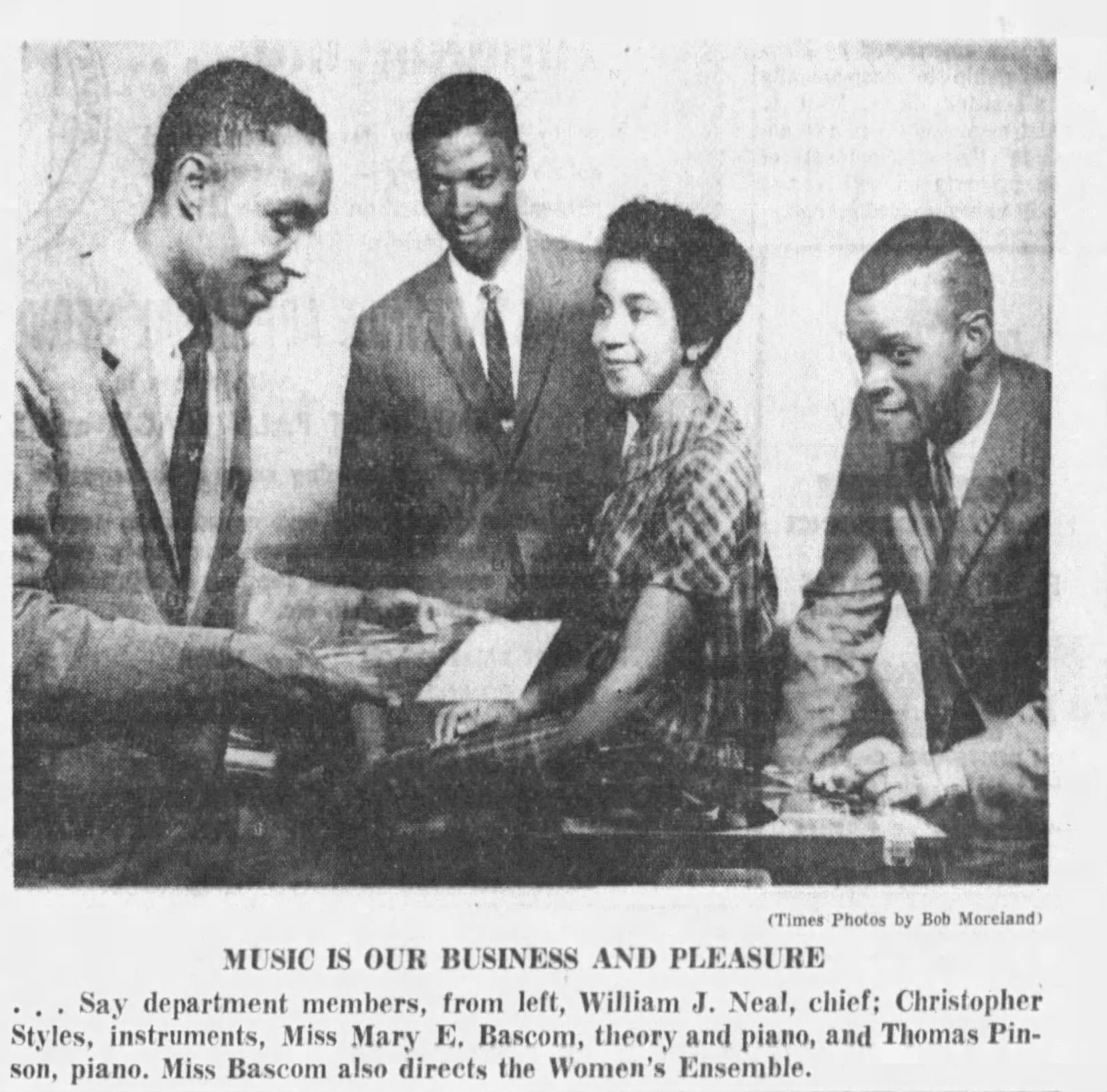
Zoom in: Among them was Neal, a pianist and Korean War veteran born in New Smyrna Beach who spent years teaching and accompanying church choirs in St. Pete.
- He earned his master of arts at Columbia University and toured the country as a solo pianist. He also directed choirs at Gibbs High, Gibbs Junior College and Bethune-Cookman College in Daytona Beach.
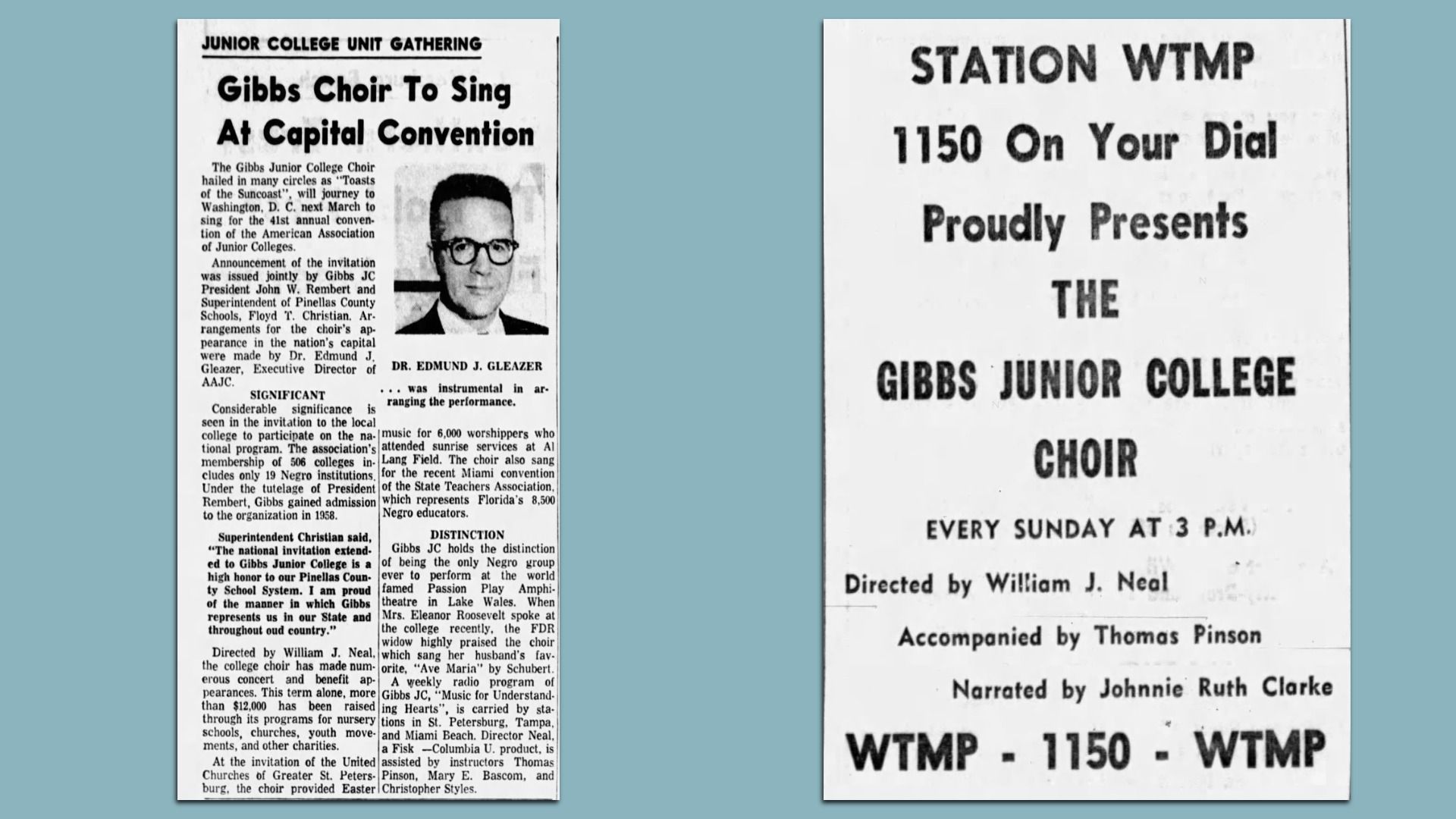
- In his role at the segregated junior college, which local officials opened in 1957 to avoid integration at St. Petersburg Junior College, Neal's wildly popular choir held concert fundraisers for local charities and performed for First Lady Eleanor Roosevelt.
Enter the Johns Committee.
- In October 1960, lead investigator Remus J. Strickland interrogated Neal about his alleged "homosexual activity" for three hours, only 30 minutes of which was recorded.
- Without a lawyer, Neal was on his own to face Strickland's questions while a police officer and a high-ranking Pinellas County Schools official looked on.
That was only the beginning of Neal's nightmare. In April 1961, the state revoked his teaching license, along with the licenses of four other Pinellas teachers.
- "I was completely devastated," Neal told a Tampa Bay Times reporter in 1993. "I went to a friend's house and slept for three days. I was like a block of ice."
Yes, but: Neal soon "resolved to do what no other victim of the Johns Committee dared before," Fieseler wrote. "He sued."
- Neal hired white attorneys and fled the state. His race never came up in legal papers or media coverage of the suit, which Fieseler posited was a strategic move by Neal.
- In October 1962, "a Black gay man won in segregated Florida," Fieseler said. The Florida Supreme Court sided with Neal.
I read Fieseler's book ahead of moderating a recent event featuring the author at St. Pete's Tombolo Books.
- I now consider it required reading for Floridians, especially as queer and Black folks continue to face attacks from people in power — a dynamic Fieseler equated to "a second Red Scare."
What's inside: The book relies on a trove of sloppily redacted records kept for nearly 30 years by Tallahassee paralegal Bonnie Stark, who Fieseler credits as the first Johns Committee scholar for her master's thesis, "McCarthyism in Florida."
- It offers the most comprehensive narrative to date on the Johns Committee's work.
What they're saying: Neal's court victory "didn't just help William James Neal by restoring his teaching credentials," Fieseler told me.
- "It helped to hamstring and shut down all of the anti-homosexual interrogations that the Johns Committee was performing outside of the bounds of law."
Neal didn't return to Florida, instead finishing out his teaching career in Maryland. He died in 2008, and his gravestone epitaph reads, "Beloved Friend," Fieseler wrote.
- "And that's how I remember him," he told me, adding later that people like Neal give him hope.
- "When I think about these figures and these histories … I feel patriotic, and I feel hopeful," he said. "I see the root and the lineage for how people resisting now can learn lessons from those who resisted and succeeded then."