Baby corals sent to Florida Keys in bid to restore state's reefs

Add Axios as your preferred source to
see more of our stories on Google.
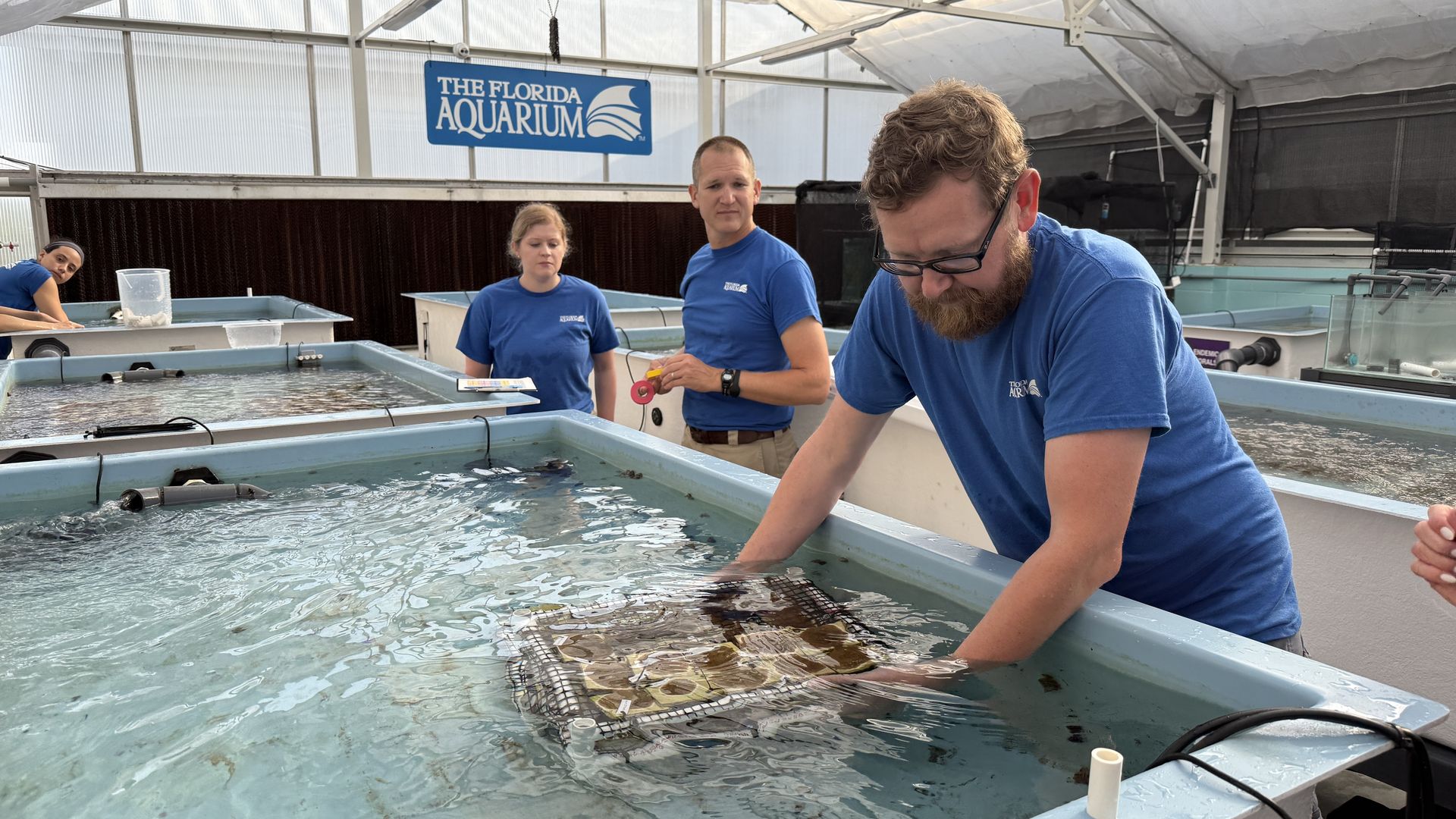
Photo: Courtesy of The Florida Aquarium
The Florida Aquarium delivered over a thousand corals, spawned and raised on-site, to the Florida Keys as part of an effort to restore the state's coral reef system.
Why it matters: Warming ocean temperatures have fueled the biggest global bleaching event on record, with 84% of the world's coral reefs affected over the last two years.
- Coral reefs provide shelter for a quarter of the ocean's animals. They're also a major driver of tourism in Florida.
How it works: Warm water corals thrive within a narrow temperature range.
- When the water is too warm, corals expel the helpful algae living in their tissues, turning themselves white in a process called coral bleaching. Once bleached, corals become more vulnerable to further heat stress.
Driving the news: The Aquarium's Coral Conservation team transported the baby corals to the Florida Keys on Wednesday. They will either be planted on the reef or in ocean-based nurseries.
- The baby corals, born at the Aquarium in 2022 and 2023, came from parent colonies rescued from Florida's Coral Reef before the record-breaking 2023 bleaching event that plagued the region.
- They were sent to the Keys Marine Laboratory to acclimate before heading out to Coral Restoration Foundation, Mote Marine Lab, Reef Renewal USA and Sustainable Ocean and Reefs.
The big picture: This is now the fourth — and most severe — global bleaching event to date, with no clear end in sight, per the Florida Aquarium.
- There are only about 37 elkhorn corals left on Florida's Coral Reef, according to Keri O'Neil, coral conservation program director at the aquarium.
What they're saying: "This coral transfer gives us hope that we can start to rebuild an elkhorn coral population that may be stronger and have a better chance to survive in the future," O'Neil told reporters.
- "We're hoping that some of these new combinations of mom and dad will produce offspring that are stronger and more resilient to future heat waves."