Play honors legacy of 1960 sit-in that spurred Tampa's integration

Add Axios as your preferred source to
see more of our stories on Google.
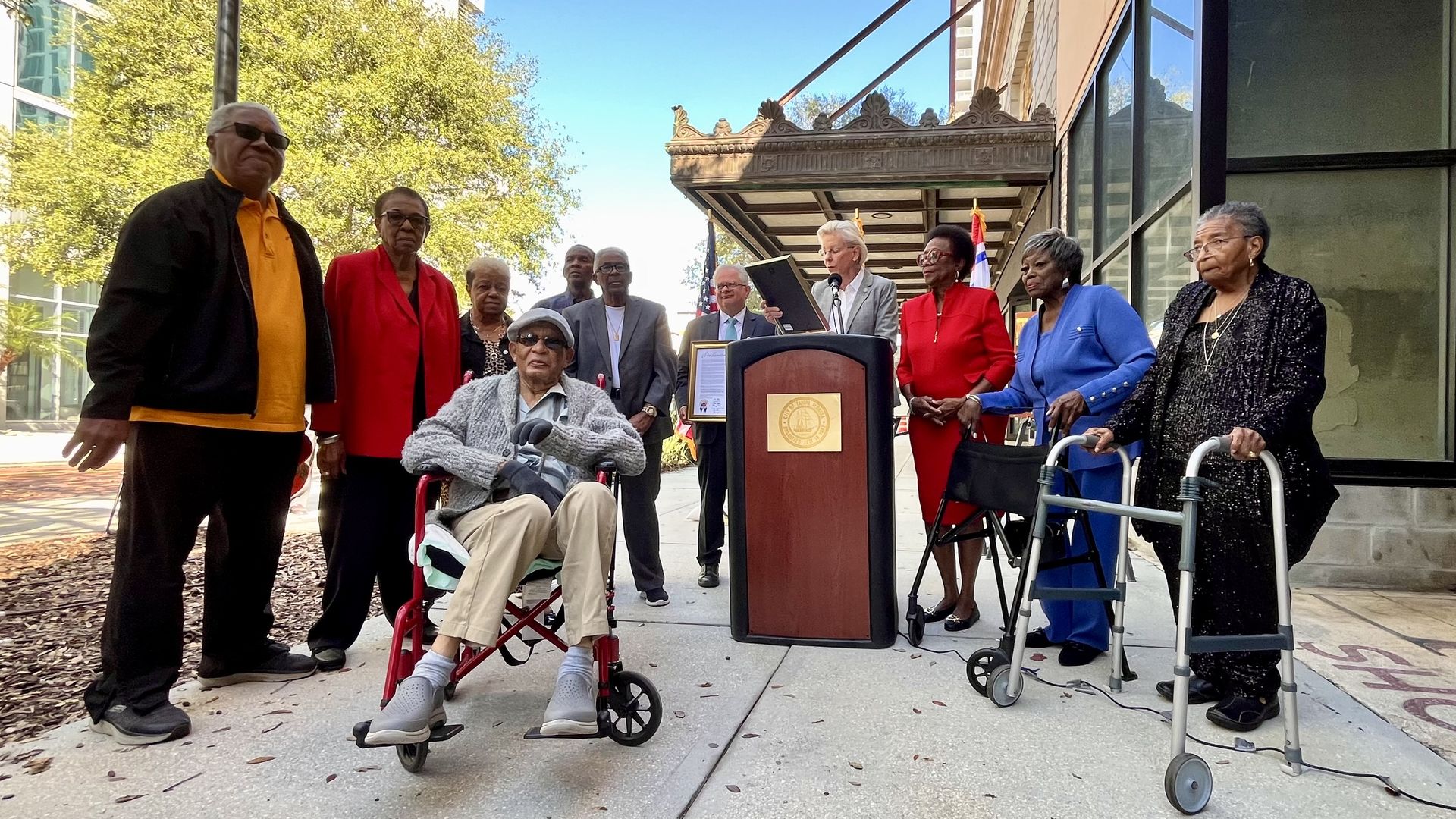
Participants in the 1960 Woolworth lunch-counter sit-in and Hillsborough County Commissioner Harry Cohen (center) look on while Mayor Jane Castor reads a proclamation from the lectern. Photo: Kathryn Varn/Axios
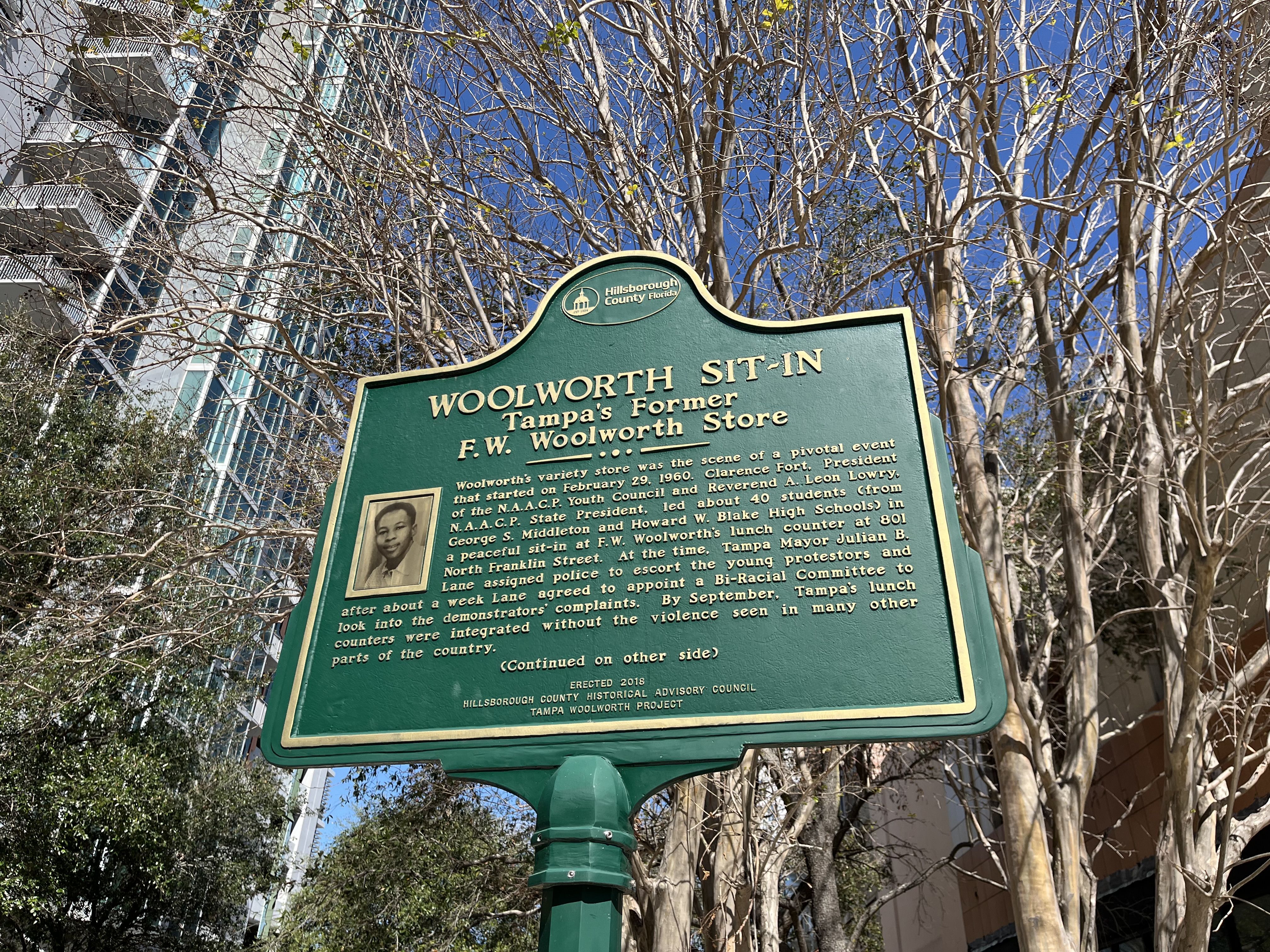
In 1960, students gathered at F.W. Woolworth in downtown Tampa for a peaceful protest that would forever change the city.
- This week, 65 years later, several of them returned. They were no longer students, and the building on North Franklin Street was no longer a Woolworth.
- But their legacy was intact.
Why it matters: That legacy will unfold on stage next week for a production of "When the Righteous Triumph," a play written by a University of South Florida professor reenacting the lunch-counter sit-ins that laid the groundwork for integration at retail lunch counters throughout the city.
- The play was first put on by Stageworks Theatre in 2023, but it will soon be restaged for a wider audience at the Straz Center's Jaeb Theater thanks to a community fundraising effort spearheaded by former U.S. Rep. Jim Davis. It opens March 6.
What they're saying: "We were so moved, we felt like more people needed to have the chance to see it," said Davis, whose grandfather, attorney Cody Fowler, helped then-Tampa Mayor Julian B. Lane put pressure on businesses to integrate.
- "This chapter in our history is a remarkable example of how we came together as a community at a time when we were very divided."
State of play: At a ceremony Thursday commemorating the anniversary, Mayor Jane Castor and Hillsborough County Commissioner Harry Cohen unveiled a proclamation declaring March 1 "Woolworth Sit-in Anniversary Day."
- Joining them were sit-in participants including former state Sen. Arthenia Joyner and Clarence Fort, who as a 20-year-old barber and head of the NAACP Youth Council helped organize the protests.
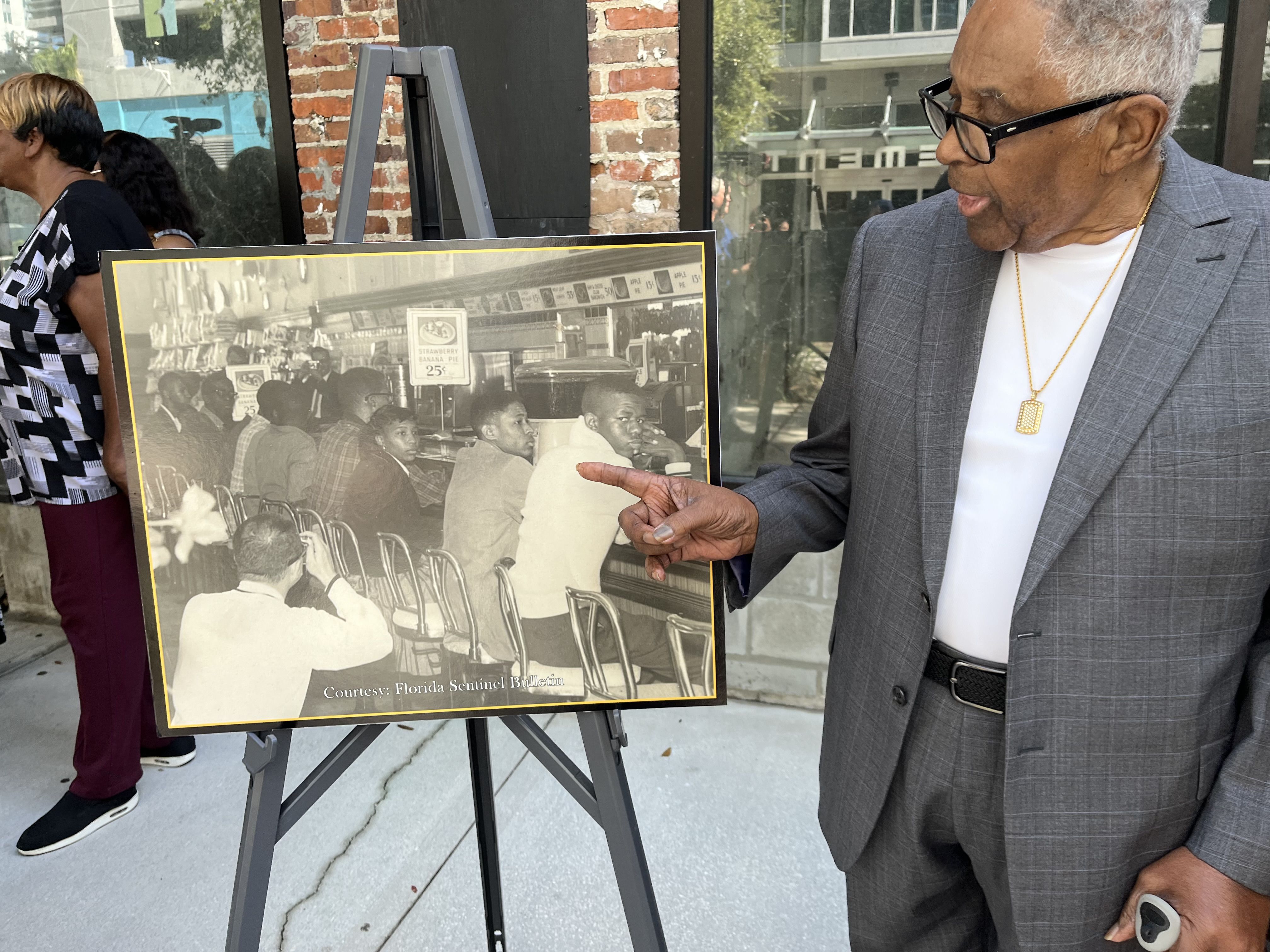
Flashback: In Jim Crow Tampa, Black patrons could shop at retailers like Woolworth but were barred from grabbing a bite at lunch counters.
- Fort and then-NAACP Florida president Rev. A. Leon Lowry organized a group of around 40 students from Tampa's Black high schools, George S. Middleton and Howard W. Blake.
- On Feb. 29, 1960, the students went into Woolworth and, after being refused counter service, stayed in their seats until it closed. The sit-ins continued for days.
Between the lines: The protests were largely peaceful, unlike similar demonstrations in other Southern cities. The students leaned on the teachings of Dr. Martin Luther King Jr., and then-Mayor Lane supported their efforts and told police to respect their mission.
- Soon after, Lane formed a biracial committee led by Fowler and Lowry to negotiate integration at retail lunch counters. By September, they achieved that goal. More city institutions would integrate in the years after.
The latest: Over the last year, Davis has worked with a coalition including Joyner, Lowry's widow, and Lane's grandson to raise about $500,000 that will go toward production costs of the play and a WEDU PBS-produced documentary.
- The funds are also subsidizing matinee tickets for high school students to see the show.
- Showtimes and tickets can be found here.
At Thursday's event, several speakers commended the courage it must have taken to stand up to such injustice, but at least one participant said she didn't recall feeling fearful.
- "I was not afraid," Middleton alum Barbara Wright said, "because I knew it was right."