Floridians are inundated with scam calls. Here's how to avoid being a victim

Add Axios as your preferred source to
see more of our stories on Google.
/2025/01/28/1738096179774.gif?w=3840)
Illustration: Brendan Lynch/Axios
You've probably gotten one today, or maybe you're getting one right now:
- The dreaded spam call.
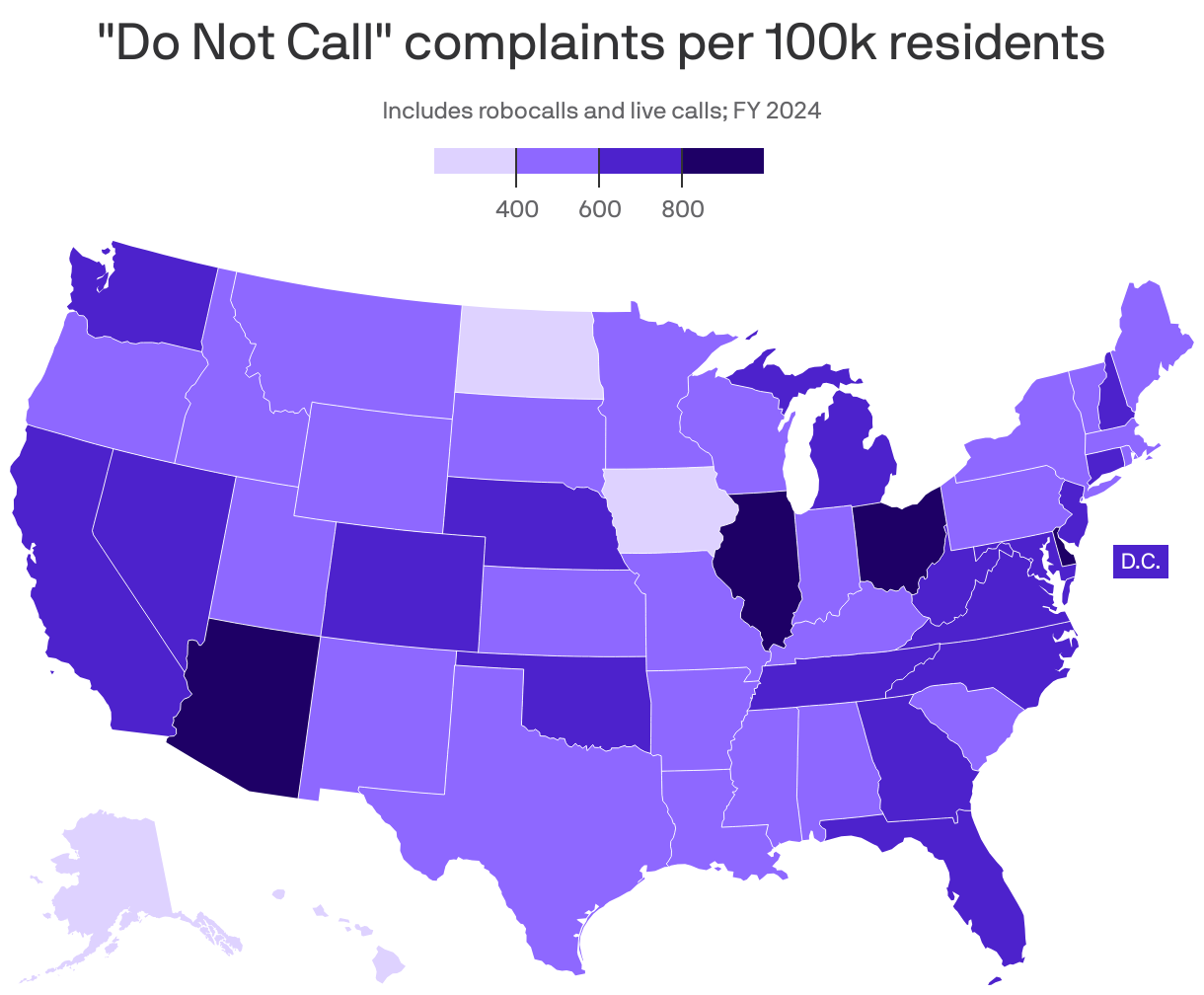
Why it matters: Floridians filed nearly 150,000 complaints about unwanted calls last fiscal year — a slight uptick after a two-year downward trend, according to Federal Trade Commission data.
- That's about 700 complaints per 100,000 people.
- Along with being extremely annoying, unwanted calls can also act as entry points to scams that could put your identity and money at risk.
The big picture: About half of complaints (73,655) were regarding robocalls, while another 60,580 involved live callers on the other end of the line.
- Among the topics of complaint calls: medical and prescriptions; reducing debt; energy, solar and utilities; warranties and protection plans; and vacation and timeshares.
- Among the biggest sources of complaints were calls in which the person on the other line impersonated someone else.
Zoom in: Those are the kind of calls St. Petersburg police detective Caitlyn Lance investigates as part of the economic crimes unit. She told Axios they typically fall into four categories, in which the caller:
- Poses as a representative from a law enforcement agency or the Internal Revenue Service calling about an arrest warrant or a tax issue.
- Pretends to be a loved one, like a grandchild or child, who is in trouble and needs money.
- Acts as a representative from a utility company calling about an overdue bill.
- Impersonates an agent from a bank or large retailer like Walmart or Amazon warning about a compromised bank account.
Threat level: They're typically looking for personal information and access to your money, Lance said.
- They will say they want to verify some transactions or information or will urge you to pay a bill or bond.
- They may also ask you to withdraw money and send it via Zelle or PayPal to an account they created for you to prove your identity.
1 big red flag: If the caller brings up gift cards. "They have one [legitimate] purpose, and they are for a gift," Lance said.
Tips to avoid scams: First up, shed your ego. Scammers have gotten really sophisticated, Lance said, and they're good at making you feel backed into a corner. Anyone of any age can be a victim — including the financial-advice columnist for a national magazine.
- Lance's main advice is to simply not answer your phone. Thanks to spoofing, in which a caller can falsify the number they're calling from, caller ID isn't much help. If it's something important, they'll leave a message.
- If they leave a voicemail, search the callback number and see if it's tied to the institution they say they're from, Lance said. It doesn't hurt, either, to call the bank or utility company yourself and ask if they're trying to reach you.
- If you answer, a scammer will likely be pushy or aggressive, Lance said. Hang up. And before you do anything, run it by someone you trust, whether that's a friend, family member or the police department.
What she's saying: "They're going to try to trap you in this fight-or-flight panicked moment where you feel like you need to make decisions immediately," Lance said.
- "That's not how a real business is going to operate."