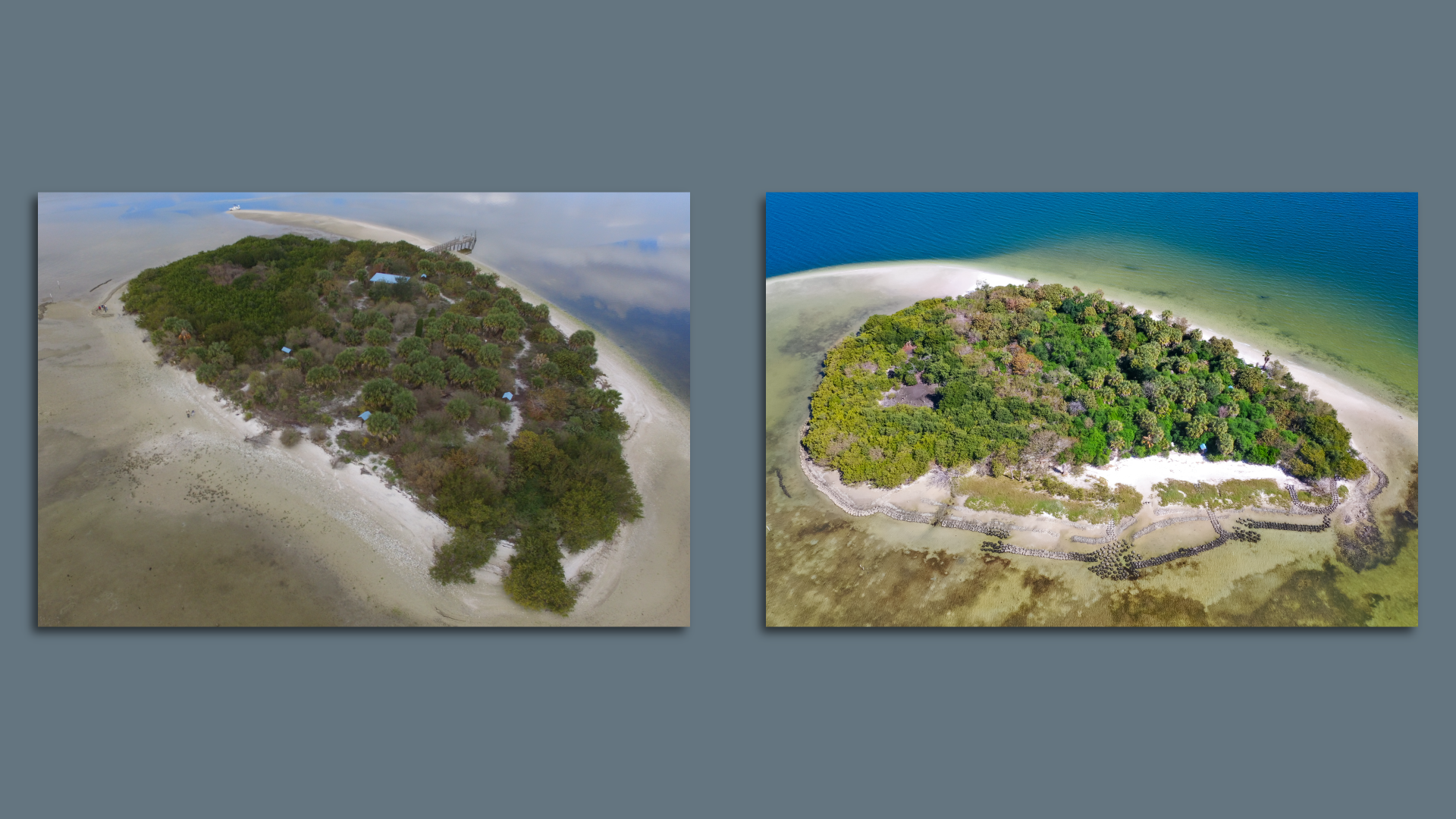
How recycled oyster shells help filter Tampa Bay's water, combat erosion

Add Axios as your preferred source to
see more of our stories on Google.
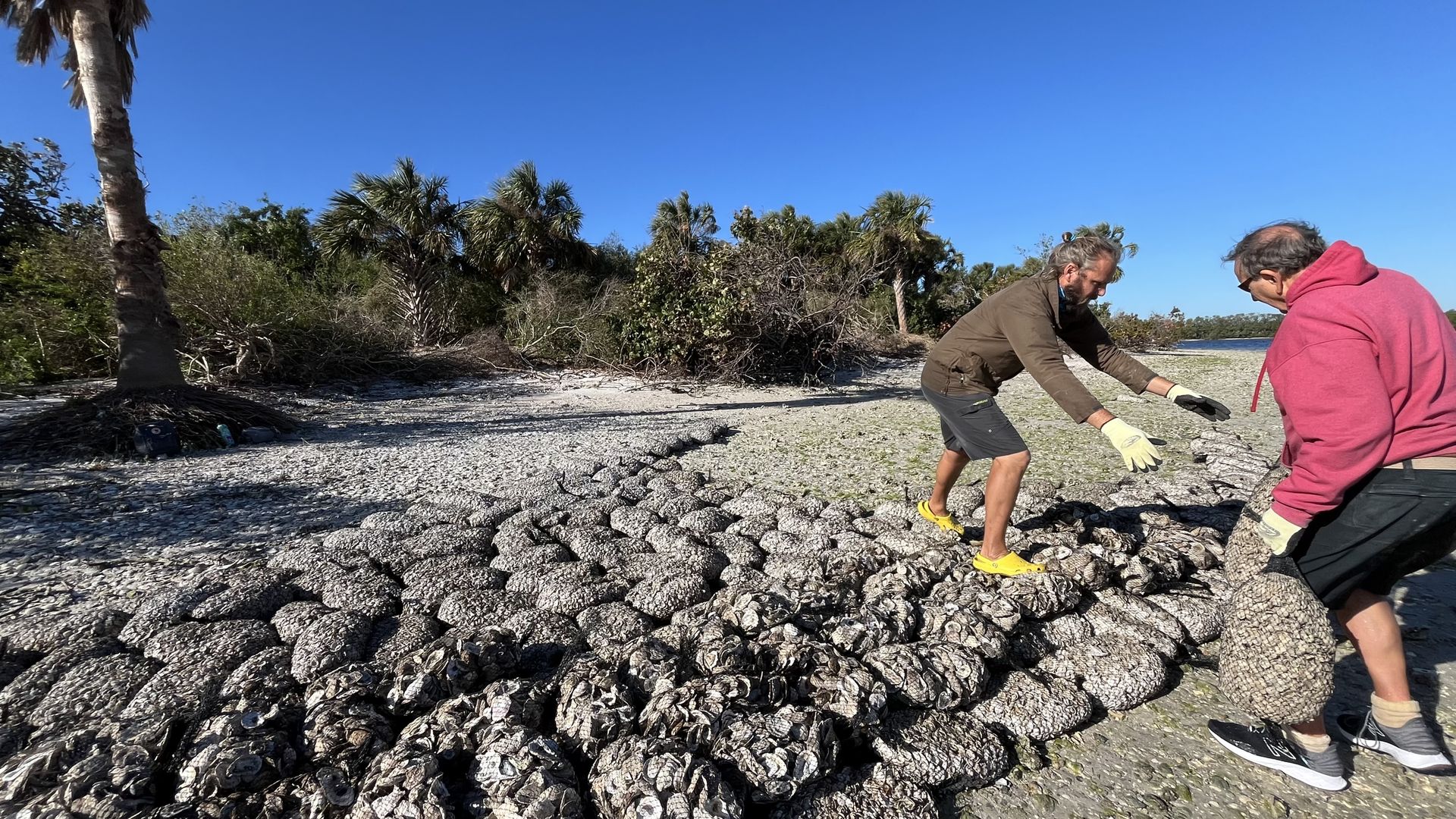
Eric Plage of Tampa Bay Watch reaches for a bag of shells from a volunteer while building out the living shoreline project on Fantasy Island. Photo: Kathryn Varn/Axios
Along shorelines throughout Tampa Bay, you've probably seen them: hunks of concrete shaped like overturned pots dotted with holes, mingling with mesh bags of shells.
Why it matters: These installations, known as living shorelines, improve water quality and combat coastal erosion — issues that took on new importance during last year's devastating hurricane season.
- And one such project just underwent a big expansion.
The latest: Last month, employees and volunteers with environmental nonprofit Tampa Bay Watch built out 500 feet of living shoreline on the northeastern side of Fantasy Island in Hillsborough Bay, near the mouth of the Alafia River.
How it works: The concrete structures, called reef balls, coupled with the shell bags provide infrastructure for oyster reefs to grow, Tampa Bay Watch social media coordinator Brianna Varner told Axios.
- Bags of fossilized shells and oyster shells are laid on the shoreline first to replace eroded sediment and hold the remaining sand in place. The reef balls are then placed in front of the shell bags.
- Many of the oyster shells the nonprofit uses are recycled through the Shells for Shorelines program, which uses discarded oyster shells from local restaurants.
- In about six months, the shell bags and reef balls will start to attract live oysters. The hunks of concrete provide a solid surface they can grow on and help break waves from passing boats, which also contribute to erosion.
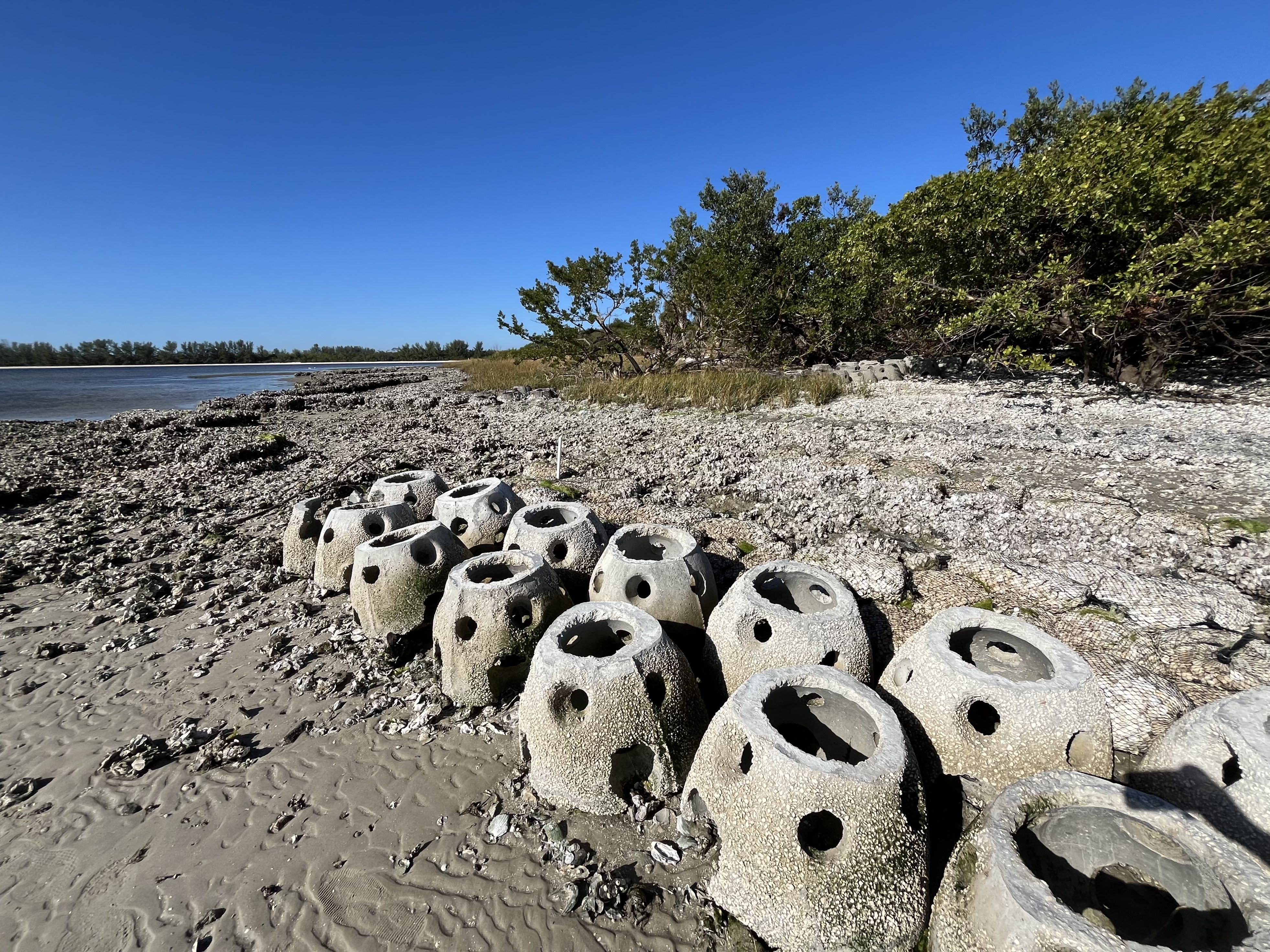
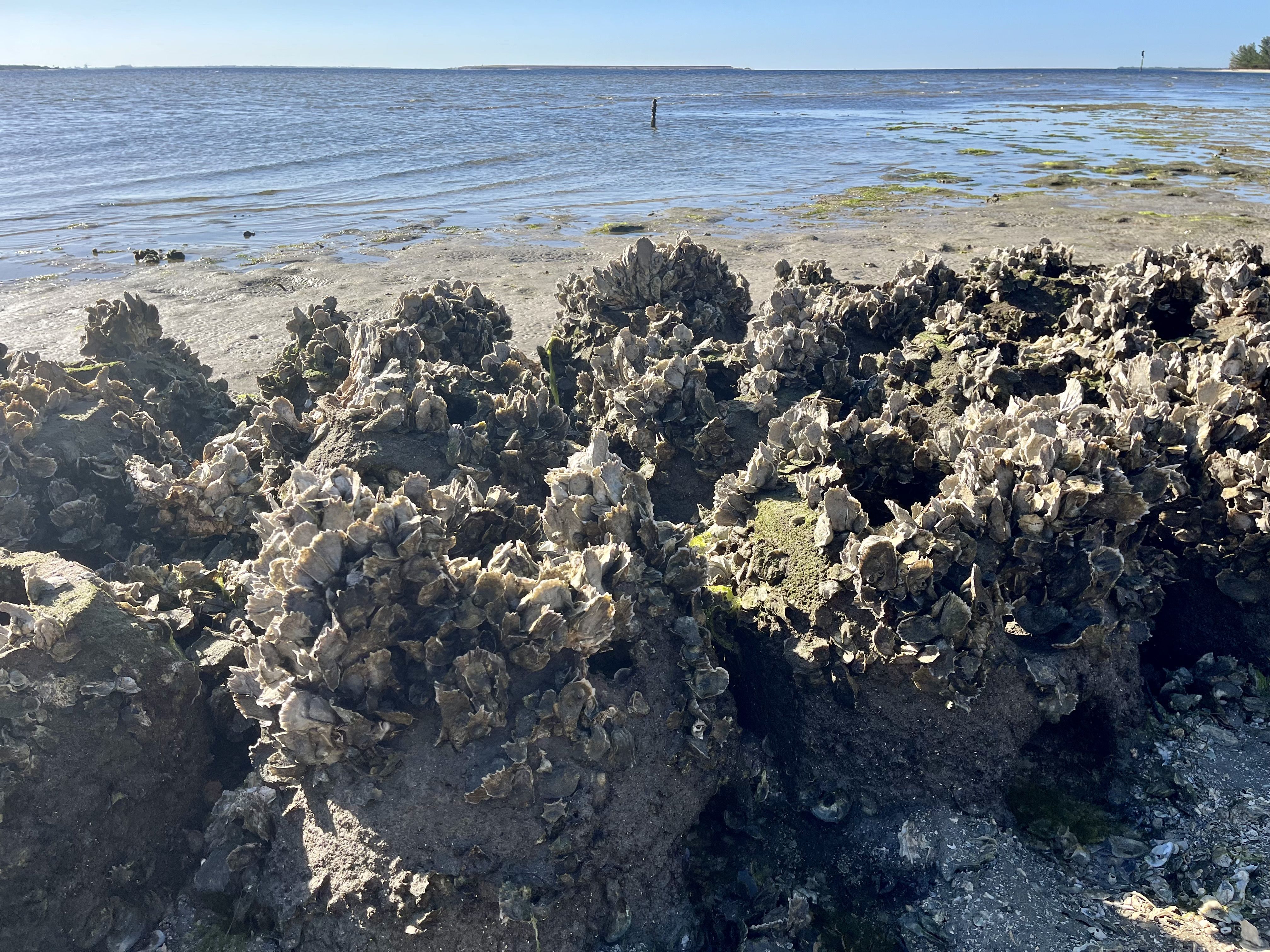
By the numbers: One oyster can filter up to 50 gallons of water per day, Tampa Bay Watch program director Eric Plage told Axios. After a couple years of growth, the average reef ball supports about 1,000 oysters.
- That means each ball has the potential to filter around 50,000 gallons of water each day.
- The Fantasy Island expansion added 870 reef balls to the shoreline.
The big picture: There are more than 20 similar projects in Tampa Bay, Varner said, including at Lassing and Maximo parks in St. Petersburg and at MacDill Air Force Base in Tampa.
- Along with stabilizing the shoreline, the oyster reefs attract critters like fish, sharks and snails.
- And a stabilized shoreline gives structure for plant life like mangroves and marsh grass to grow.
Flashback: The Tampa Bay estuary was once full of oysters, but as droves of people moved to the area over the last century, developers dredged the shellfish from the bay to be used for infrastructure like roads, Plage said.
- Nowadays, oysters cover about 200 acres of Tampa Bay, per the Tampa Bay Times. That's less than one-tenth of what existed a century ago.