Meet the emergency chief who guided Pinellas through a historic hurricane season

Add Axios as your preferred source to
see more of our stories on Google.
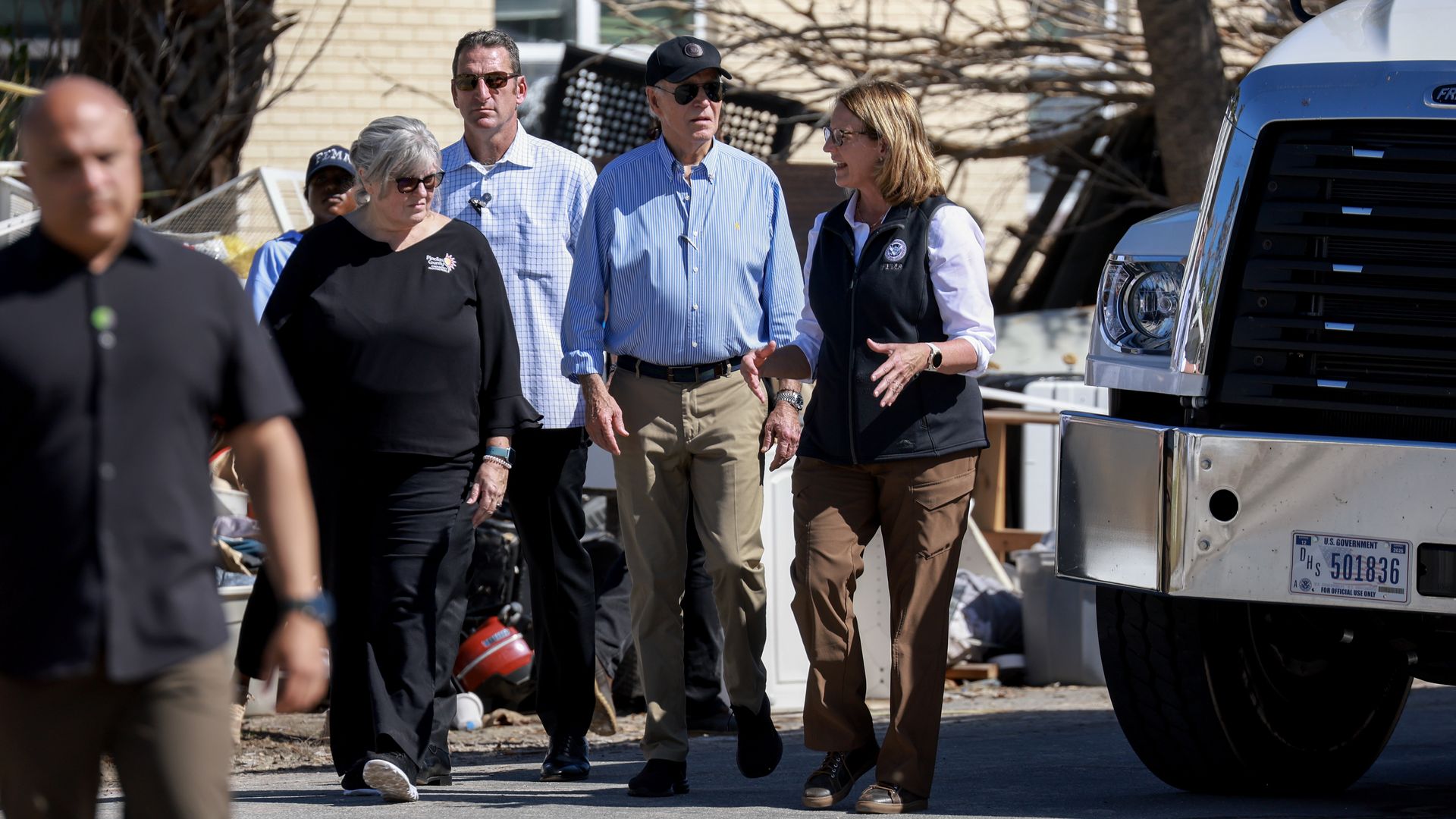
Pinellas County emergency management director Cathie Perkins walks with President Joe Biden during his visit to Tampa Bay in the wake up Hurricane Milton. Photo: Joe Raedle/Getty Images
Three weeks after the last storm, the twin-sized air mattress where Cathie Perkins slept through back-to-back hurricanes was still a half-folded heap on the floor of her office.
Why it matters: Managing the response to the two worst hurricanes to swipe Pinellas County in more than a century isn't glamorous, but someone's gotta do it.
- On this peninsula on a peninsula with nearly a million people and 588 miles of vulnerable coastline, that job belongs to Perkins, the county's emergency management director since 2018.
State of play: You may recognize her from the news, running through storm surge projections or pleading with beach residents to evacuate in a tone so passionate that one wrote her a thank-you note: "You saved our lives."
- In other words, "I'm probably not the face that people want to see on TV," Perkins told Axios in a recent interview.
Zoom in: Humor is one way she copes with the chaos and trauma that comes with the job. Diet Coke is another. So is confiding to someone, the power of which she believes in thanks to her psychology degree and background in social services.
- Perkins was born in England, grew up in Pennsylvania and moved to Florida after graduating from Penn State to escape the winters and join her brother in Tampa.
- In the wake of Hurricane Andrew's catastrophic hit to South Florida in 1992, Perkins moved to Miami. After a stint at the health department, she moved to the county, where her first big project was revamping the special-needs registry, ensuring vulnerable residents have access to the right level of care during evacuations.
- That foray into emergency management was "baptism by fire," she said.
These days, she's an expert in the field, armed with a bag of analogies to help her job make sense to the layperson.
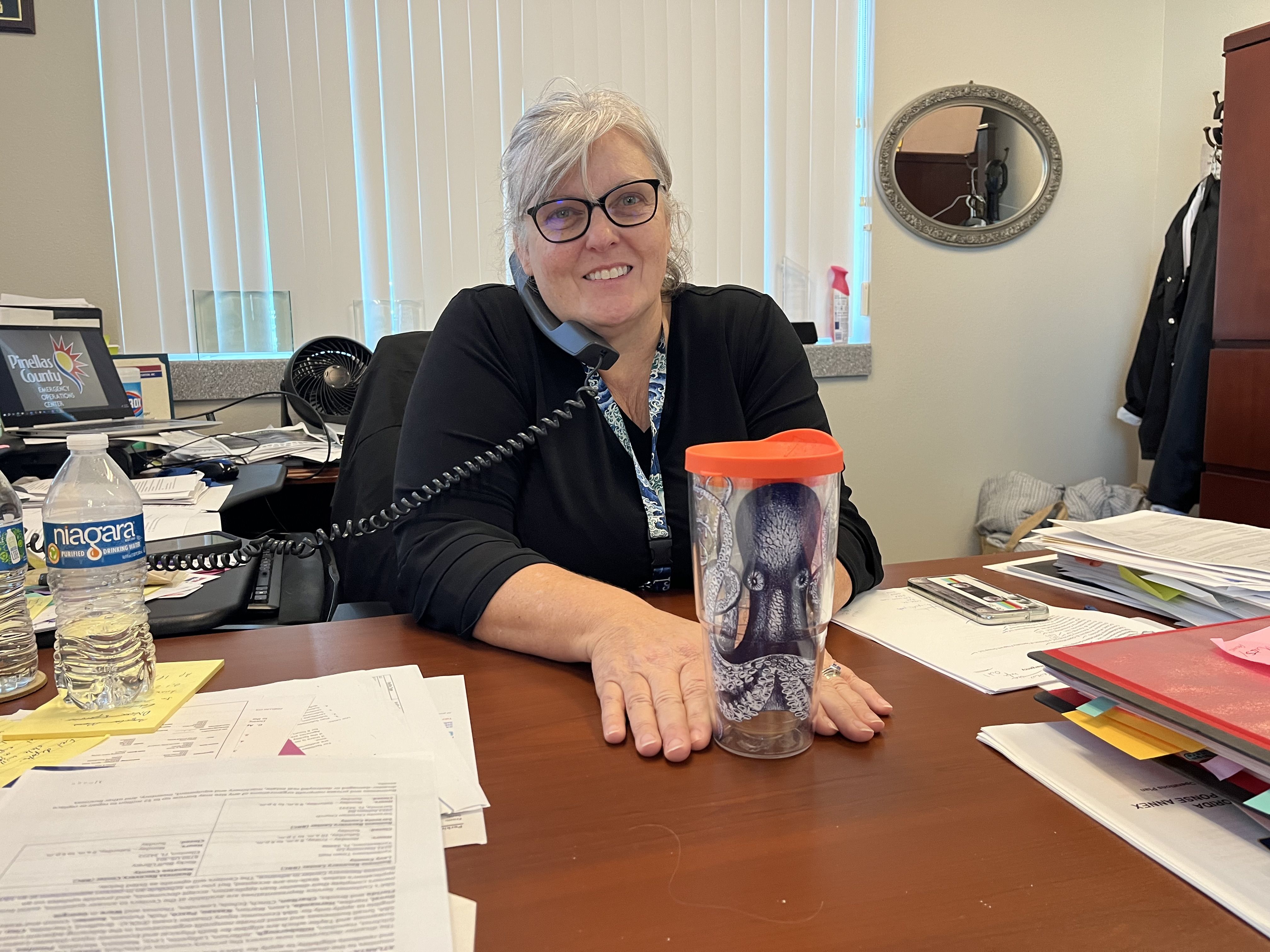
- She shares a kinship with the octopus "because I have eight things to do at once."
- She often feels like Chicken Little, except the sky falling is a hurricane that could bring inconvenience or destruction depending on its wobbly whims. ("Do not put your faith in a wobble," she warned during one of the news conferences leading up to Milton.)
- Sometimes it all feels like the fictional board game "Jumanji," with another lion or swarm of giant mosquitos just around the corner.
Case in point: The late-night text that came in from Perkins' St. Petersburg counterpart during Milton: "Are you awake?"
- Perkins would learn the city's failing water infrastructure meant that officials would need to figure out how to evacuate 1,000 patients from five St. Pete hospitals in the middle of a wind storm with gusts up to 100 mph.
- Officials found other solutions, but it was a moment that underscores all of the things you can't plan for.
All the time, Perkins said, she worries if she said the right thing, in the right way, to help residents help themselves.
- That means peeking at the social media comments even when people tell her not to, reading the criticisms that she's a fear-monger or should've said this or that.
Yes, but: She reminds herself that she doesn't know what's going on in their lives and that everyone is navigating their own fears and worries.
- So is Perkins, who has a 17-year-old daughter looking toward college next year and whose husband was diagnosed with brain cancer during the COVID-19 pandemic.
- Working for 63 days straight during that emergency, she took several calls from Moffitt Cancer Center while he was undergoing treatment.
What she's saying: In that way, the job is a blessing.
- "It takes me out of the 'woe is me'" mentality, she said. "Woe is the entire community."
Seven weeks after the last storm, the air mattress is back in the box. Perkins is pressing forward with the perpetual to-do list that comes after a storm, mapping out long-term recovery, coordinating grants and resources — and, yes, looking toward the dreaded next hurricane season.
- It's not a glamorous job, but someone's gotta do it.