How Milton brought unprecedented flooding to North Tampa

Add Axios as your preferred source to
see more of our stories on Google.
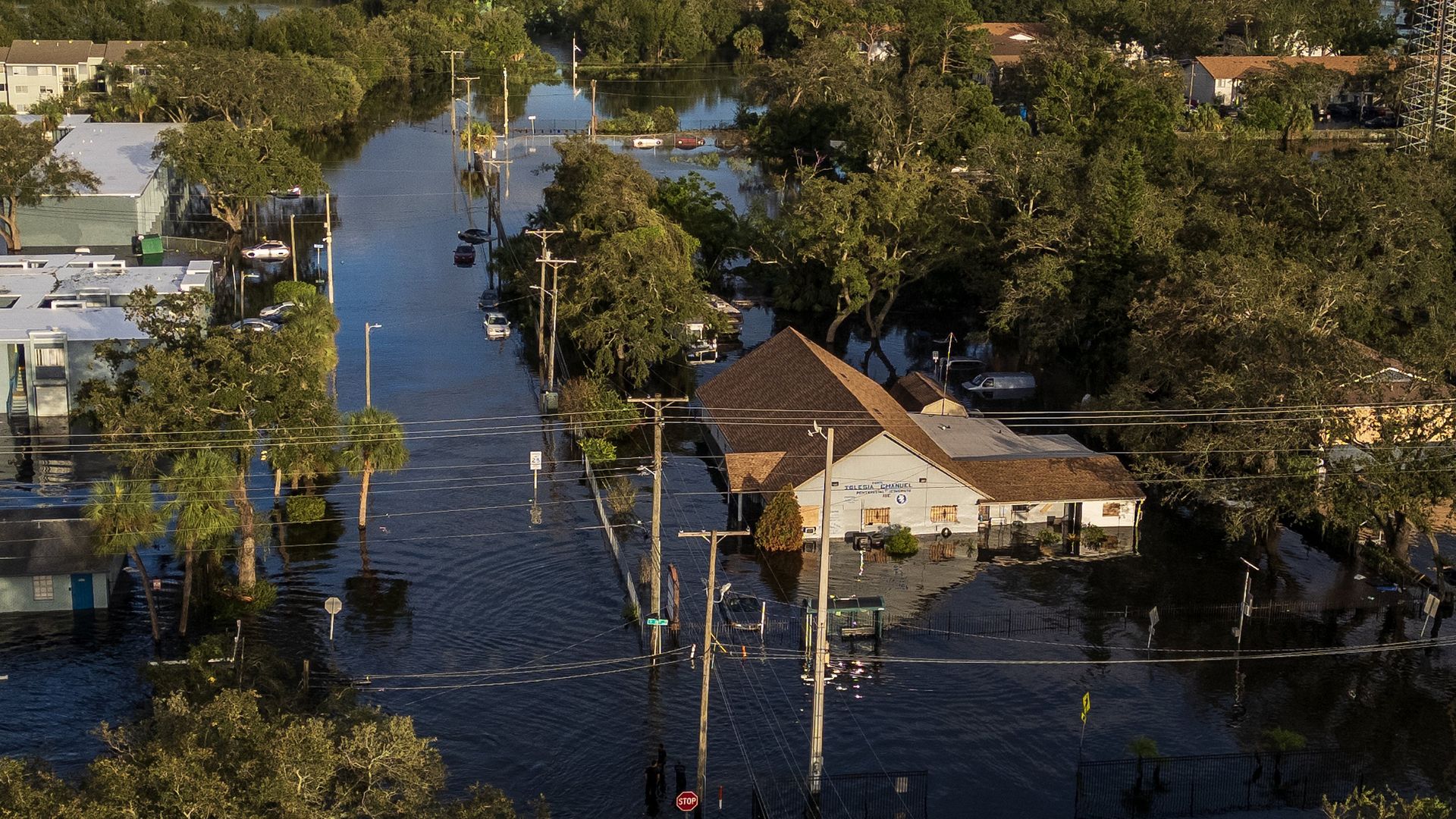
An aerial view of a neighborhood in North Tampa that Hurricane Milton flooded. Photo: Pedro Portal/Miami Herald via Getty Images
Hurricane Milton dumped 10 to 15 inches of rain on the University Area of unincorporated Hillsborough County, causing unprecedented floods that devastated a community already in dire straits.
Why it matters: Milton inundated hundreds of buildings across North Tampa — an unwelcome reminder that places once thought safe from such hurricane destruction are no longer so.
Catch up quick: University, a census-designated area named for its closeness to the University of South Florida, lies in flood zone X. That means it faces a 1-in-500 chance of flooding each year.
- Milton defied those odds. Floodwaters overtook Fowler Avenue, which Mayor Jane Castor dubbed "Lake Fowler."
- Families waited to be rescued from flooded homes while deputies and firefighters scrambled to evacuate 135 seniors from an assisted living facility submerged in waist-deep water.
- 230 properties sustained damage, a spokesperson with the City of Tampa tells Axios.
Yes, but: It wasn't all rain. Milton caused a power outage at Duck Pond, Hillsborough County's largest pump station.
- The pump failure, combined with what Tampa's Mobility Department described as a "300-year rainfall," resulted in the flooding.
The big picture: Flooded homes in the University Area remained occupied last week as some residents had nowhere else to go. Tree branches pierced roofs, and basic supplies like food and water ran low.
- "When a catastrophe hits an area that already faces challenges," says Sarah Combs, CEO of the nonprofit University Area Community Development Corporation, "it makes it that much worse."
- The University Area is home to around 26,000 people, most of whom are Hispanic and Black. About 89% of residents rent their homes, leaving them dependent on landlords to fix the damage.
- The University Area Community Development Corporation served 10,000 meals last week and, with the Sheriff's Office, distributed clothes and supplies.
What they're saying: "It's going to take months … to figure out how we really meet the need of what we're seeing out here," Combs tells Axios.
- "Our biggest issue is emergency shelter," she adds. "We need safe housing before contractors can start repairs, but hotels are full, and there's no housing inventory in the area."
How to help: Volunteers will be needed in the coming weeks, Combs says. For now, those who want to help can donate.