Florida's 988 crisis centers lag other states in picking up calls


Add Axios as your preferred source to
see more of our stories on Google.
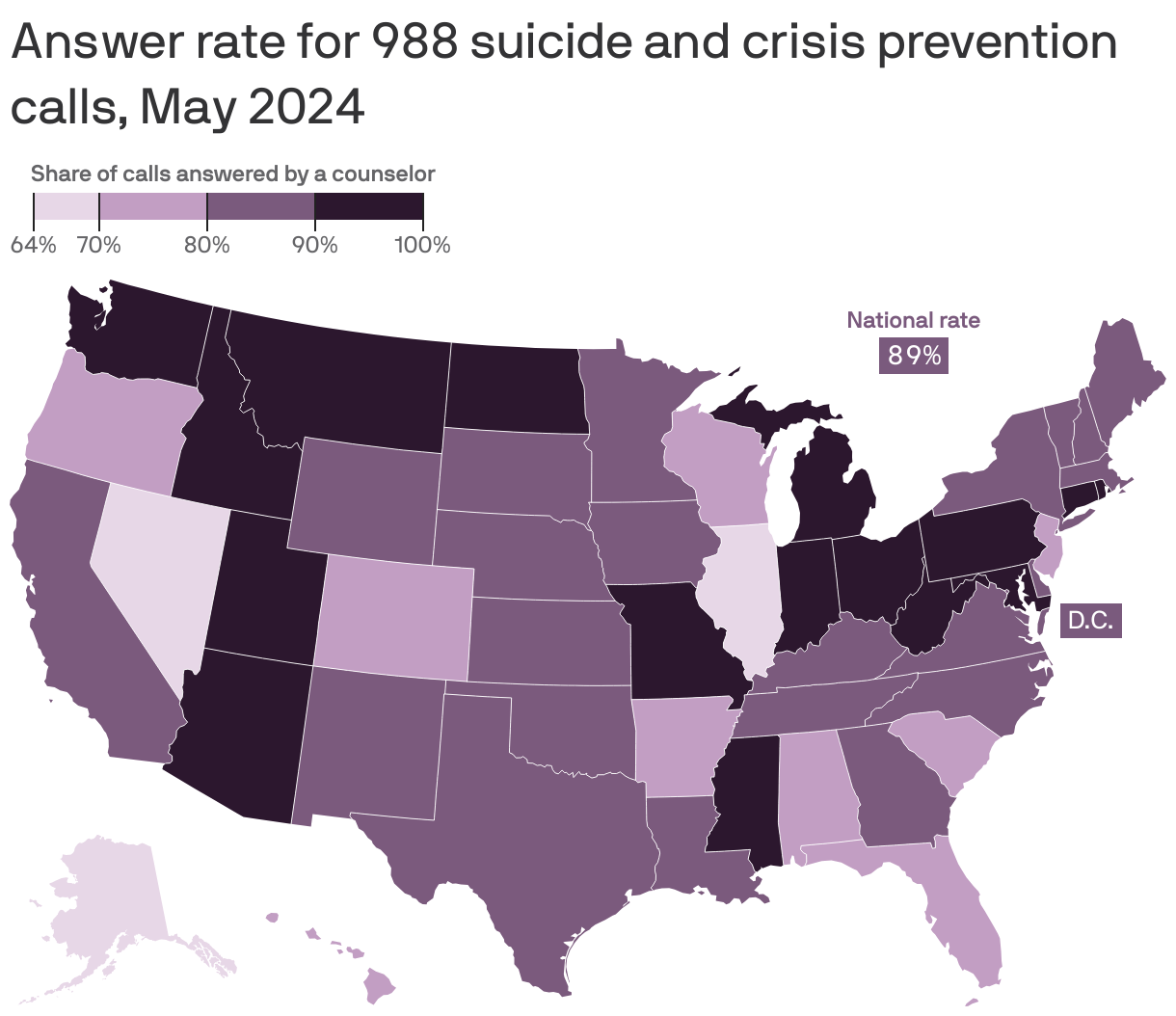
Almost two years after the debut of a revamped national suicide hotline, its promise of a quicker, more seamless crisis response is still a work in progress.
Why it matters: Congress gave states $1 billion to build out the 988 hotline, with the expectation that states would establish their own long-term funding to operate crisis services.
- But those efforts have been slow in Florida — and its in-state response rate lags behind other states that have secured funds for 988.
State of play: Though Florida uses surcharges on cellphone bills to fund 911 services, it hasn't done the same for 988, according to a new report from mental health advocacy group Inseparable shared first with Axios.
- If enacted, a monthly surcharge would generate about $21 million each year for the state's 988 services.
- Florida hasn't applied for or received temporarily boosted federal Medicaid funding for mobile crisis services — and it hasn't required private insurers to cover these services, per the report.
Where it stands: Calls, texts and chats to the hotline are up since it was relaunched as an easy-to-remember three-digit service in July 2022.
- But in Florida, 78% of 988 calls were answered in-state last month. That's below the national average of 89%, according to federal data.
The bottom line: Response rates don't give the full picture of how well a state has implemented 988, but they can indicate whether a state's call center has adequate resources, says Angela Kimball, Inseparable's chief advocacy officer.
- A federally funded national backup system exists so anyone in the country can access a trained counselor when they call 988, HHS told Axios.