Scoop: Mysterious tortoise deaths at St. Pete's Boyd Hill under investigation

Add Axios as your preferred source to
see more of our stories on Google.
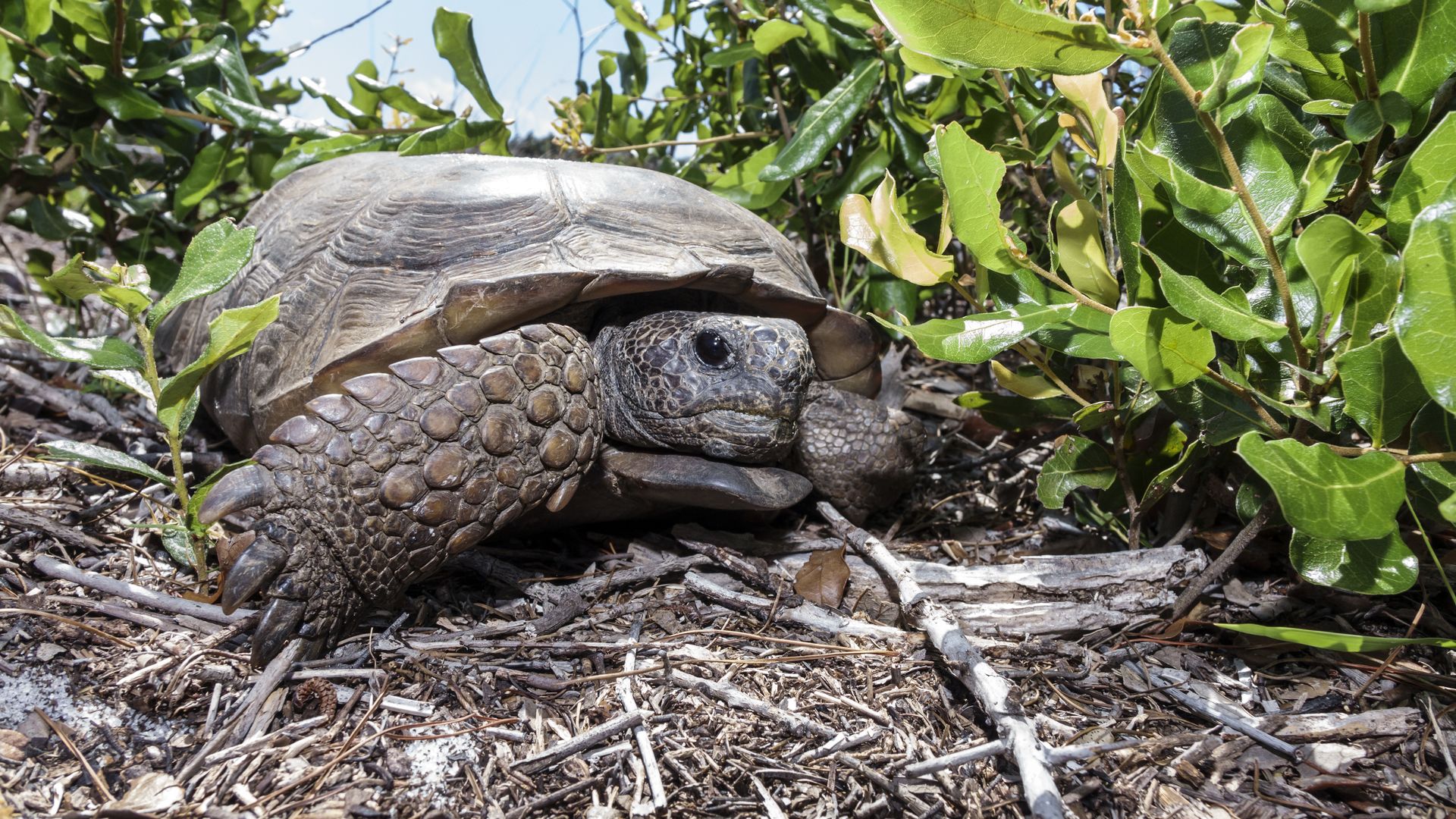
A gopher tortoise at Seabranch Preserve State Park in Stuart. Photo: Jeffrey Greenberg/Universal Images Group via Getty Images
More than a third of Boyd Hill Nature Preserve's gopher tortoise population has died, preserve officials confirmed to Axios — and the cause is a mystery.
Why it matters: Gopher tortoises are in trouble, environmental groups say.
- While the species in Florida is protected by state law, land development, cars and humans pose a continuing threat, per the Center for Biological Diversity.
- The center last year sued the federal government for broader protections for populations in Florida and neighboring states.
The latest: Surveyors conducting a gopher tortoise burrow survey found 57 tortoise carcasses over the last six weeks at the preserve, St. Petersburg's natural and cultural areas manager Taylor Graham Thornton told Axios.
- No foul play is suspected, she said.
- The burrow survey is conducted every two years to keep track of the 245-acre city-owned park's gopher tortoise population. The most recent survey began last month and concluded on Sunday.
The big picture: Gopher tortoises can live up to 80 years and are spread out among parts of Louisiana, Mississippi, Alabama, Georgia, South Carolina and Florida.
- They thrive in pine flatwoods, prairies and scrub ecosystems, where they can burrow into sandy soil.
- Their burrows provide shelter, food and other resources for more than 350 species, some of which face their own dwindling numbers.
Stunning stat: The U.S. Fish and Wildlife Service projected that as much as 70% of the gopher tortoise population will be lost by 2100, according to the Center for Biological Diversity's lawsuit, which is ongoing.
Zoom in: In Boyd Hill, it wasn't unusual to log a few carcasses during past burrow surveys, Thornton told Axios. But as volunteers kept finding bleached, empty shells, it became clear something was wrong.
- Based on the state of the carcasses and where they were found, surveyors suspected that coyotes were eating the turtles.
The intrigue: Wildlife officials are unsure whether they killed and ate the reptiles or fed on the carcasses after they died, possibly from an illness.
- Gopher tortoises have been known to die from upper respiratory tract disease, according to FWC.
- And in 2021, the University of Florida said its researchers had found a new strain of bacteria "strongly associated" with death in gopher tortoises.
What's next: The Florida Fish and Wildlife Conservation Commission and federal officials took blood samples and swabs from living tortoises to determine whether they're sick,Thornton said.
- They'll also set up wildlife cameras to observe coyotes.
- From there, wildlife officials will make recommendations for the best path forward.