Muni rail ridership hits post-pandemic high

Add Axios as your preferred source to
see more of our stories on Google.
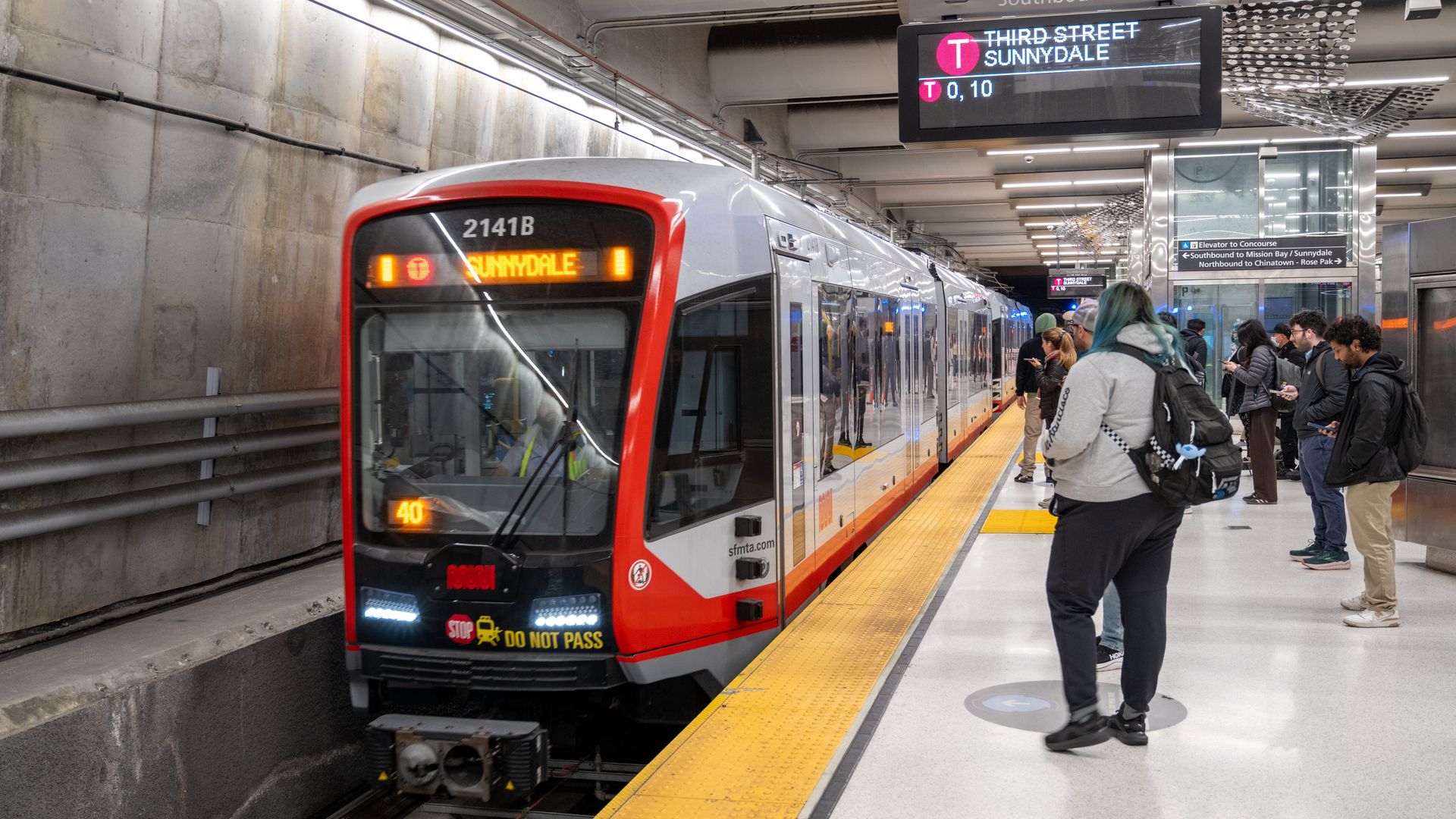
Muni Metro is seeing a boost in passengers again. Photo: Smith Collection/Gado via Getty Images
More San Franciscans are riding Muni rail after years of stalled ridership, new data suggests.
Why it matters: Officials are cautiously optimistic that ridership increases represent a sustained comeback. But SF's transit authority is still on the edge of a fiscal cliff and potential service cuts.
By the numbers: The Muni system logged over 14.9 million passenger trips in March, 85% of pre-pandemic levels (the highest yet) and an 8% increase from March 2025, per the latest SFMTA data.
- That growth was largely driven by the Muni Metro light rail lines, which reached 74% of 2019 ridership levels in March — a post-pandemic record for the system — and averaged 121,000 trips during weekdays, SFMTA spokesperson Michael Roccaforte told Axios.
- Muni Metro accounts for nearly a quarter of Muni's overall ridership and primarily serves downtown,
- Weekday ridership is back to 79% of March 2019 levels, averaging 529,000 daily trips.
Rail ridership fell sharply during the pandemic and has trailed behind buses in the last five years.
- Rail recovery is running in parallel with downtown San Francisco's post-pandemic rebound — driven by an increase in commuters, nightlife and office leasing, according to Sebastian Petty, senior transportation policy advisor at the urban policy think tank SPUR.
Zoom out: Recent high-profile events, like the Chinese New Year parade and Tulip Festival, also boosted ridership across the Muni system, with an average of 362,000 daily trips across March weekends, Roccaforte said.
Yes, but: These gains won't matter if Muni can't secure the funding needed to keep operating, Petty said.
- Even if ridership reaches pre-pandemic levels, the fare revenue generated wouldn't be enough to cover the budget deficit, he said.
Local leaders, including Mayor Daniel Lurie, are pushing two crucial funding measures ahead of the November election to help Muni close a $307 million deficit.
- Without those funds, officials have warned that Muni will have to cut over a dozen bus routes and eliminate nighttime service, leading to longer wait times.
- "Right now, you have a lot of metrics that are pointing in the right direction, but that's contingent on getting funding to sustain it," Petty said.