San Francisco leaders launch tax measure to rescue Muni

Add Axios as your preferred source to
see more of our stories on Google.
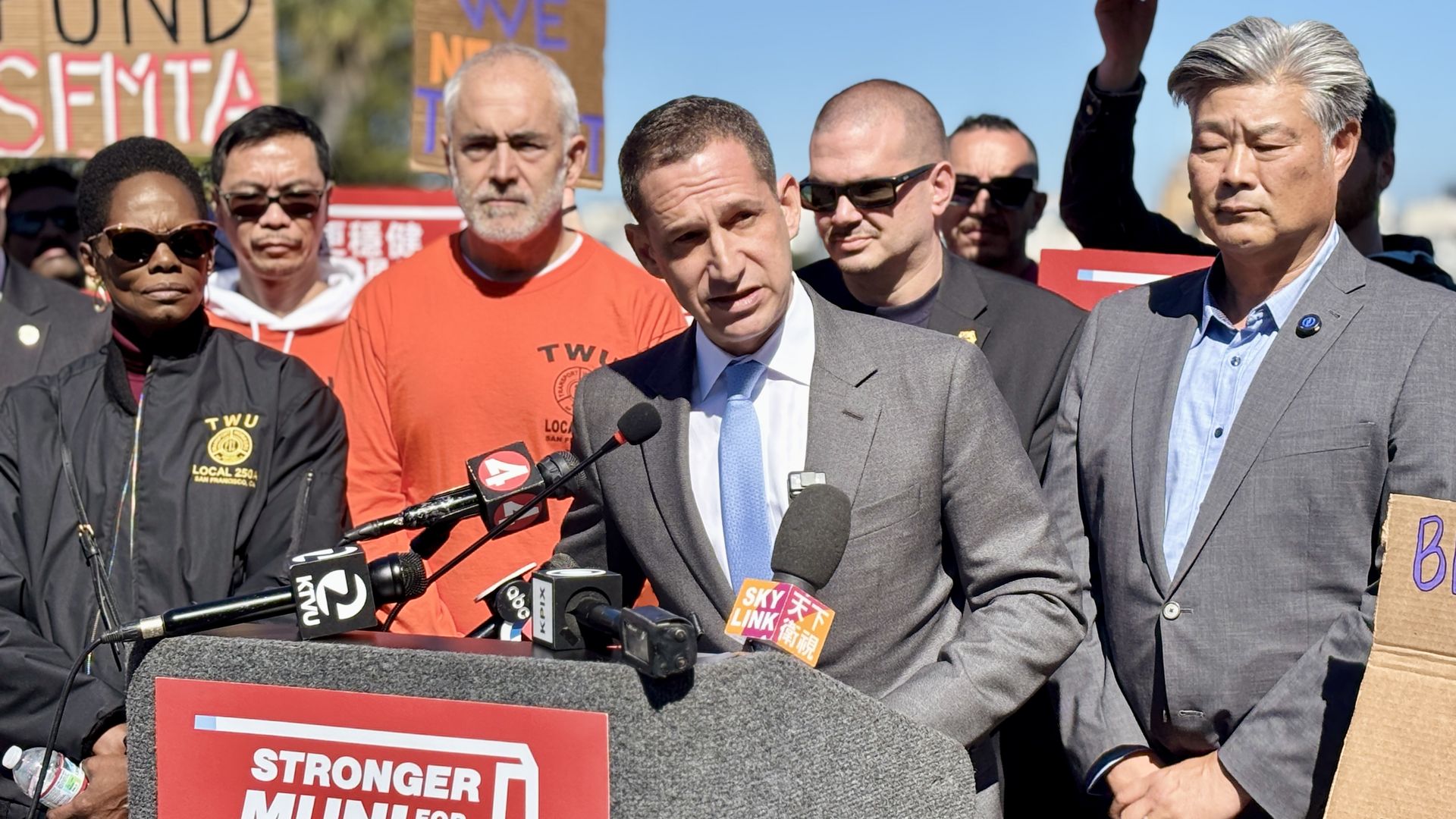
Mayor Daniel Lurie speaks alongside bus operators and SF Chamber of Commerce CEO Rodeny Fong. Photo: Nadia Lopez/Axios
Supporters of a ballot measure aimed at shoring up San Francisco's public transit system kicked off a signature-gathering campaign Tuesday, casting it as essential to staving off severe service reductions.
Why it matters: The measure is expected to generate about $160 million a year for Muni — revenue city officials say would help close a $307 million deficit and prevent cuts to more than a dozen bus routes, elimination of nighttime service and longer wait times systemwide.
- Without intervention, the San Francisco Municipal Transportation Agency has said its budget shortfall could grow to $434 million within five years.
How it works: If enough signatures are gathered to get it on the ballot this November, the measure would levy a parcel tax on residential and commercial properties.
- Most single-family homeowners would pay $129 annually, while large commercial properties and corporate landowners would shoulder the highest rates at $400,000 a year.
- Landlords of rent-controlled apartments could pass along a portion of the cost, but charges to tenants would be capped at $65 a year — a limit intended to blunt the burden on renters.
Driving the news: City leaders, Mayor Daniel Lurie and public transit advocates gathered Tuesday afternoon at the J-Church stop on 20th Street overlooking Dolores Park to launch the signature drive — dubbed "Stronger Muni for All"— casting it as a lifeline for Muni's future and the city's continued economic recovery.
What they're saying: "We need to not only save Muni, we need to strengthen it and increase service," Lurie said, noting that the stakes are high for thousands of riders — including seniors, about 14,000 public school students who use it daily and roughly 40% of office workers who commute downtown.
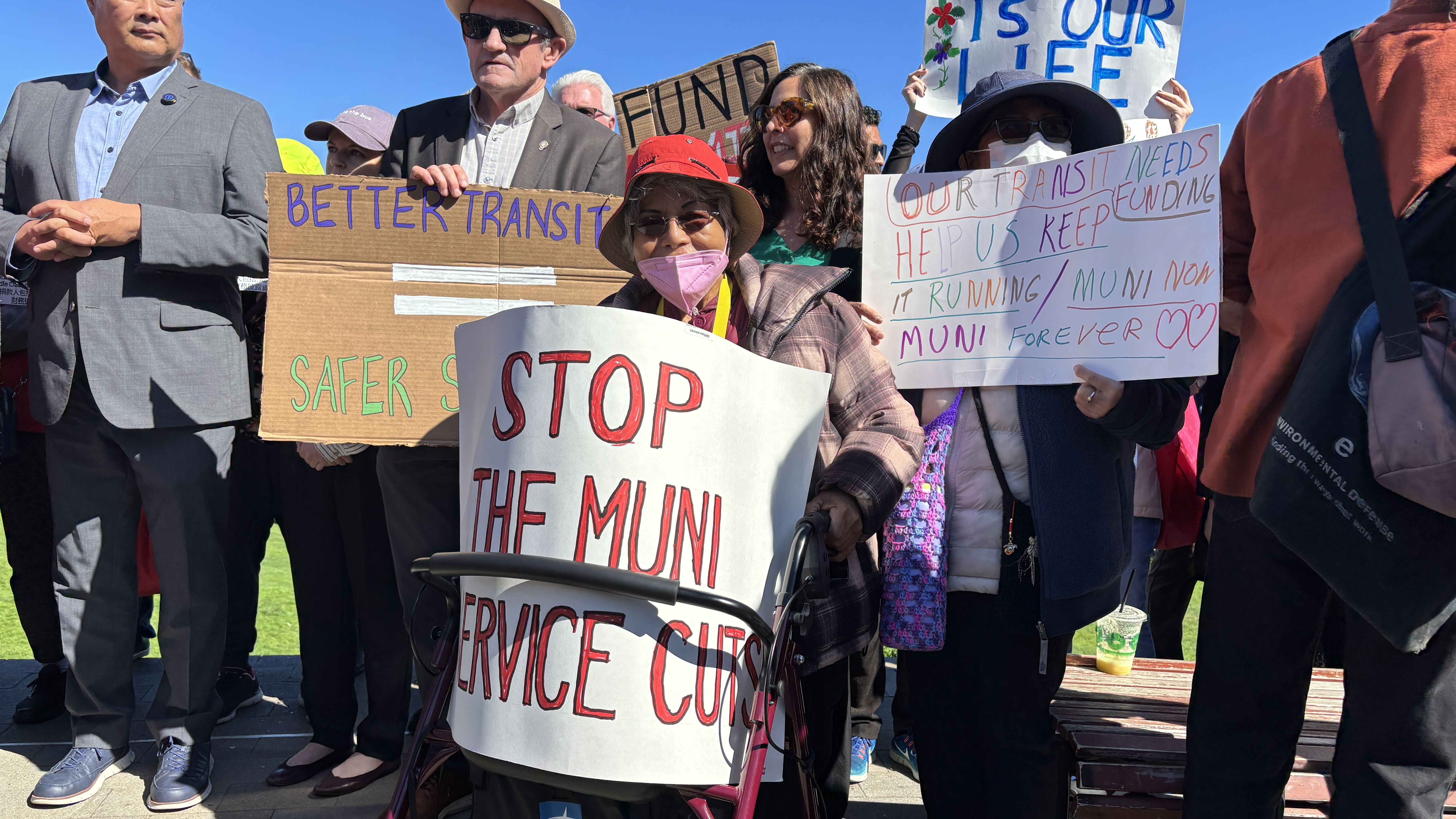
The big picture: Muni isn't alone. Various Bay Area transit agencies are staring down similar fiscal cliffs as federal relief runs out and ridership lags pre-pandemic levels.
- BART has warned of sweeping service cuts without new revenue and regional leaders are pushing for a separate November sales tax measure to raise billions for numerous agencies annually.
- In the meantime, Gov. Gavin Newsom recently signed off on a short-term $590 million emergency loan to keep major agencies afloat — a stopgap meant to buy time while voters decide on more permanent funding solutions.
The intrigue: Political strategists say the urgency is intentional. Campaigns often lean on worst-case scenarios because voters respond more strongly to potential losses — like fewer routes and more traffic — than budget debates.
- But experts told the SF Standard that fear-forward messaging can risk sidelining deeper conversations about spending priorities and longer-term reforms.
- New taxes are also a tough sell in a city where residents say they already face significant costs. Some voters may question whether additional internal cuts are possible before being asked to support another tax.
What's next: At least 10,600 verified signatures must be obtained by July 6 for the measure to qualify.