How SF is navigating a pivotal year in transportation

Add Axios as your preferred source to
see more of our stories on Google.
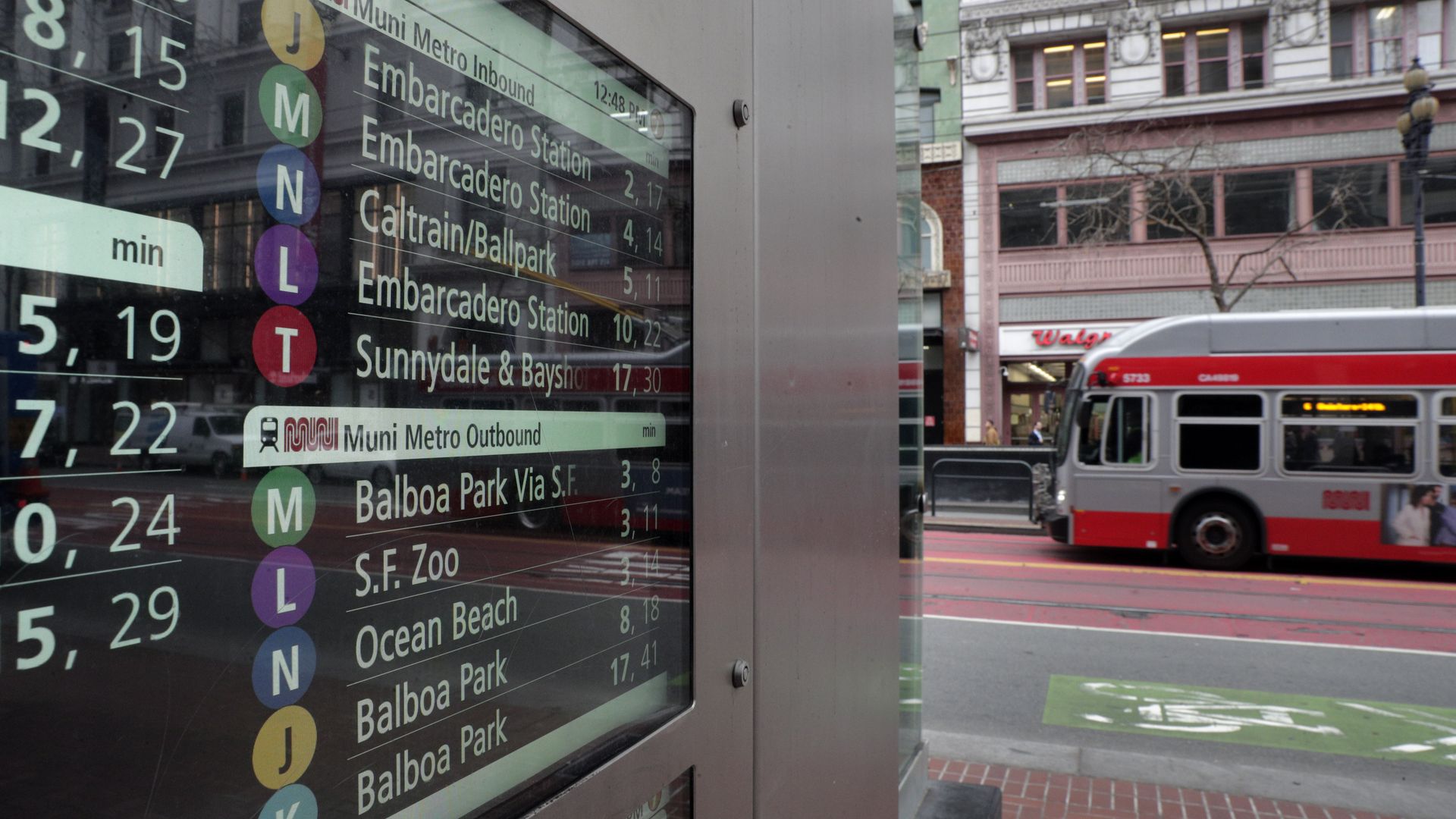
Photo: Carlos Avila Gonzalez/The San Francisco Chronicle via Getty Images
San Francisco's transportation landscape is entering a consequential year as regional transit systems teeter on the brink of fiscal collapse.
Why it matters: The crisis comes as the Bay Area prepares for an international spotlight — and an influx of thousands of people — as the host of the Super Bowl and multiple World Cup events this year.
The big picture: San Francisco Municipal Transportation Agency (SFMTA) faces $300 million annual deficits beginning this July, which could mean major service cuts in a year where local transit agencies will play a key role in helping the Bay Area maximize economic growth.
State of play: The Bay Area will face its first big test when Super Bowl fans descend in a few weeks. Bay Area Host Committee president and CEO Zaileen Janmohamed told Axios the group is working to ensure a "seamless" experience with minimal standing time for fans traveling to and from Santa Clara.
- "We're here to help people get around safely, keep the city running and support events and businesses when the city is on the world stage," said SFMTA spokesperson Michael Roccaforte.
Here are three major transportation developments we're following this year.
Transit crisis
Bay Area officials are scrambling to save public transit operators, including BART and Muni, from making major service cuts amid ballooning budget deficits due to ridership declines and increased operating costs.
- Threat level: If the shortfall isn't addressed, BART would likely have to pare down service from 4,500 trains per week to just 500 — with no weekend service — and shut down two of its five lines, ABC7 News reports.
- A proposed ballot initiative would increase funding for regional transit systems by adding a 0.5% sales tax in Alameda, Contra Costa, San Mateo and Santa Clara counties. San Franciscans would see a 1% sales tax increase to account for additional SFMTA deficits.
- Meanwhile, Mayor Daniel Lurie is advocating a parcel tax that would charge homeowners at least $129 a year to help save Muni.
Self-driving cars
The Dec. 20 power outage that led Waymo to temporarily suspend service raised new concerns about robotaxi operators' ability to navigate emergencies. That's on top of other incidents involving autonomous vehicles that have renewed calls for stricter regulations and transparency.
- What's next: While Waymo still dominates the autonomous rideshare market in San Francisco, other companies, such as Zoox and Tesla, are gaining ground. As their footprint expands, regulators are facing greater scrutiny over their ability to hold operators accountable.
Street safety
City Hall committed to a number of initiatives last year amid upticks in traffic-related injuries and fatalities.
- That includes developing a plan to enforce safe electric scooter and bike operations, bolstering police presence on high-injury roadways, adding curb extensions and islands to dangerous intersections and creating a faster system for installing speed humps.
- What we're watching: Pedestrian safety advocates are calling on the city to expand its network of automated speed cameras after SFMTA data found that speeding at 15 camera locations fell 72% in September from the prior year.