How winter is warming in California


Add Axios as your preferred source to
see more of our stories on Google.
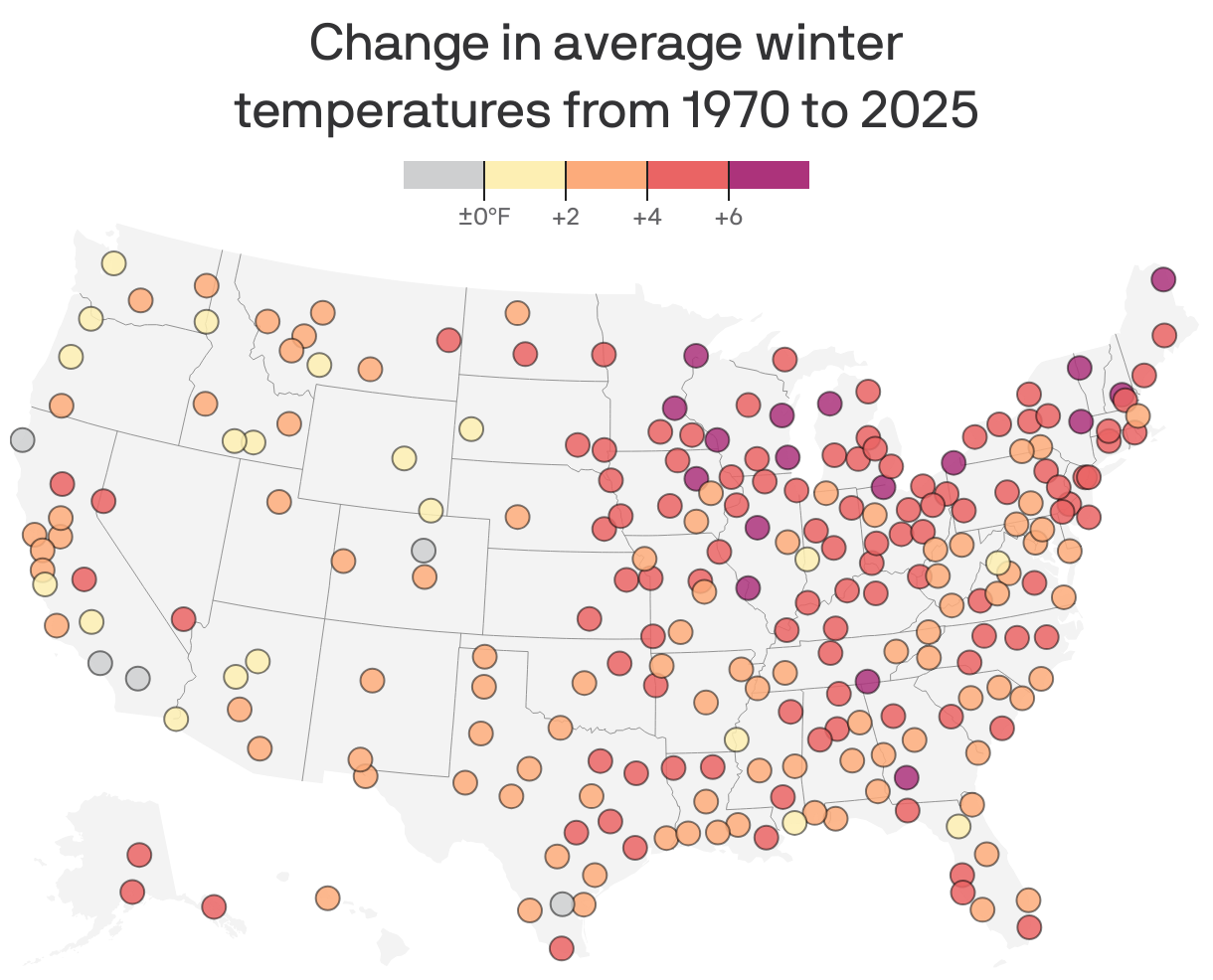
Though it may not feel like it — considering recent bouts of cold snaps — winter is getting warmer in San Francisco and across the country, due in part to climate change, an updated analysis finds.
Why it matters: Warmer winters can be a bummer for skiers and snowboarders, affect water supplies tied to annual snowmelt, and more.
Driving the news: From 1970 to 2025, average winter temperatures rose in 98% of the 244 U.S. cities analyzed in a new report from Climate Central, a climate research group.
- Among the cities with an increase, winter temperatures rose nearly 4°F on average.
Zoom in: San Francisco saw an increase of 3.6°F, low compared to many of the midwestern and East Coast cities included in the analysis.
The big picture: California's winters are warming as climate change drives higher temperatures and intensifying wet and dry swings. Such weather patterns can lead to unusually low early-season snow levels in the Sierra Nevada or flooding during periods of prolonged rain.
- These shifts are reshaping everything from the state's water supply to wildfire risk, since less winter snow means drier landscapes heading into spring.
- Statewide, warming has already taken a bite out of winter snowpack, with further depletions predicted as warming continues.
- Meanwhile, the destructive wildfires in L.A. last winter — fueled by hot and dry conditions — underscore how wildfire risk has become a year-round threat.
Zoom out: Many of the cities with the most warming over the covered period are in places with traditionally cold winters, including Burlington, Vermont (+8.1°F); Milwaukee (+7.3°F) and Green Bay, Wisconsin (+7°F).
How it works: Climate Central's analysis is based on NOAA data covering December, January and February of each year.
What's next: NOAA's latest winter outlook shows an elevated chance of below-normal temperatures, caused by a predicted La Niña, for parts of the Pacific Northwest, northern Rockies and Midwest.