SF summers are becoming hotter, longer and more dangerous


Add Axios as your preferred source to
see more of our stories on Google.
Hotter summers are one of the most tangible ways we're experiencing climate change. San Francisco isn't exempt.
Why it matters: Higher temperatures pose health risks for vulnerable groups like children, pregnant women, the elderly and homeless people and ramp up the likelihood of extreme heat effects and wildfires.
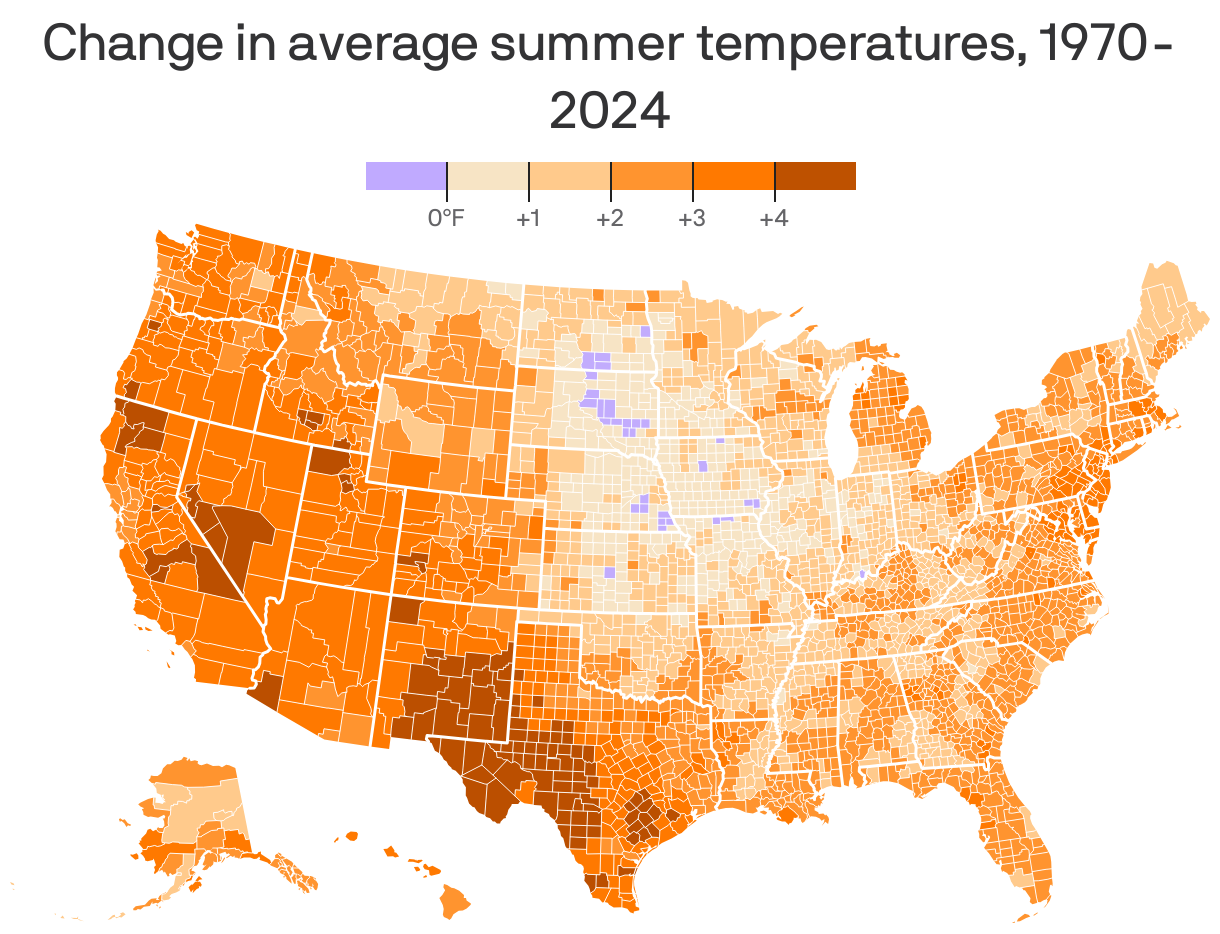
Driving the news: Average summer temperatures between 1970 and 2024 rose in 97% of the 242 cities analyzed in a new report from Climate Central, a climate research group.
- Among those cities, summers are now 2.6°F hotter on average.
Zoom in: San Francisco itself is has seen average summer temperatures increase by 2.2°F since 1970. That figure reaches nearly 3°F for some other Bay Area counties.
- Meanwhile, Reno, Nevada (+11.3°F), Boise, Idaho (+6.3°F), and El Paso, Texas (+6.2°F) saw the greatest rise in average summer temperatures between 1970 and 2024.
Stunning stat: Over 60% of the cities analyzed now have at least two more weeks' worth of hotter-than-normal summer days compared to 1970.
- That includes San Francisco (28 more days).
The fine print: The analysis uses NOAA data and defines "summer" as June through August.
The big picture: San Francisco, like many U.S. counties, has recorded upticks in average temperatures across every single season, including winter.
- The bump in summer temperatures, however, is happening in parallel with an increase in heat wave duration and frequency.
Between the lines: Many cities suffer from "heat islands" — areas of especially high temperatures caused by roads, parking lots, buildings and other heat-trapping features.
- Heat islands tend to be more common in low-income neighborhoods and ones with predominantly Black and Latino residents, researchers have found.
- San Francisco ranked second behind New York City for metros with the most drastic urban heat island effects in a a 2024 Climate Central analysis, with summer temperatures feeling 9°F higher on average.
- That means SF residents could face temperatures of 104°F when surrounding rural areas are seeing 95° temps.
What to watch: Some cities have been hiring "chief heat officers" and taking steps to keep streets cooler, like planting more trees and using reflective road coatings.
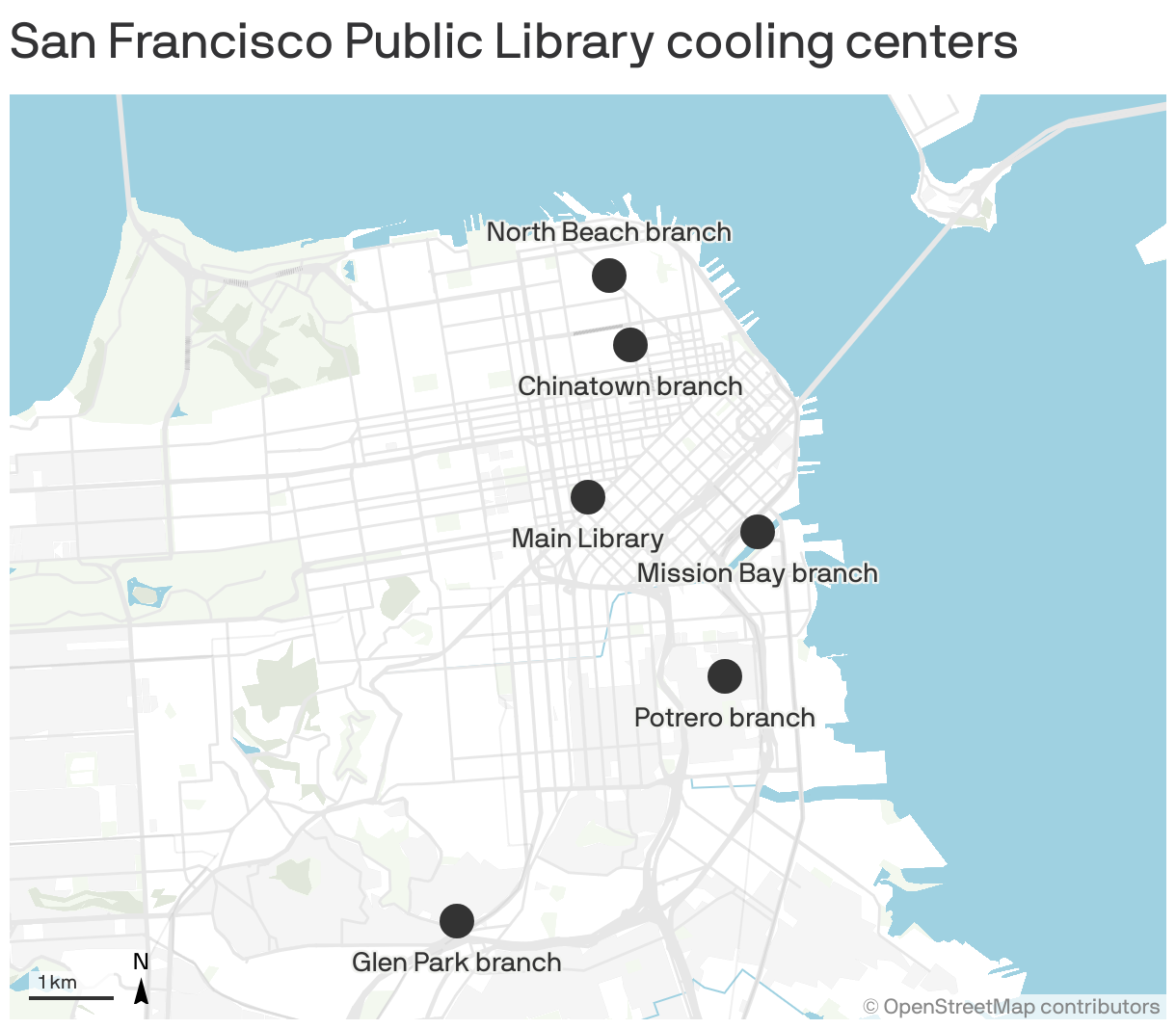
- The city's public libraries also operate cooling centers in the event of extreme heat emergencies.