Spotlight on IVF

Add Axios as your preferred source to
see more of our stories on Google.
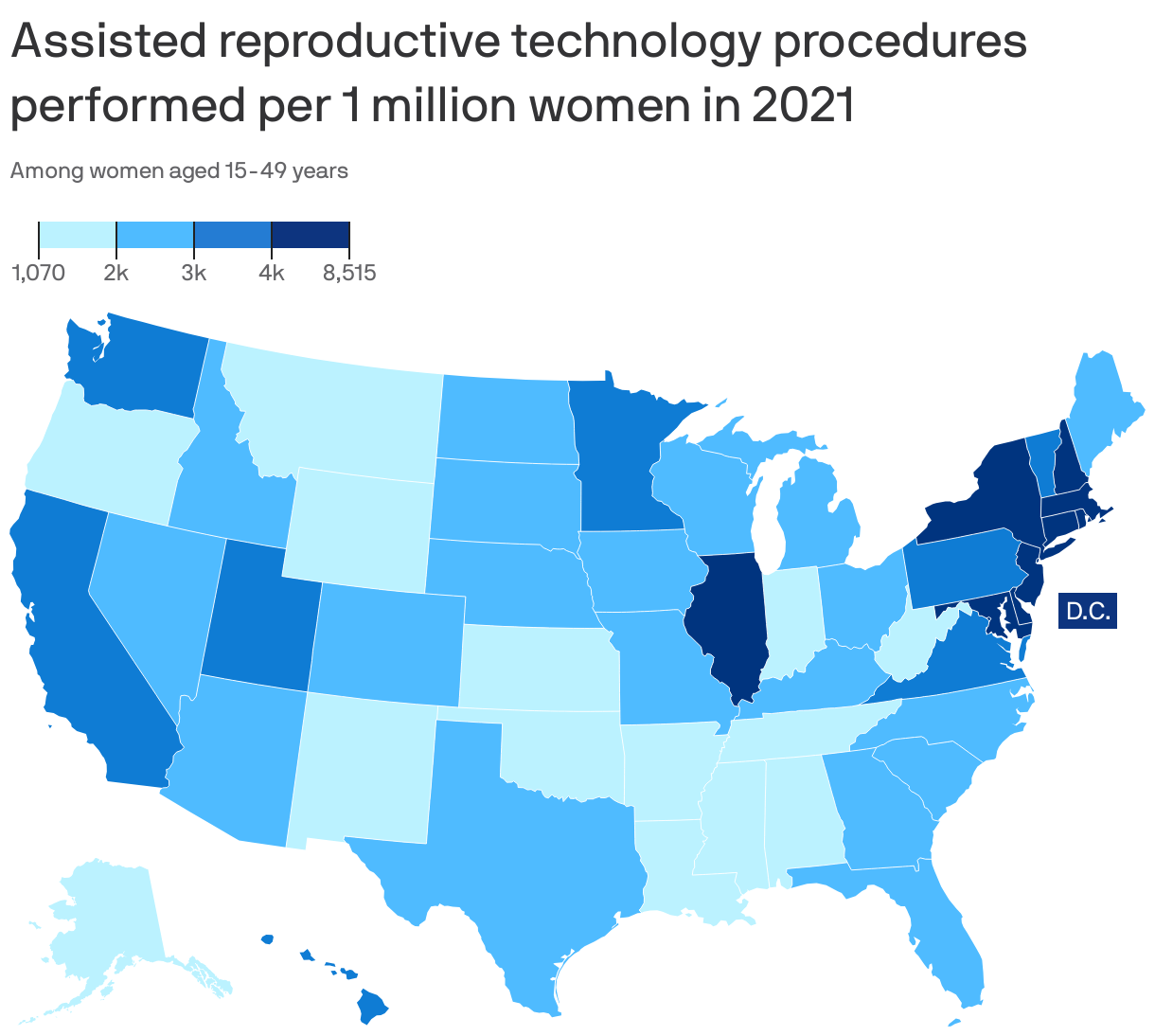
More than 11,000 babies were born in California in 2021 using assisted reproductive technologies like in vitro fertilization, according to the most recent CDC data.
- Providers performed about 24,500 embryo transfers to get that number of infants, which accounted for 2.7% of all births statewide that year.
The big picture: Alabama recently passed legislation to protect patients and doctors involved in IVF after the state's Supreme Court ruled weeks earlier that frozen embryos created through IVF are children under state law, Axios' Kate Murphy and Carly Mallenbaum report.
- Since IVF typically takes more than one embryo to achieve pregnancy safely, that ruling meant fertility clinics could be held legally liable for disposing of unused embryos.
Why it matters: If laws prohibit clinics from discarding embryos, IVF could become even more expensive, time consuming, and physically and emotionally draining.
State of play: Other states are considering fetal personhood bills, while California lawmakers are trying to protect and expand access to IVF.
- In 2022, Californians voted to protect reproductive health care and abortion rights through a ballot measure that includes the right to choose IVF.
- There's also been a push to update the definition of infertility to be inclusive of LGBTQ family planning so they have access to broader insurance coverage.
- San Francisco itself has seen a sustained increase in people seeking fertility treatments since the pandemic.
Between the lines: IVF patients usually need multiple embryos to ensure just one healthy baby because the process often involves embryo attrition, Lucky Sekhon, a reproductive endocrinologist and infertility specialist at RMA of New York, tells Axios.
What to watch: A Berkeley startup is trying to develop experimental technology that could turn stem cells into human eggs.
- The procedure, known as in vitro gametogenesis, could help people have genetically related children regardless of age or egg viability, which can decline due to health-related issues like cancer treatment.