What it's like to see the world's largest bat colony

Add Axios as your preferred source to
see more of our stories on Google.
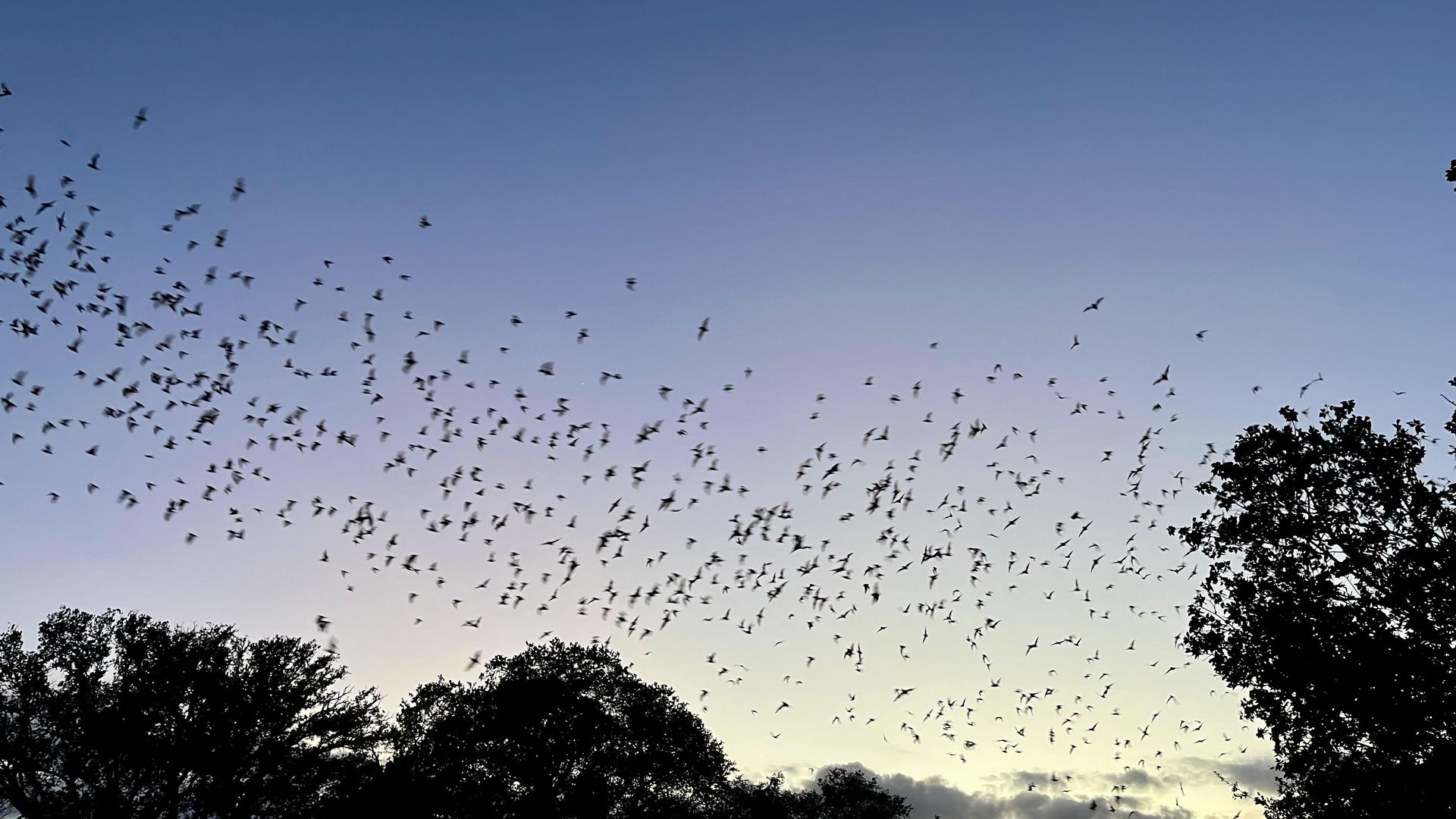
The bats emerging from Bracken Cave this month. Photo: Megan Stringer/Axios
Watching the bats emerge at Bracken Cave Preserve is a special summer activity that draws travelers from around the globe to a field just 30 miles outside San Antonio.
Why it matters: The cave is home to the largest bat colony in the world.
By the numbers: About 20 million Mexican free-tailed bats stay at Bracken Cave during the summer, generally May through September. They've been roosting there for about 10,000 years.
The big picture: Mexican free-tailed bats, which are relatively small, are key to our health. They are effective pollinators and eat several agricultural pests.
State of play: The bats are migratory, and those that come to Bracken Cave are pregnant females.
- They give birth in June and the babies often begin flying in July, learning the ropes through the end of the summer so they can survive the trip back to Mexico and South America for the winter.
Stunning stat: The mortality rate for the babies is anywhere from 30 to 50%, a docent told my group during a recent viewing. Up to 30 million bats could leave the cave in the fall.
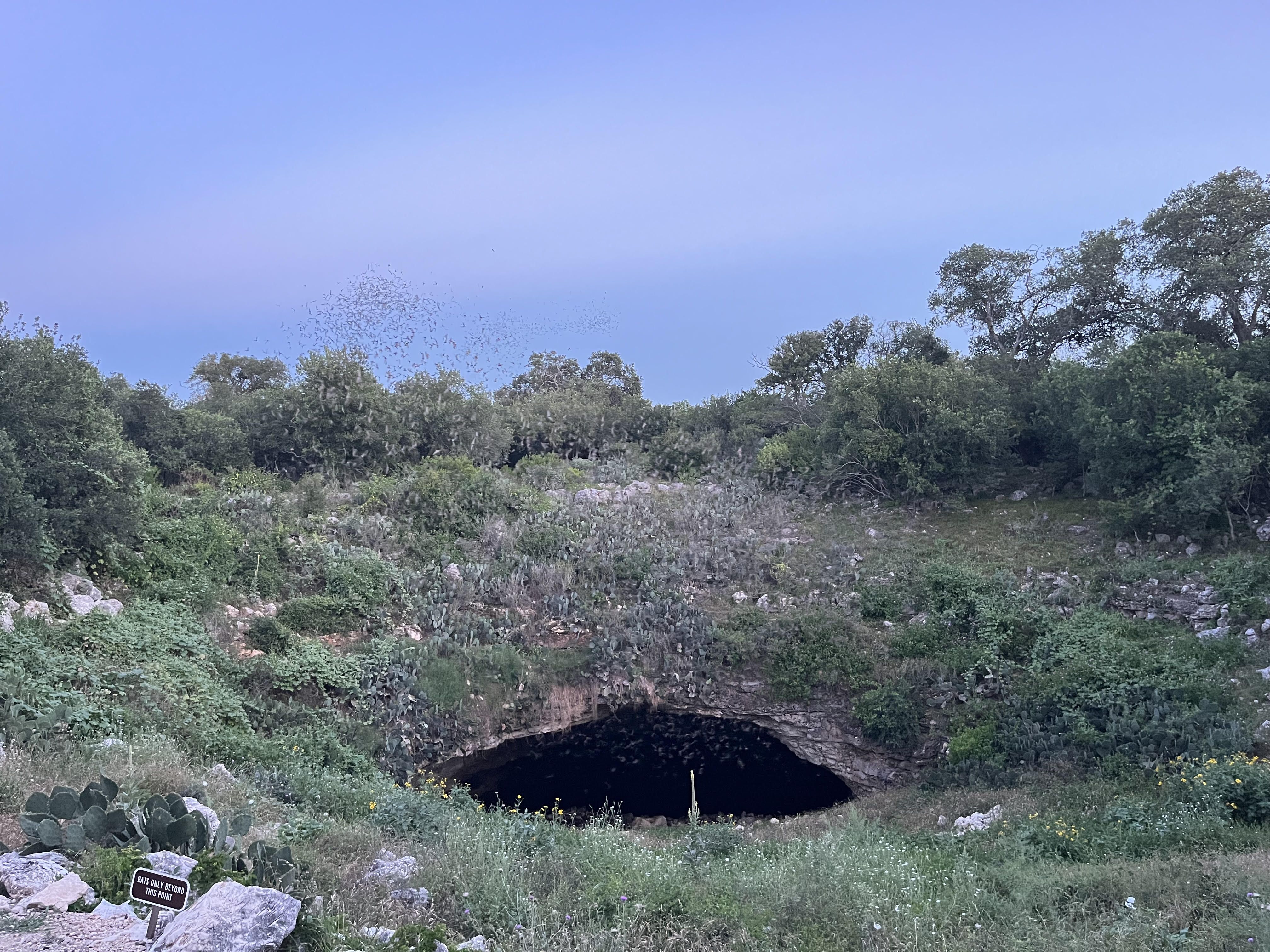
My experience: I left awe-struck and speechless after seeing the bats emerge. I've attended other bat viewings at Old Tunnel State Park in the Hill Country and at Carlsbad Caverns National Park in New Mexico, but this is different.
- The sheer number of bats means they continue to emerge for hours in a tornado-like shape that blankets parts of the sky. They've even been known to show up on radar.
- There are multiple ways to take in the emergence. I was at first glued to my seat in front of the cave's mouth, but heading over to the back side of the cave allowed me to stand and watch the bats fly right over my head. I could see the transparency of their wings.
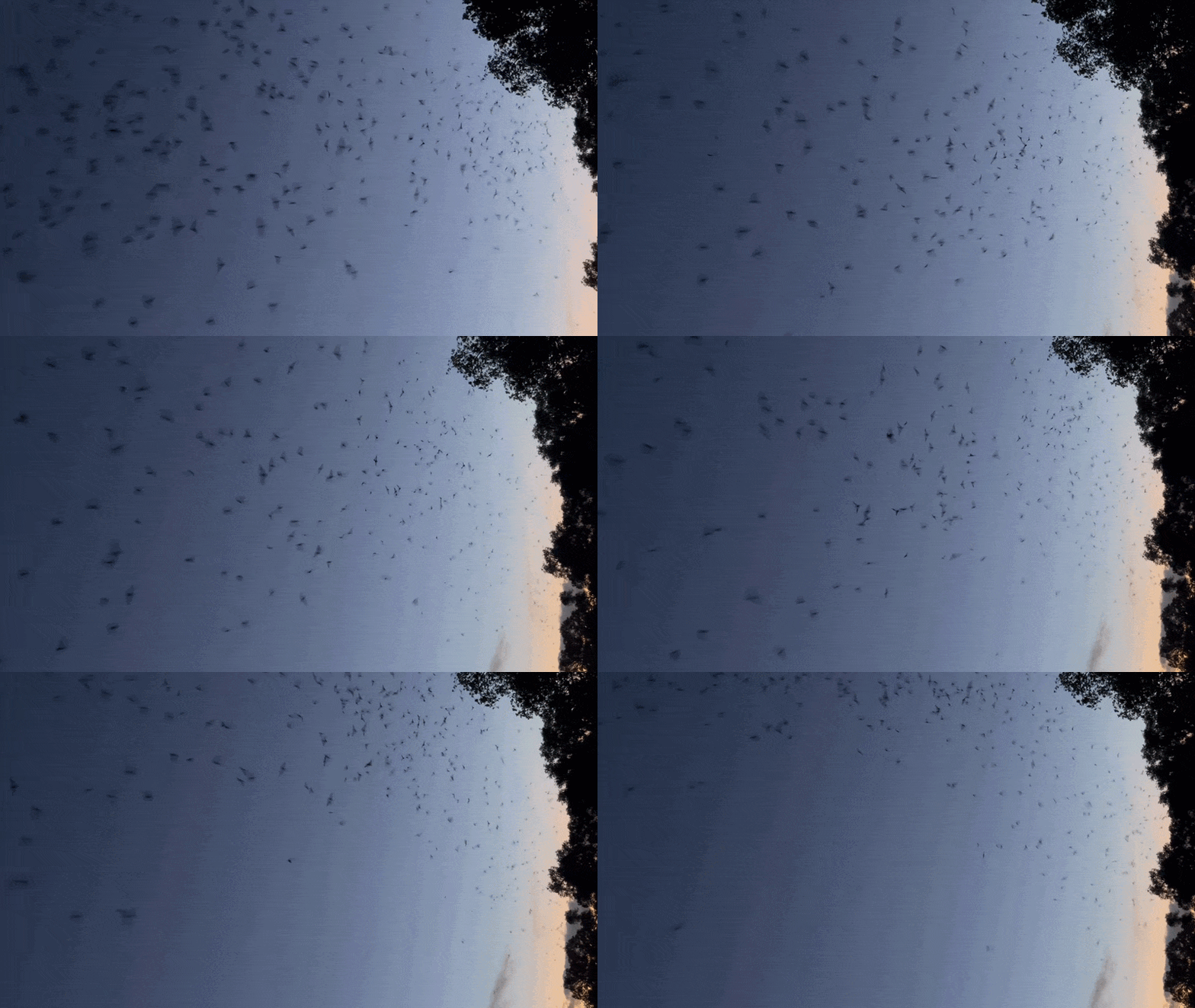
- It's a rare kind of proximity to wildlife. When you cup your ears, their flying sounds like raindrops on pavement.
How it works: The bat viewings are ticketed and in high demand. Registration generally opens in mid-April, and tickets for the first half of the season sell out quickly.
- Times vary depending on sunrise and sunset, but there are both morning and evening bat flights.
- Tickets cost about $33.
Zoom in: Your listed arrival time might be well before sunset, but there's plenty to do on the preserve. Hike the short trails and check out an old guano mine. Take some binoculars into the bird blind.
Pro tips: I finally got in by setting a calendar reminder that ticketing was open, so I remembered to purchase before the summer got busy.
- You'll definitely want to bring bug spray.
- The adult-only nights do allow for a quieter experience.
What's next: Tickets are still available for August and September.