Five questions with bat conservationist Merlin Tuttle

Add Axios as your preferred source to
see more of our stories on Google.
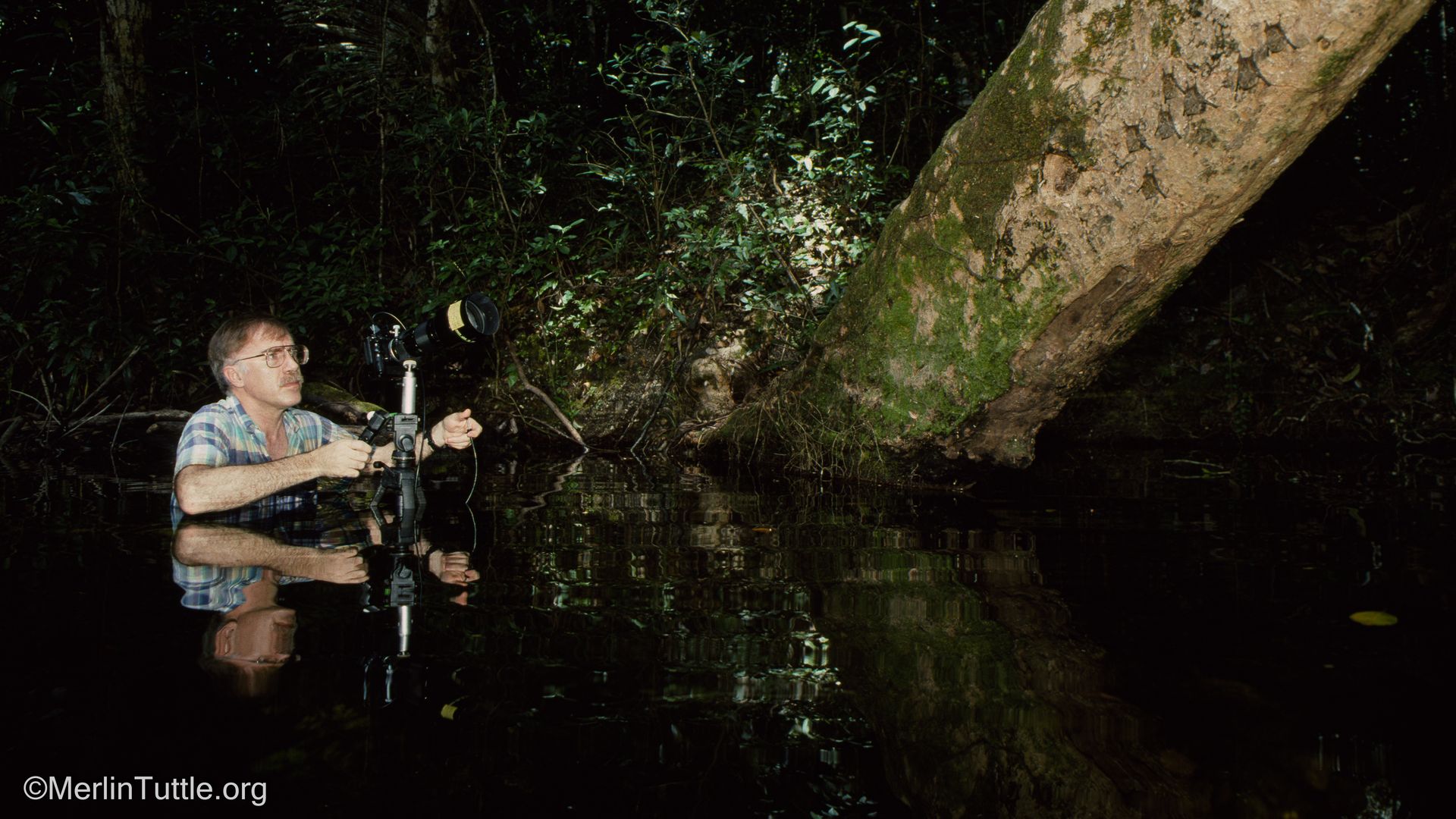
Conservationist Merlin Tuttle will speak at an Earth Day event this weekend. Photo: Courtesy of MerlinTuttle.org
Austin-based biologist and conservationist Merlin Tuttle helped Austin embrace its Mexican free-tailed bat colony.
Catch up quick: Austin's bats weren't always beloved. In the 1980s, residents feared that the creatures settling under the new Congress Avenue Bridge would bring disease.
- Tuttle worked to shift public perception of Austin's bats — the largest urban bat colony in the world.
- Now, Texas Parks and Wildlife estimates that the bats bring 140,000 visitors and as much as $10 million to Austin every year.
What's happening: We caught up with Tuttle ahead of his Earth Day conversation at Huston-Tillotson University to talk about misconceptions around bats, why they matter and how to help their population in Austin and beyond.
This interview has been condensed and lightly edited for clarity.
1. When is the best time to watch Austin's bats?
"Traditionally, the very best peak of the season has been between approximately Aug. 15–24. The reason being that that's when we usually have the driest, hottest weather with lots of young pups just learning to fly.
- But ... if it happens to rain on Aug. 19, you may not see many bats. ... People call me and want to know, 'What's happened to bats?' And I say, 'Well, you didn't see them this year because they're very happy they've had plenty of rain and plenty of food and didn't need to come out early.'"
2. What are we still getting wrong about bats, even in Austin?
"Bats are incredibly valuable to the state of Texas. According to Texas Parks and Wildlife Department, they're saving Texas farmers a conservatively estimated $1.4 billion a year."
3. What about when it comes to bats and rabies?
"Bats in all the U.S. and Canada combined kill only one or two people with rabies annually, and those people are ones that pick up a sick bat and get bitten in self-defense and then they don't tell their doctor.
- By comparison, an average of [about] 45 people die annually in the U.S. alone from dog attacks..."

4. What's one simple way Texans can help bats?
"Putting up bat houses are certainly a good way to help such bats, but it also accomplishes something just as important. It gives you a conversation piece to explain to neighbors ... you can help them get over their pointless fear of bats and be more tolerant."
5. What's one way Texans benefit from bats?
"They are primary pollinators and seed dispersers of everything from deserts to rainforests.
- We're talking a lot nowadays about the need to plant trees and reforest cleared land as a hedge against climate change. Bats are by far the best investment you can possibly make to replant forests."
If you go: Tuttle's Earth Day event is free but tickets can be purchased at a pay-what-you-can rate. All proceeds benefit the university and Tuttle's bat conservation.