Why the San Antonio Museum of Art returned artifacts to Italy

Add Axios as your preferred source to
see more of our stories on Google.
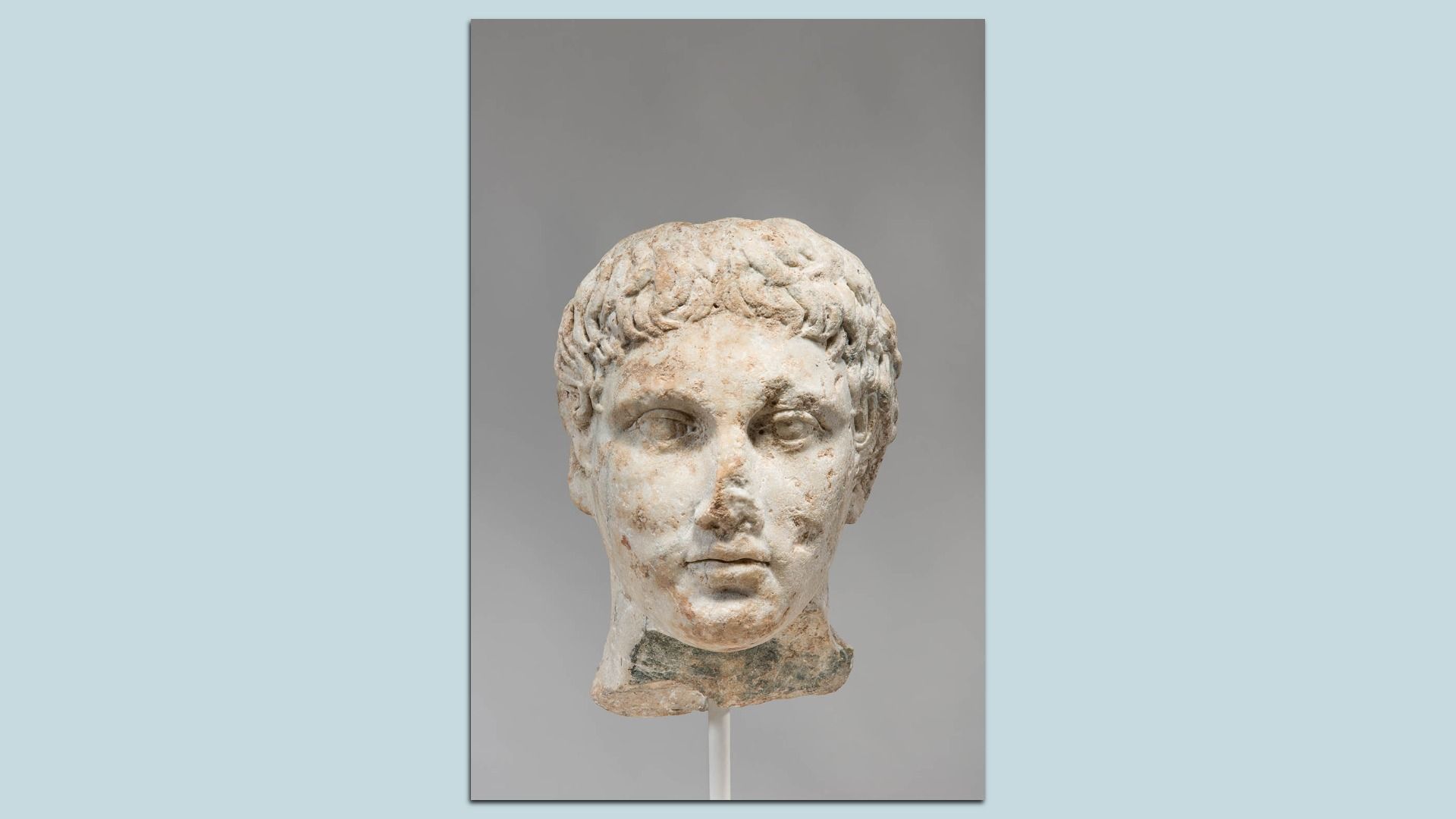
The marble "Head of Hermes." Photo: Courtesy of the San Antonio Museum of Art
The San Antonio Museum of Art (SAMA) has handed over nine artifacts from its collection to the Italian government in a first-of-its-kind move for the museum, but some of the art will remain on display locally for now.
Why it matters: The global art world has faced a reckoning in recent years with how museums came to possess some items, from Jewish-owned artwork stolen during the Holocaust to artifacts acquired during colonial conquests.
Zoom in: The items SAMA is returning to Italy include a marble head of the Greek god Hermes, ceramic vessels made in Athens and southern Italy and a terracotta statue of a woman.
- The marble head was found underneath the Basilica of Santi Giovanni e Paolo in Rome between 1887 and 1891 and recorded publicly in 1894.
- In 1971, an antiquities dealer in Rome sold it — with no documentation — to Gilbert M. Denman Jr. of San Antonio.
- Denman donated it to SAMA in 1986.
- In 2016, a German scholar told museum officials about the marble head's heritage.
Thus began a conversation between the Italian government and SAMA. In 2023, the two sides made a cultural agreement that led to the return of the nine items, SAMA announced last week.
- The other returned works passed through dealers and auction houses in London and New York City in the 1980s and '90s before SAMA acquired them.
How it works: Seven of the nine items that are now under Italian ownership will remain on view at SAMA until 2030, when those items will be shipped to Italy. (One of the other items is already in Italy, while the other remains with SAMA but is not on view.)
- At that point, they could be replaced by other art from Italy of equal cultural value, museum officials said.
What they're saying: That arrangement "continues to allow our visitors a chance to learn about Italy's ancient history and cultural heritage," Jessica Powers, chief curator at SAMA, tells Axios.
- "This agreement strengthens cultural relations between Italy and the United States and stands as an international best practice in the field of combating illicit trafficking of cultural property," Luigi La Rocca, head of Italy's Department for the Protection of Cultural Heritage, said in a statement.
Context: SAMA has previously returned art to other countries, but it's the first time the museum has voluntarily given up items in its collection.
- A woman bought an ancient Roman bust at an Austin Goodwill in 2022 that ended up on display at SAMA. The museum returned that to Germany, but it was never part of SAMA's collection, Powers says.
- In 2021, the Manhattan district attorney's office confiscated antiquities from SAMA and other major museums that it said were connected to an art dealer accused of smuggling.
State of play: SAMA has since taken a proactive approach to learn more about the items in its collection. A full-time position added in 2023 is focused on that research.
The bottom line: "We strive to steward our collection as ethically as possible," Powers says.
Editor's note: This story has been corrected to reflect that a Roman bust bought at a Goodwill store was returned to Germany, not Italy.