Climate disasters could drive insurance hikes in San Antonio


Add Axios as your preferred source to
see more of our stories on Google.
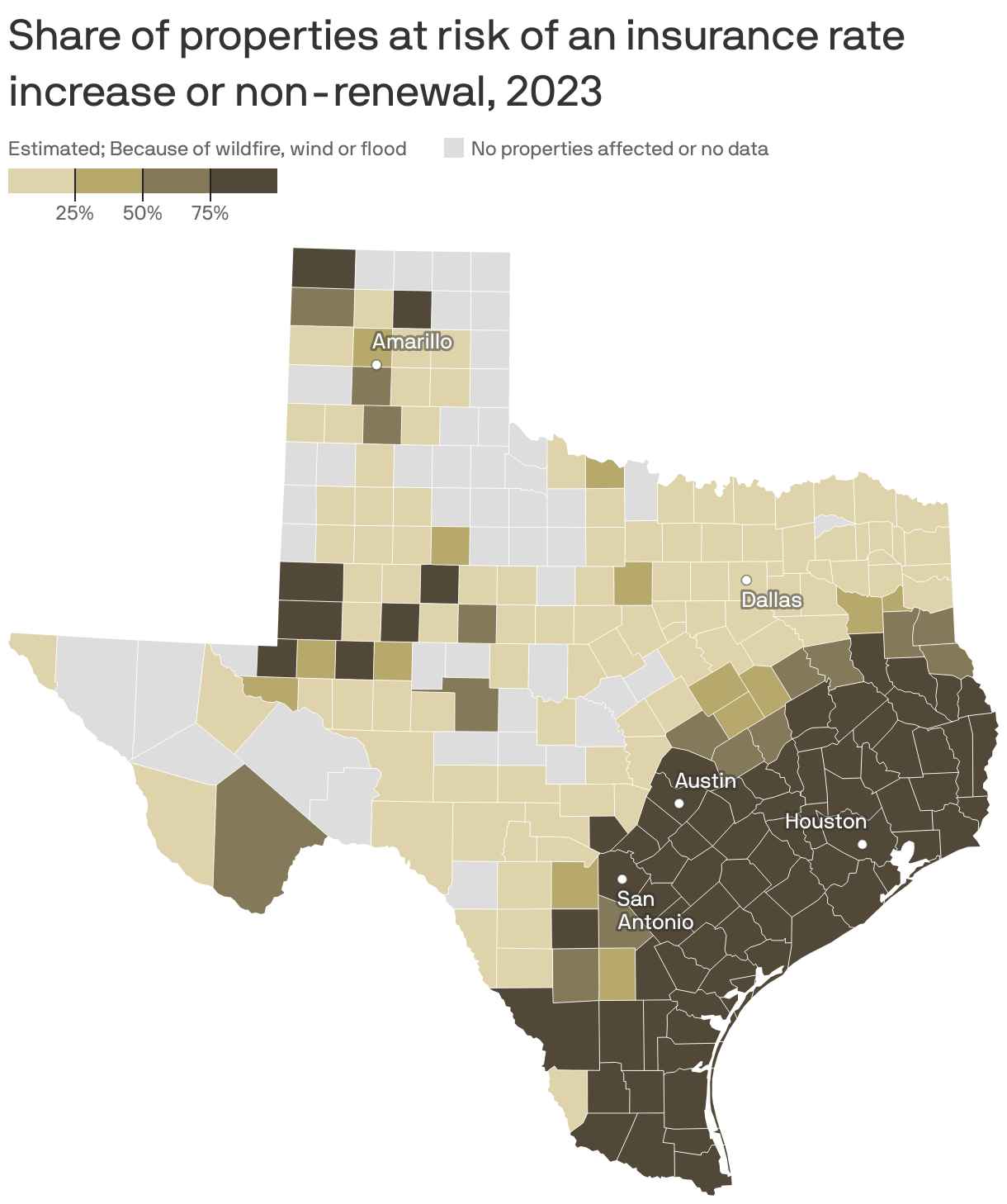
Texans could see their home insurance rates increase — or lose coverage entirely — as natural disasters intensify.
Why it matters: Rates could start to become unaffordable as climate change fuels an increase in destructive storms.
- And if insurers decide to pull back altogether, states will need to step in to take on the risk — which can cost individuals more and offer less coverage.
Zoom in: In the San Antonio-New Braunfels area, nearly 88% of properties are at risk of insurance rate hikes or non-renewal due to wildfire, wind or flooding — with 86.6% specifically at risk from wind, according to First Street Foundation.
Threat level: Bexar County has a "relatively high" risk index — which FEMA uses to measure a county's risk of natural disasters, scoring it based on exposure, vulnerability and ability to recover.
- With a score of 98.3 it ranks in the top 2% of U.S. counties and top 4% in Texas for disaster risk.
- Tornados, hail, river flooding, lightning and heat waves are the highest hazard types.
Zoom out: The U.S. saw 28 weather and climate disasters costing at least $1 billion in 2023 — the highest on record. Damages totaled $93 billion.
- 2024 disaster data is not yet out, though it's expected to follow the trend.
What to watch: Insurers are changing how they factor climate and extreme weather risks into the premiums they charge for coverage, while some are suspending coverage, Axios' Brianna Crane reports.
- That's pushing many homeowners to opt for public "insurer of last resort" plans — but often at higher rates.