San Antonio renters spend too much on housing


Add Axios as your preferred source to
see more of our stories on Google.
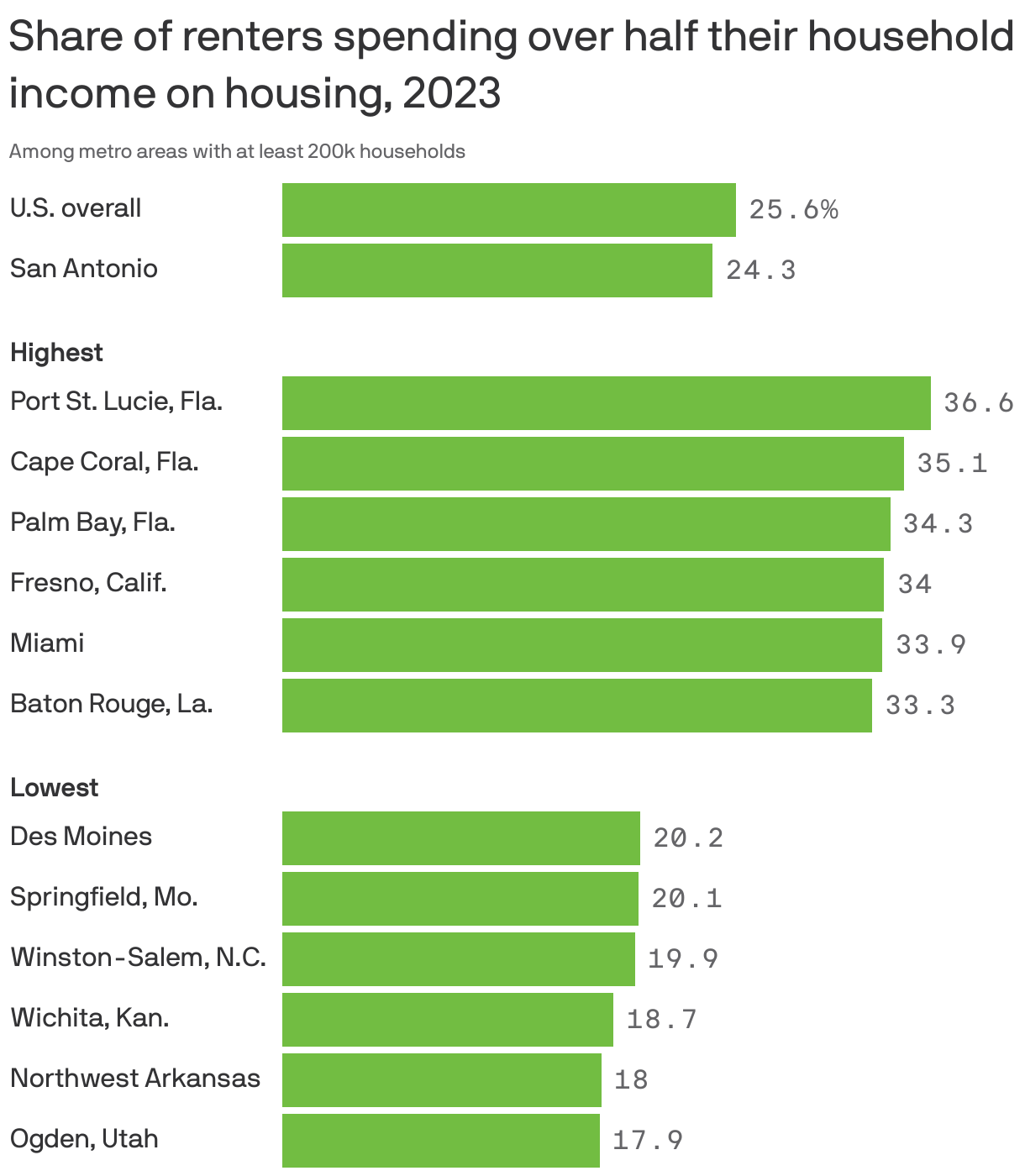
Nearly a quarter of San Antonio renters are spending more than half their income on housing, according to recent Census Bureau data.
Why it matters: An excessive rent burden can make it harder to afford other basic needs, like groceries and transportation — or to save for a down payment and build home equity.
Plus: Nearly 48% of San Antonio renters are spending more than 30% of their income on housing — the standard to be considered cost-burdened.
- That's according to the 2023 one-year American Community Survey estimates.
By the numbers: The average rent has been rising in San Antonio and sat at about $1,266 in the second quarter of 2024, per CoStar Group data.
- But rent here is still cheaper than the national average of $1,713.
Zoom out: In addition to rent, Texas tenants are increasingly paying "junk fees," according to a report from the University of Texas at Austin's Housing Policy Clinic.
- Junk fees can include mandatory add-ons to rent that tenants cannot opt out of, like valet trash and pest control fees.
Between the lines: Nationally, race and ethnicity play a role in the burden of housing costs.
- 56.2% of Black renters nationwide are spending more than 30% of their income on rent, compared to 46.7% of white renters.
- 53.2% of Hispanic renters nationwide were cost-burdened at that level.
Zoom in: Rent affordability in the city's core has come into focus recently as developer Weston Urban plans to raze the Soap Factory Apartments — a rare, market-rate affordable complex downtown — to make way for new development surrounding a minor league baseball stadium.
- Tenants will receive $2,500 in relocation assistance, among other measures.
What they're saying: "Is it bad enough that we do not make enough money based on what we get paid for us to be able to make a living? And now adding back this kind of insult to injury, it's just not OK," Araceli Herrera said at a meeting hosted by the San Antonio Independent School District this week about the baseball stadium, KSAT reported.
- Herrera raised concerns that the stadium would impact property taxes for surrounding homeowners as well.
What's next: The SAISD board is considering whether to sell district property to developers for land for the baseball stadium.
The bottom line: It's growing more expensive to be a renter in San Antonio, and not everyone can afford the increase.