San Antonio heat waves are lasting longer


Add Axios as your preferred source to
see more of our stories on Google.
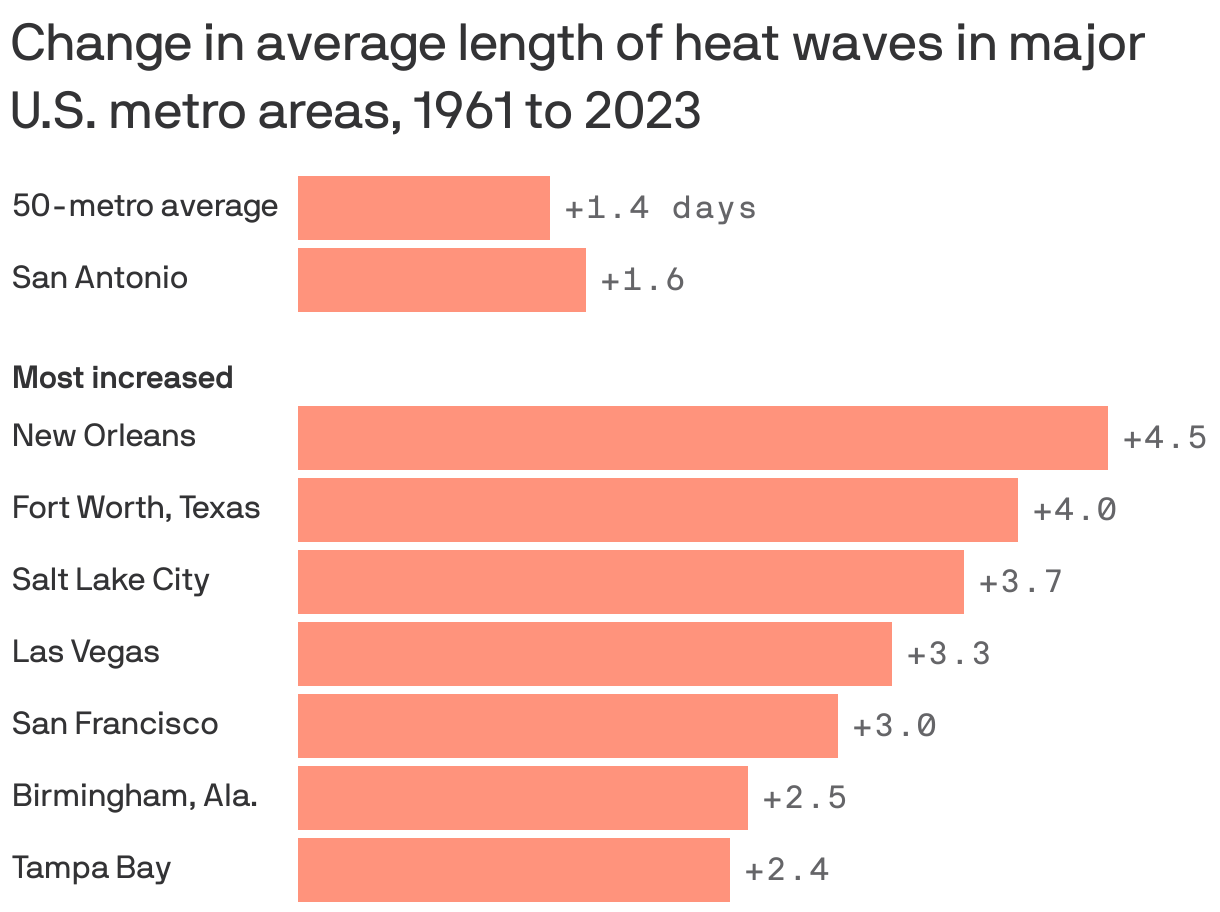
Recent data shows the upward march of heat waves in San Antonio.
Why it matters: Long-lasting events are more likely to lead to infrastructure malfunctions like power outages, and also escalate human health risks, studies have shown.
Context: Human-caused climate change is increasing the likelihood, severity and duration of heat waves.
By the numbers: The average length of a heat wave in the San Antonio metro area increased by 1.6 days from 1961 to 2023, per data from the Environmental Protection Agency.
- The average increase across the 50 largest U.S. metro areas the EPA analyzed was 1.4 days.
The big picture: The EPA data is part of a wider new report on climate metrics.
- Heat waves are becoming longer, more frequent and more intense.
How it works: EPA tracked events of two or more consecutive days when daily, humidity-adjusted temperatures topped the 85th percentile of historical July-August temperatures in a given area from 1981-2010.
Zoom out: Heat waves also inflict economic losses.
The bottom line: "Heat waves are more than just uncomfortable," the EPA authors write, "they can lead to illness and death," damage crops and increase wildlife risk.
- "Unusually hot days and heat wave events are a natural part of day-to-day variation in weather. As the Earth's climate warms, however, hotter-than-usual days and nights are becoming more common," they observe.