Climate change made San Antonio summer heat more likely


Add Axios as your preferred source to
see more of our stories on Google.
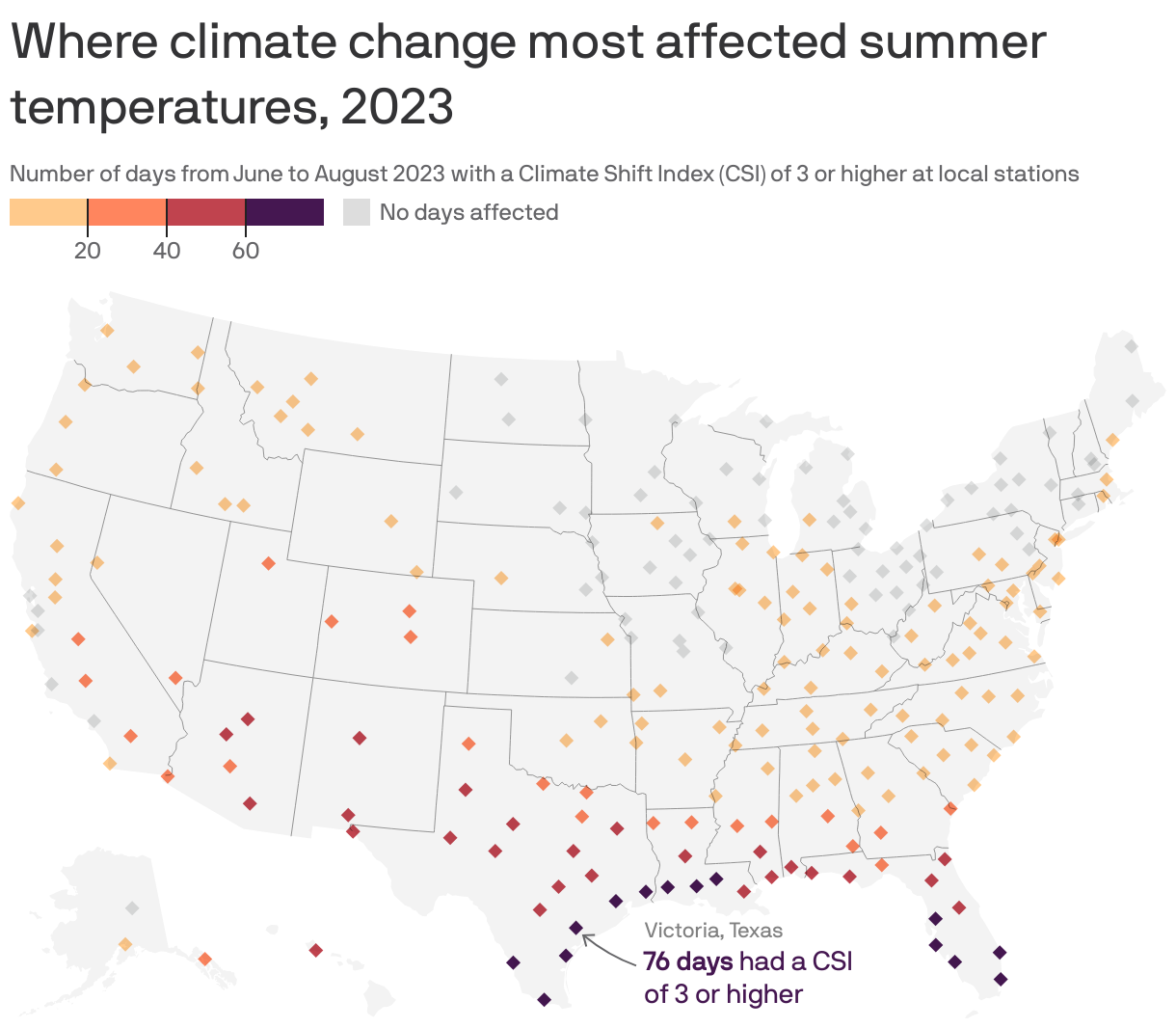
Texas' record-breaking heat this summer would have been "virtually impossible" without human-caused climate change, per recent climate analyses.
Why it matters: Prolonged exposure to heat can make us ill, physically and mentally. And it can quickly turn deadly for vulnerable residents.
By the numbers: 65% of summer days in San Antonio this year had heat made three times more likely by climate change, per a new Climate Central report.
- That's 59 days.
How it works: Climate Central's analysis is based on the group's Climate Shift Index (CSI), which compares observed or forecast temperatures with simulations of the same weather conditions minus excess atmospheric greenhouse gases, Axios' Alex Fitzpatrick reports.
- A CSI of 3, for example, means human-caused climate change made a given daily average temperature three times more likely.
Of note: While the analysis wasn't peer-reviewed, the methodology was.
Zoom in: Metro Health reported 729 cases of heat-related illnesses in San Antonio from mid-March to mid-September this year, a record since the city began tracking heat-related illnesses in 2018.
State of play: The city has taken steps to reduce the effects of climate change and adapt to extreme heat.
- That includes installing "cool pavement," a water-based asphalt treatment that better reflects sunlight and absorbs less heat, in an effort to cool down neighborhoods.
- The city kept some facilities open as cooling centers when temperatures soared this summer.
Plus: A city rule passed in November requires Level 2 electric vehicle chargers in new single-family homes and apartment complexes, to encourage and prepare for broader EV use.
The big picture: In 45 of the 244 U.S. cities the group analyzed, at least half of all summer days had temperatures made at least twice as likely by climate change.
- Victoria, southeast of San Antonio, had 80 days with heat made twice as likely by climate change.
- San Juan, Puerto Rico, had the most with 90.
What's next: Highs in the 90s are forecast to continue this week, and October temperatures are leaning above normal.