1 big thing: Women underrepresented in S.A.'s statues


Add Axios as your preferred source to
see more of our stories on Google.
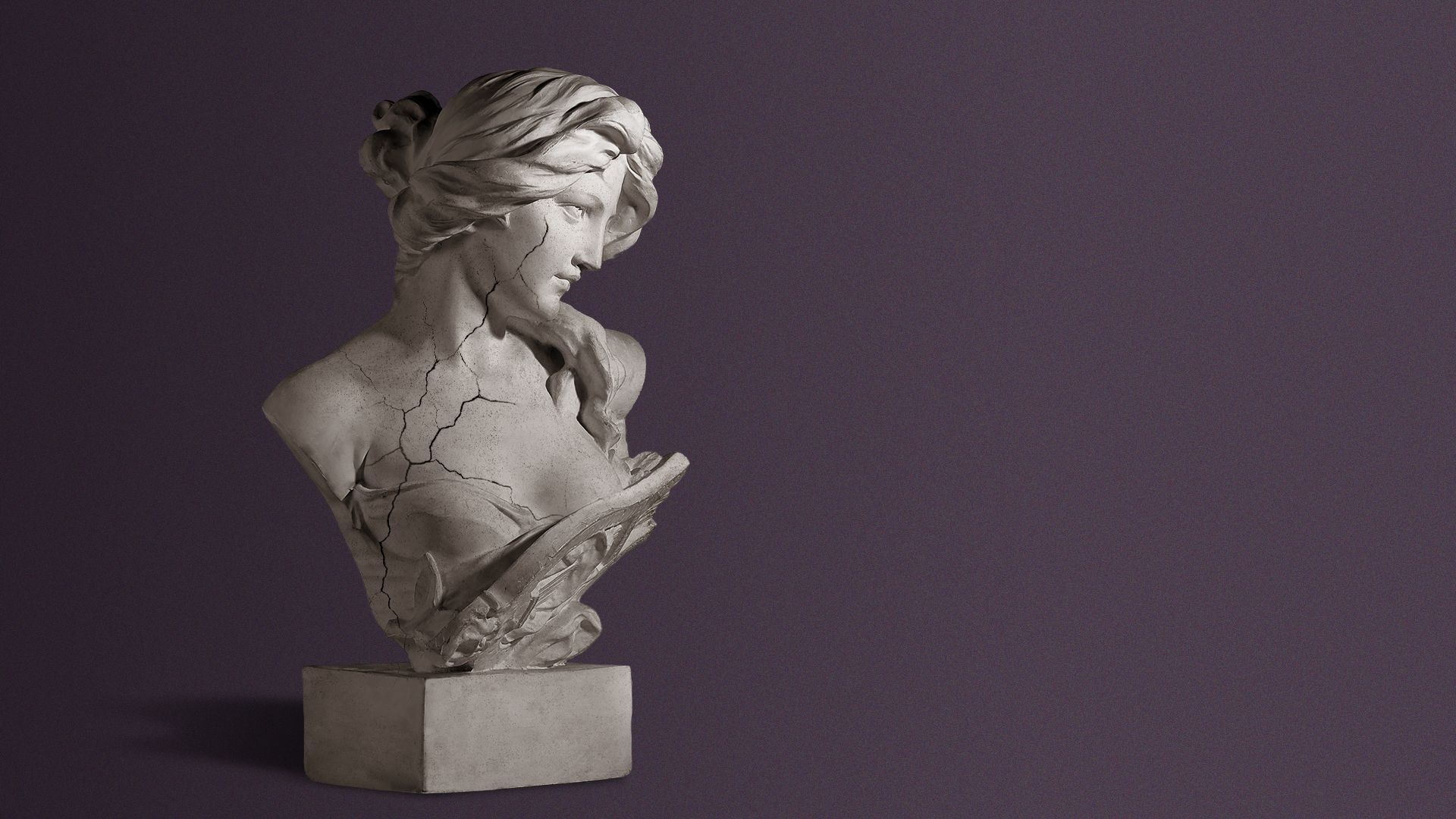
Illustration: Allie Carl/Axios
Like most places in the U.S., San Antonio's inventory of monuments is male-dominated.
Why it matters: Monuments have historically represented our values by putting concepts and people on literal pedestals, then enshrining them with protective status and decades-long upkeep, Axios' Chelsea Brasted reports.
- But public art in the U.S. has long presented a lopsided view that can leave the impression that American history is all horses and white male military veterans.
Zoom out: Of the top 50 historical figures represented in U.S. public monuments only three are women, and only five are Black or Indigenous, according to nonprofit Monument Lab's data. Half are people who enslaved others.
Zoom in: This month, life-size statues of former Bexar County Judge Nelson Wolff and his wife, Tracy, were unveiled at San Pedro Creek Culture Park, according to Texas Public Radio.
- Tracy Wolff was honored for founding the Hidalgo Foundation, which funded the restoration of the Bexar County Courthouse, the Children's Court and BiblioTech libraries.
State of play: Statues representing women in Texas history — from the Alamo to politics — can be found around downtown.
- The Alamo's "Statues of Heroes" collection includes Susannah Dickinson (holding her daughter Angelina) and Emily West Morgan.
- A representative for the Henry B. Gonzalez Convention Center confirmed statues of Barbara Jordan, the first Black woman from the South to serve in the U.S. House, and Olympic gold medal winner Mildred "Babe" Didrikson Zaharias are at the facility. It's unclear whether a statue of writer Katherine Anne Porter is still on the premises.
Yes, but: According to the San Antonio Public Art Directory, 16 statues are dedicated to men while three are of women.
- That tally does not include the Alamo statues, or paintings, religious statues or the recently installed "Stargazer," which depicts a figurative woman.
What they're saying: Andi Rodriguez, who is Centro's vice president of cultural placemaking and previously served on the Mayor's Commission on the Status of Women, says there's room for more women to be placed on pedestals.
- She'd like to see tributes for Dolores Huerta, Emma Tenayuca, Ella Austin, Lila Cockrell and Ivy Taylor.
- "It's the idea of who do we model ourselves after? We need heroes. When you honor someone and feature them, it raises them up and then you want to know their story. This idea of being inspired helps you aspire to your own greatness and tap into your own gifts," Rodriguez tells Axios.
The bottom line: "Monument-building is a slow process, and it will be decades — if ever — before gender parity exists in public art," Sierra Rooney, assistant professor of art history at the University of Wisconsin-La Crosse, tells Axios.