Virginia to take "F--k the police" license plate fight to Supreme Court

Add Axios as your preferred source to
see more of our stories on Google.
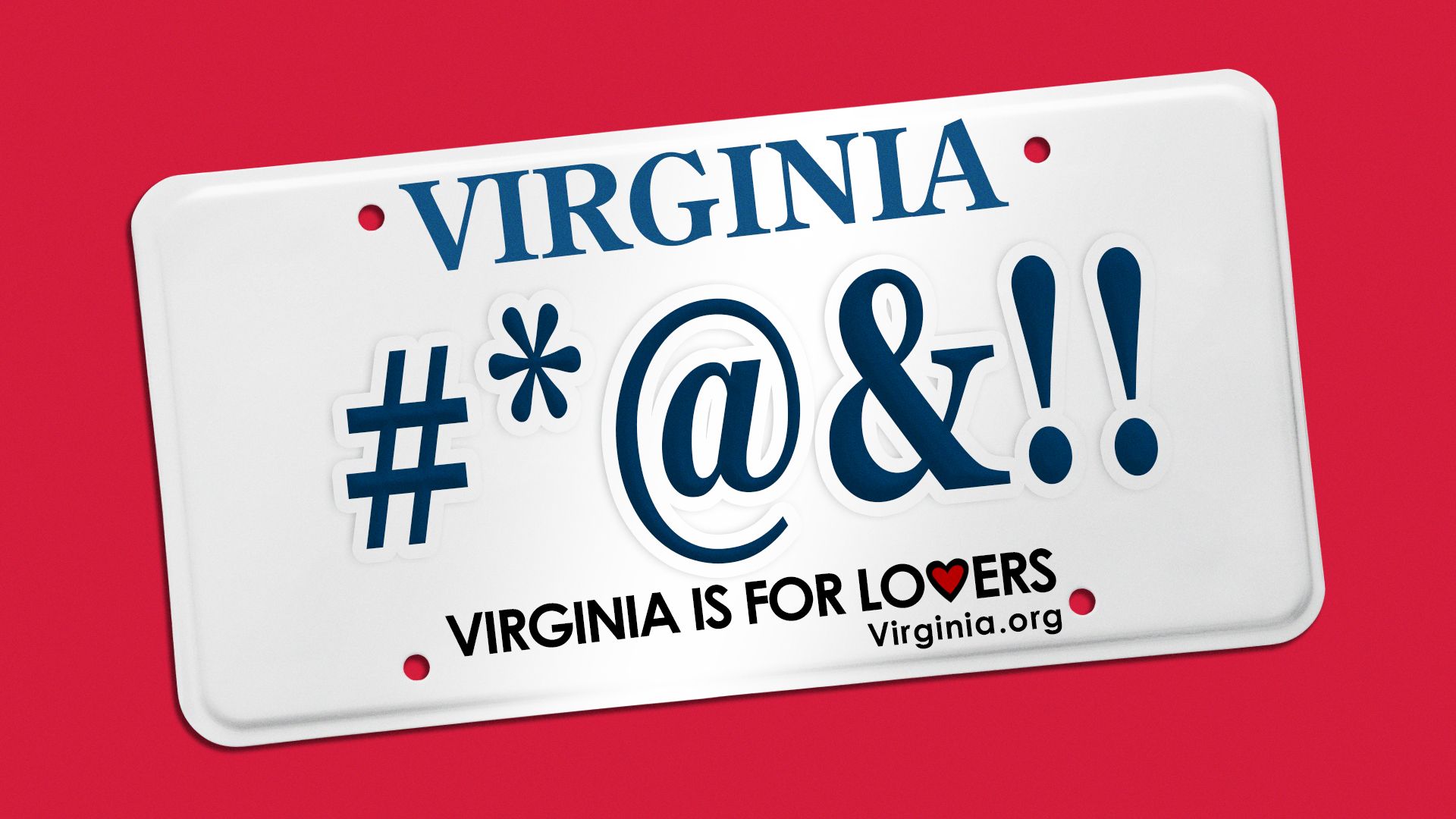
Illustration: Maura Losch/Axios
A Lynchburg resident put "FTP" — shorthand for "F--k the police" — on his license plate with Virginia's permission.
- Now the state wants the U.S. Supreme Court to decide whether it can take its approval back.
Why it matters: The Richmond-based Fourth Circuit Court ruled personalized plate messages are private speech protected by the First Amendment. The state disagreed, arguing it should get to decide what appears on state-issued plates.
Catch up quick: Curtis Whateley paid $10 in 2023 for a personalized plate reading "FTP&ATF," per court documents. ATF stands for the Bureau of Alcohol, Tobacco, Firearms and Explosives.
- And there's no secret code here: Whateley says it means what you think it means.
- He drove around with the plate for over a year until someone complained to the state agency that it was "most offensive."
- The DMV then recalled it as potentially vulgar and encouraging violence, prompting Whateley to sue.
The latest: Virginia is planning to ask the Supreme Court to review the ruling, the attorney general's office confirmed to Axios on Friday.
- The move was first reported by The New York Times.
- "The Commonwealth has a responsibility to ensure that state-issued license plates are not profane and do not promote dangerous hate speech or incite harm," AG spokesperson RaeAnn Pickett told Axios.
The intrigue: Virginia has long played referee over the state's 930,000 personalized plates.
- In 2017, Virginia recalled Richmond lawyer Donald Butler's "FTRU MPK" plate as potentially vulgar, despite Butler insisting the F and K stood for "flunk."
- Its 2021 reject pile, obtained by Axios, also included "FCOPS" and "FUQATF."
- Other denied plates that year: "PIGBUT," "POOPMAN," "BOOBIEZ" and "BIDNSUX."
Between the lines: The DMV stopped maintaining a running rejected-plate list in October 2021, and when Axios Richmond requested an updated list last year, a spokesperson said it'd require a minimum deposit of $200.
What we're watching: Whether SCOTUS takes the case.