Richmond's $50M street safety plan dividing City Hall gets green light

Add Axios as your preferred source to
see more of our stories on Google.
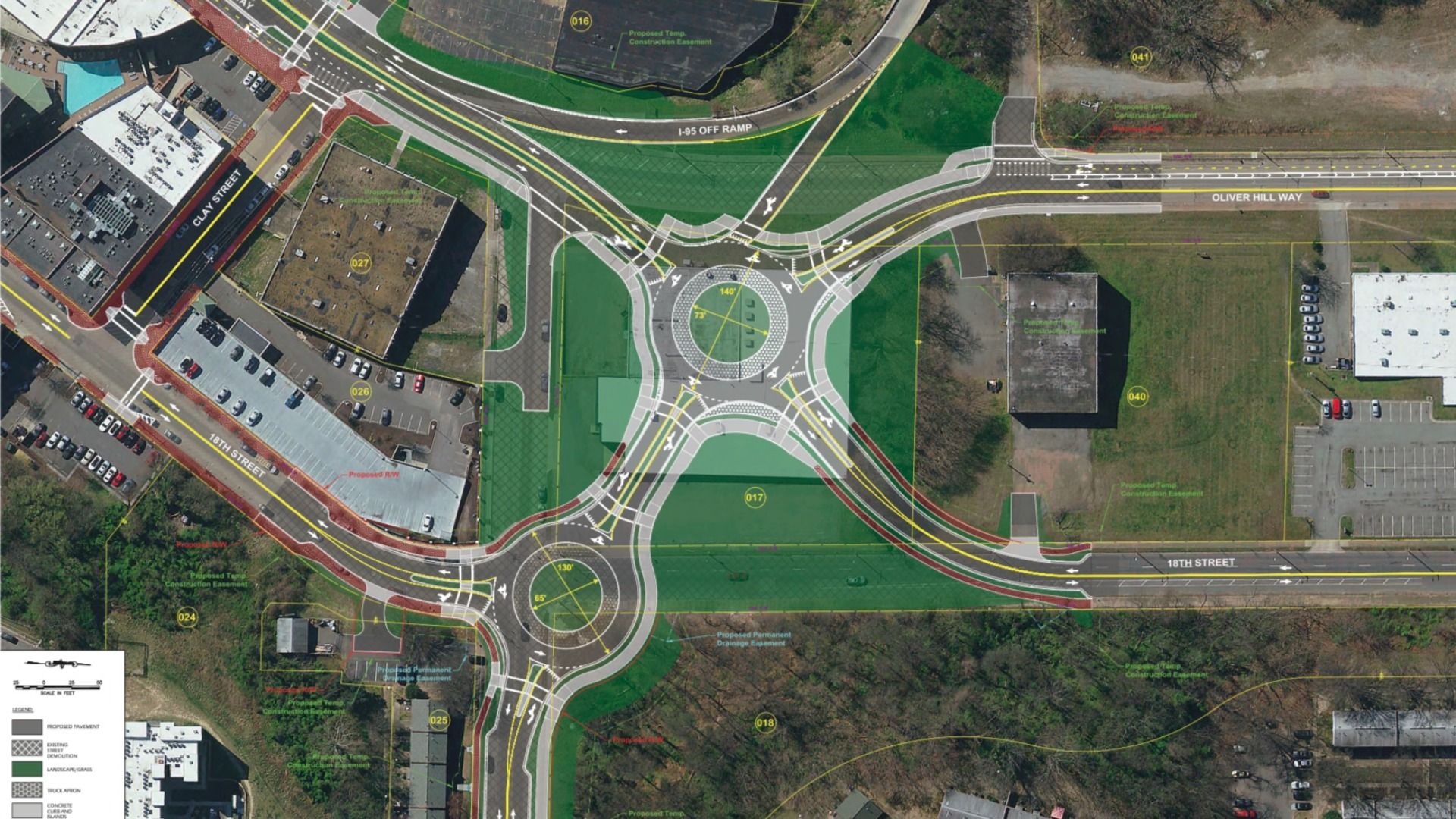
The most controversial proposed roundabouts at Oliver Hill Way and Venable and 18th Street and Venable. Image: Courtesy of the city of Richmond
Richmond's Planning Commission approved a nearly $50 million project to make Shockoe Valley more walkable, despite objections from the city's own planning staff.
Why it matters: The fight dividing planners and transportation officials is the latest test of Richmond's competing visions for how to build safer streets.
Between the lines: Richmond is now closer to a redesign its own planners say falls short, right at the gateway to the ongoing Shockoe Project, a planned memorial to the domestic slave trade.
- Without approval, DPW officials said the city would have faced redesign costs and delays on a project already eight years and $4 million in the making, with a risk to $33.3 million in secured federal funding.
- And at one point in the heated, nearly four-hour commission meeting Tuesday night, DPW director Bobby Vincent told members he was "almost embarrassed" the city was still debating it.
Friction point: The commission approved the project after members ultimately decided the costs of redesigning it were too high.
- "I will support this project, but I feel held hostage in a lot of ways," commissioner Rebecca Rowe said. "And I resent that."
Catch up quick: The project would cover about half a mile that includes Oliver Hill Way, N. 18th St., Venable, Mosby and Leigh.
- It would add protected bike lanes, wider sidewalks, two-way streets, and a new traffic signal to one of Richmond's fastest-growing corridors.
- Plus: Four regular intersections would become landscaped roundabouts and Oliver Hill Way would get street parking for the first time.
Yes, but: The Tuesday night decision broke with the Urban Design Committee's contentious vote last month, which recommended denial over concerns that the current roundabout layout prioritizes drivers over pedestrians — and wastes a city block of usable land.
- In a claim transportation officials disagreed with, planning staff argued that it goes against Richmond 300, the long-range blueprint for a more walkable city.
- And they said two roundabouts sit on land the city cleared out in 2019 with the expectation it would eventually be put to another use.
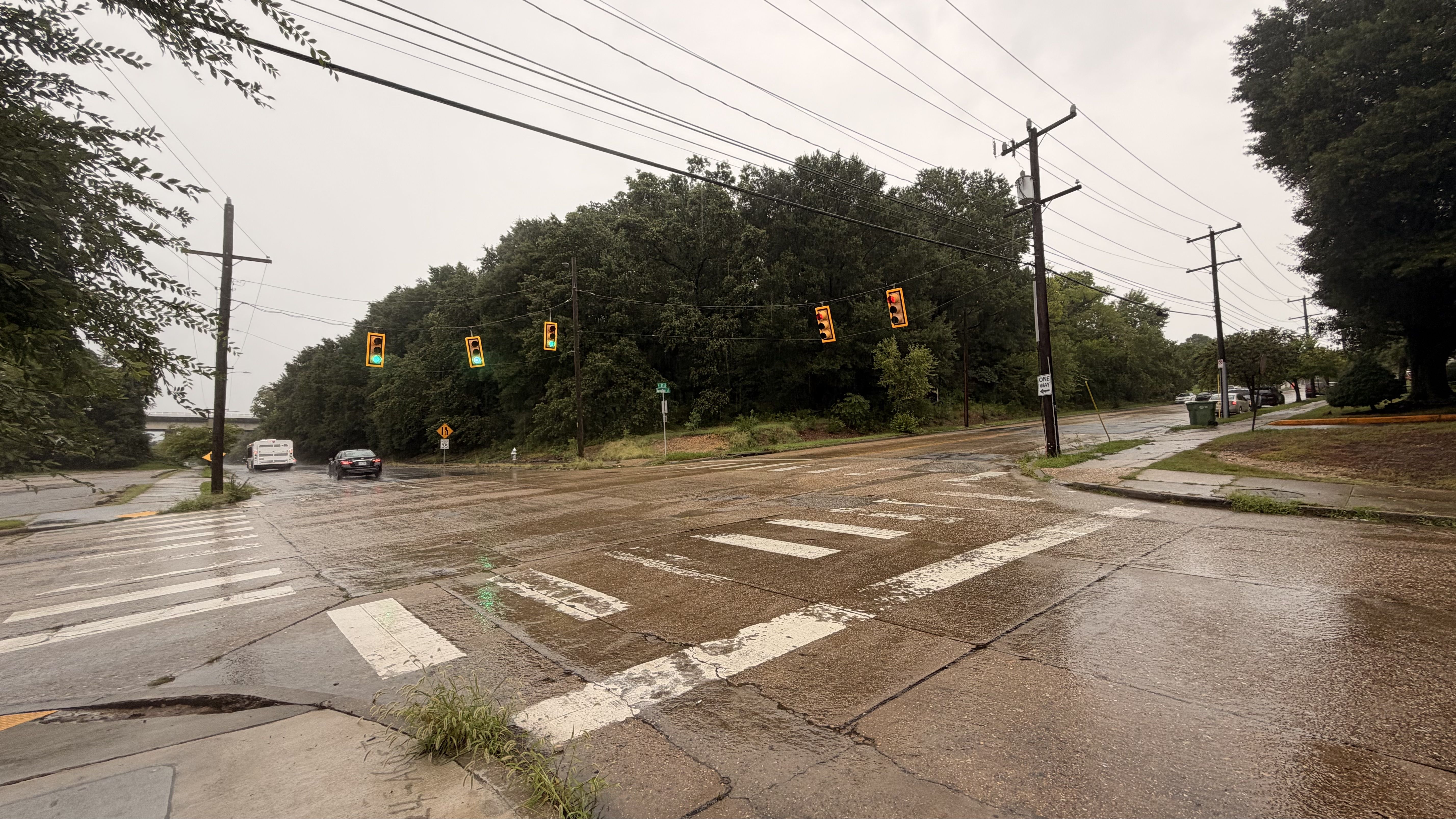
The other side: DPW, which houses Richmond's new transportation department, argued it's too late for a fundamental redesign.
- After nearly a decade of engineering, traffic modeling and extensive coordination with city, state and community partners, the department says moving the roundabouts wouldn't make the streets safer.
- City spokesperson Jensen Gavlic tells Axios the current plan strikes the best balance of safety, cost and future development.
The intrigue: Even Raymond Roakes, the planner who wrote the recommendation against the project, admitted at the UDC meeting that it's "already changed so much" that asking for more revisions is "somewhat embarrassing."
What's next: Construction is slated to start in 2029 and finish by 2031.