Report: Some Richmond 311 flood complaints take years to close

Add Axios as your preferred source to
see more of our stories on Google.
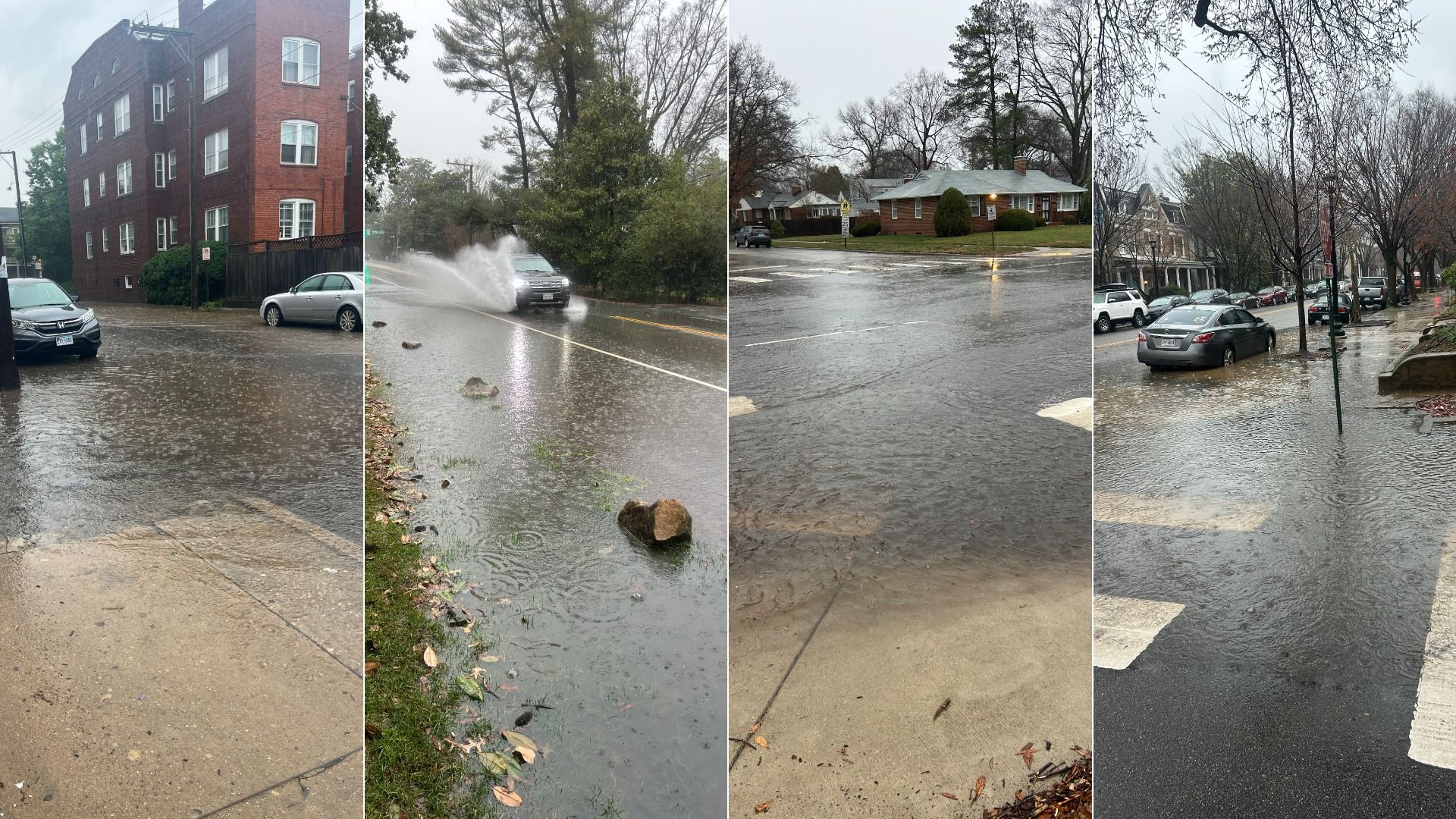
Several flooding pics that residents citywide have submitted to Southside ReLeaf and U of R's survey. Photos: Courtesy of Southside ReLeaf
A new analysis of nearly a decade of Richmond 311 requests found that some neighborhoods with chronic flooding issues report flooding the least.
- And when they do, they face the longest response times.
Why it matters: Researchers and city officials both agree that 311 complaints don't tell the whole story. But they're one of the few public tools available for tracking a problem that disrupts commutes, blocks sidewalks and poses safety risks.
The big picture: Southside ReLeaf and the University of Richmond analyzed 11,478 flood-related 311 tickets between June 2016 and October 2025.
- Those include requests to clear stormwater drains and assess standing water.
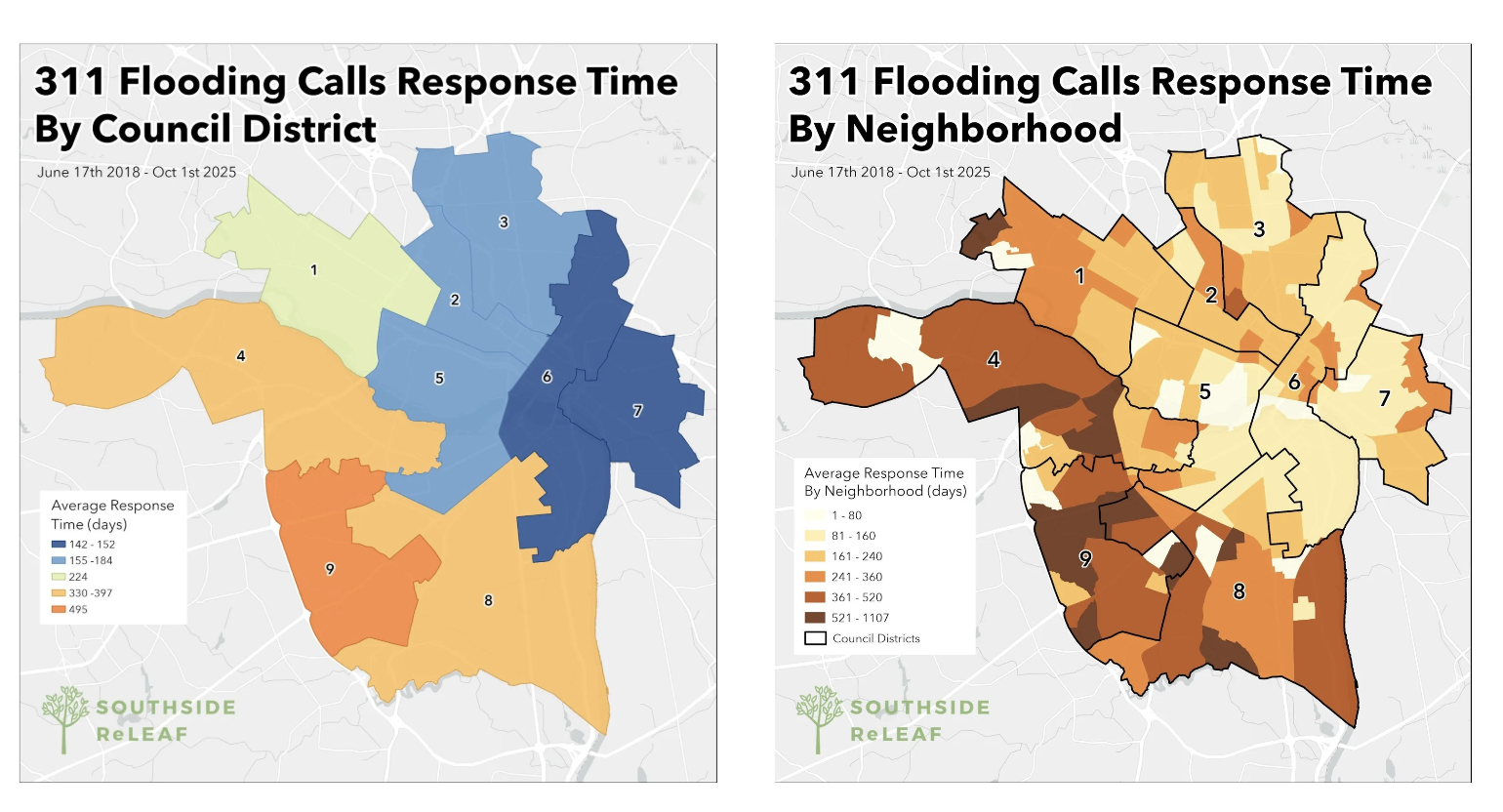
What they found: Report rates range from 0.2 to 60.8 calls per 100 residents, with the 9th District in South Richmond — which has one of the largest concentrations of Black and Latino people in the city — having the lowest call rate.
- The 4th District, which borders the James River and includes Forest Hill and Chippenham, had among the highest.
- But residents in the 4th, 8th and 9th — which are all in South Richmond — faced the longest average response times: 330 to 495 days.
- At the neighborhood level, some response times stretched to over three years.
Stunning stat: The average response time in the 9th was three times longer than in the 7th.
- Even the fastest average response times, by council district, start at 142 days.
The other side: City spokesperson Tamara Jenkins said officials were unaware of the analysis before Axios' inquiry, but added that the city doesn't see lower overall request rates from any one area.
- Jenkins told Axios the 9th District submitted more overall 311 requests last year than from the 1st or 2nd, and that 311 complaints are only one source the city uses to monitor flooding.
- On longer closure times, Jenkins noted that fixing flooding in South Richmond can require long-term construction rather than quick maintenance.
- That's because much of the area was annexed from Chesterfield in 1970 and lacks the stormwater infrastructure common in other parts of the city.
What they're saying: Still, Southside ReLeaf co-founder Sheri Shannon told Axios that residents have described a cycle of filing complaints, getting no response and eventually giving up.
- Some weren't aware 311 existed. Others didn't know Spanish-language support was available.
- "It does not flood any less on the south side than any other place," said UR professor Stephanie Spera, who oversaw the research by student Julia Norton.
- "I just think it's being underreported in the city portal."
What we're watching: Southside ReLeaf's "Go with the Flow" project is collecting resident flood surveys and photos to build neighborhood-level data.
- 30 of the 34 respondents who answered an optional question about reporting flooding said they didn't contact 311, Spera told Axios.
- Twenty submitted photos documenting it anyway.