Brown's Island history: From pleasure garden to Richmond concert hub

Add Axios as your preferred source to
see more of our stories on Google.
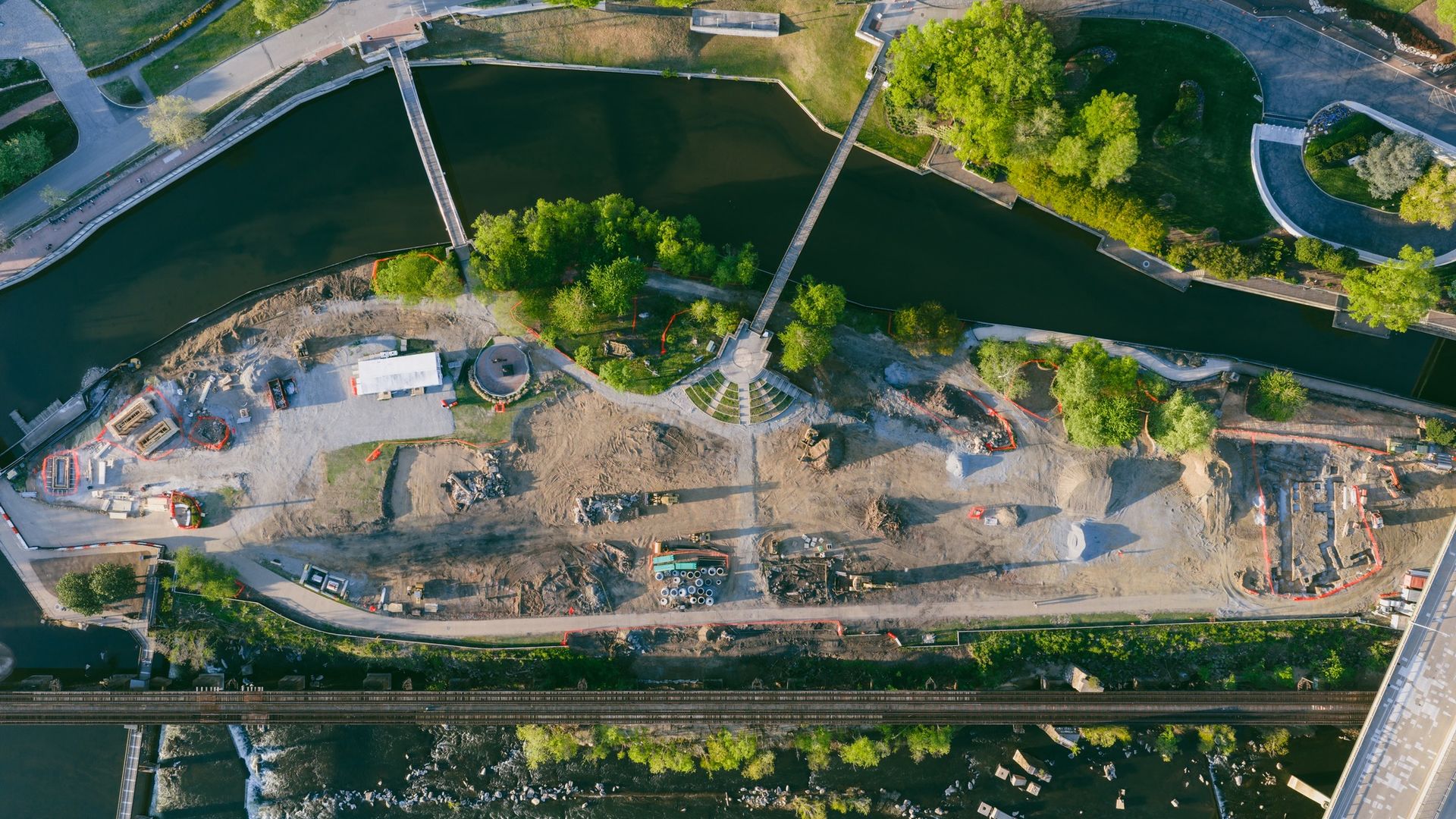
A drone view of Brown's on April 10. Image: Courtesy of Chad Williams / Creative Visual Design
From a 19th-century "pleasure garden" and "Confederate Laboratory" to a beloved 21st-century concert destination, Richmond's Brown's Island has had quite the journey.
Why it matters: In celebration of the nearly halfway mark of the Brown's improvement project, we thought we'd take a look back at the surprising history of "Richmond's biggest little island."
State of play: Brown's closed last fall for its years-in-the-making $30 million glow-up — it's biggest enhancements in recent history.
- When it reopens in October, the city-owned park will have permanent bathrooms, more shade and seats, a splash pad and will be fully ADA-accessible.
Flashback: Brown's roots trace to around 1789, when the building of the Haxall Canal helped form the man-made island, per the city.
- It's named for Elijah Brown, a Rhode Island transplant who acquired it in 1826. Though the space was first publicly known as Prior's Gardens, an early- to mid-19th-century "pleasure garden."
- Pleasure gardens were pay-to-play, privately-owned spaces where the urban elite could escape the worst of summertime heat with rope-dancing, fireworks, ice cream and cake.
- And they did in droves at Prior's on Brown's, converging on the island to enjoy masquerade balls, "the best of liquors," live music and even "cock-fighting and bear-bating," per local history blogs.
Zoom in: The pleasure would be short-lived. During the Civil War, the island was known as the Confederate States Laboratory.
- There, around 600 workers, half of whom were women and girls, churned out ammunition and artillery for a few years, until an explosion on the site killed 50 workers, including a 10-year-old girl, according to the National Museum of Civil War Medicine.
- The island would continue to be used for industry for another 100-plus years, hosting a coal power plant for railways, a hydroelectric plant for Virginia Power and the railway supports for "one of the longest elevated railways in the country," per the city, which you can still see today.
- Its final private use was as a paper mill for the Albemarle Paper Company. In 1987, long after it closed, the company gifted the island to the city, which made it the park Richmonders know and love today.
The latest: Venture Richmond, which manages the island, is working with a cultural resource firm during construction to review any artifacts found.
- Outside of the paper company's building footings, not much of interest has been found, Venture president Lisa Sims tells Axios.
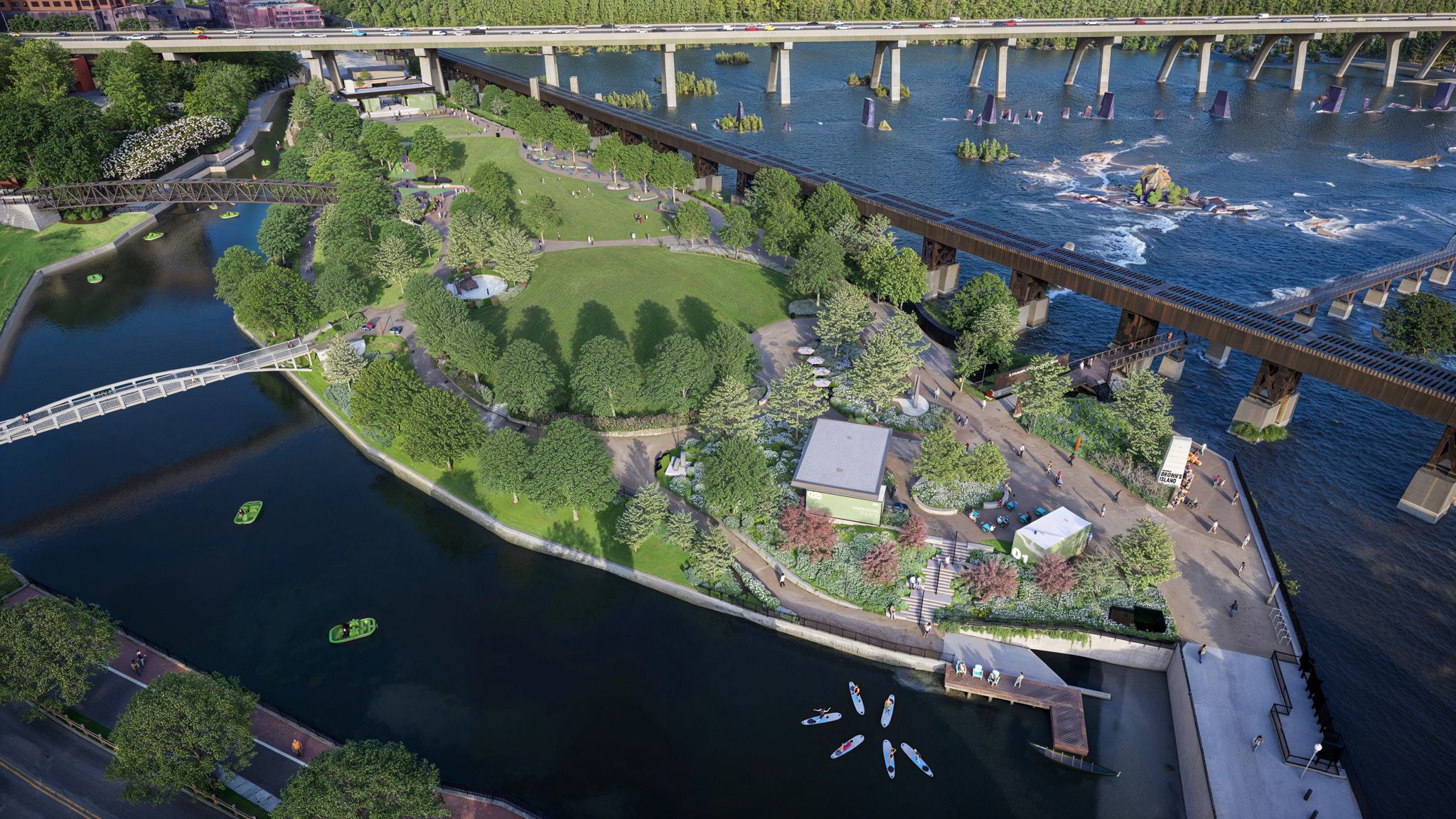
What's next: Construction on Brown's is slated to wrap up in October and with it, the return of Richmond's favorite, 21st-century "pleasure garden."