Waymo could expand to Virginia under new driverless car bill


Add Axios as your preferred source to
see more of our stories on Google.
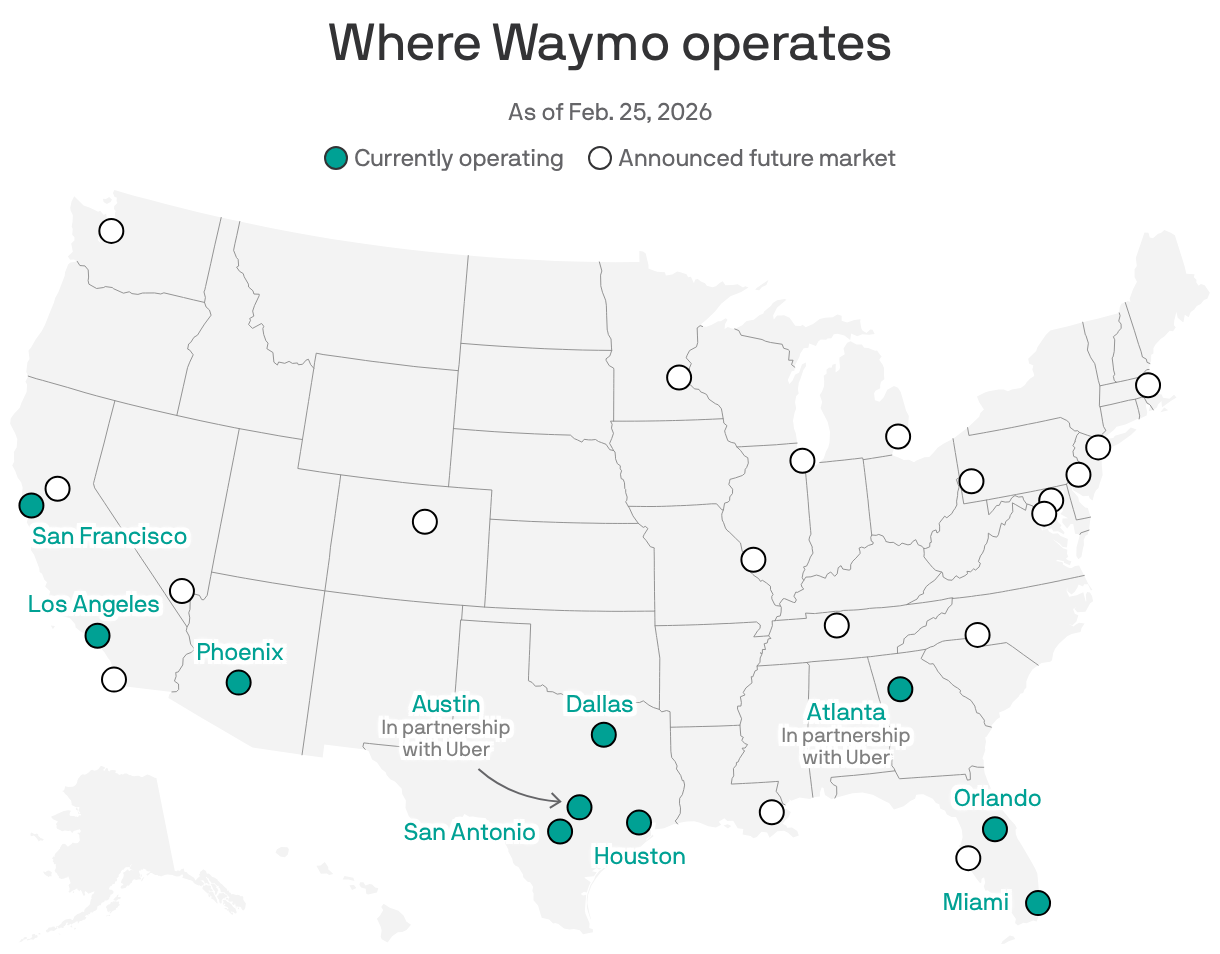
As Waymo races to expand its rollout of robotaxis nationwide, Virginia lawmakers are deciding whether to make the state legally ready for fully driverless cars.
Why it matters: Robotaxis aren't sci-fi anymore, and their vote could influence whether one will soon share the road with you.
State of play: Self-driving cars are permitted in about half the country, but Virginia law doesn't give companies an explicit green light to run a ride-hailing service without a human behind the wheel.
- One bill moving through the General Assembly would change that by explicitly allowing commercial driverless cars to operate under a state certification system.
- The proposal would require insurance coverage and for the car to follow traffic laws.
- It'd also prevent local governments from banning the cars.
Zoom in: The fiscal impact would include a one-time cost for the DMV (about $191,000) to build the systems and processes needed to issue fully autonomous vehicle certificates, per state budget analysts.
A Waymo spokesperson told Axios Richmond that if the proposal becomes law, they'd be able to expand to Virginia — though the timeline is unclear.
Catch up quick: Backed by $16 billion in fresh capital from parent Alphabet and other investors, Waymo has doubled the number of markets it serves in recent months — quickly extending its lead over Tesla and Amazon-owned Zoox, which are mostly in testing mode.
- Waymo now operates in 10 cities, and is prepping launches in Dallas, Houston, San Antonio and Orlando.
- And it's on track to provide more than 1 million driverless rides per week by the end of the year.
What we're watching: Waymo's robotaxis are adapting quickly to new markets, but basic operational challenges — such as charging and maintenance — could constrain network growth.
- As could what states like Virginia choose to do when it comes to fully driverless cars.