5 ways Virginia lawmakers are trying to rein in ICE's power

Add Axios as your preferred source to
see more of our stories on Google.
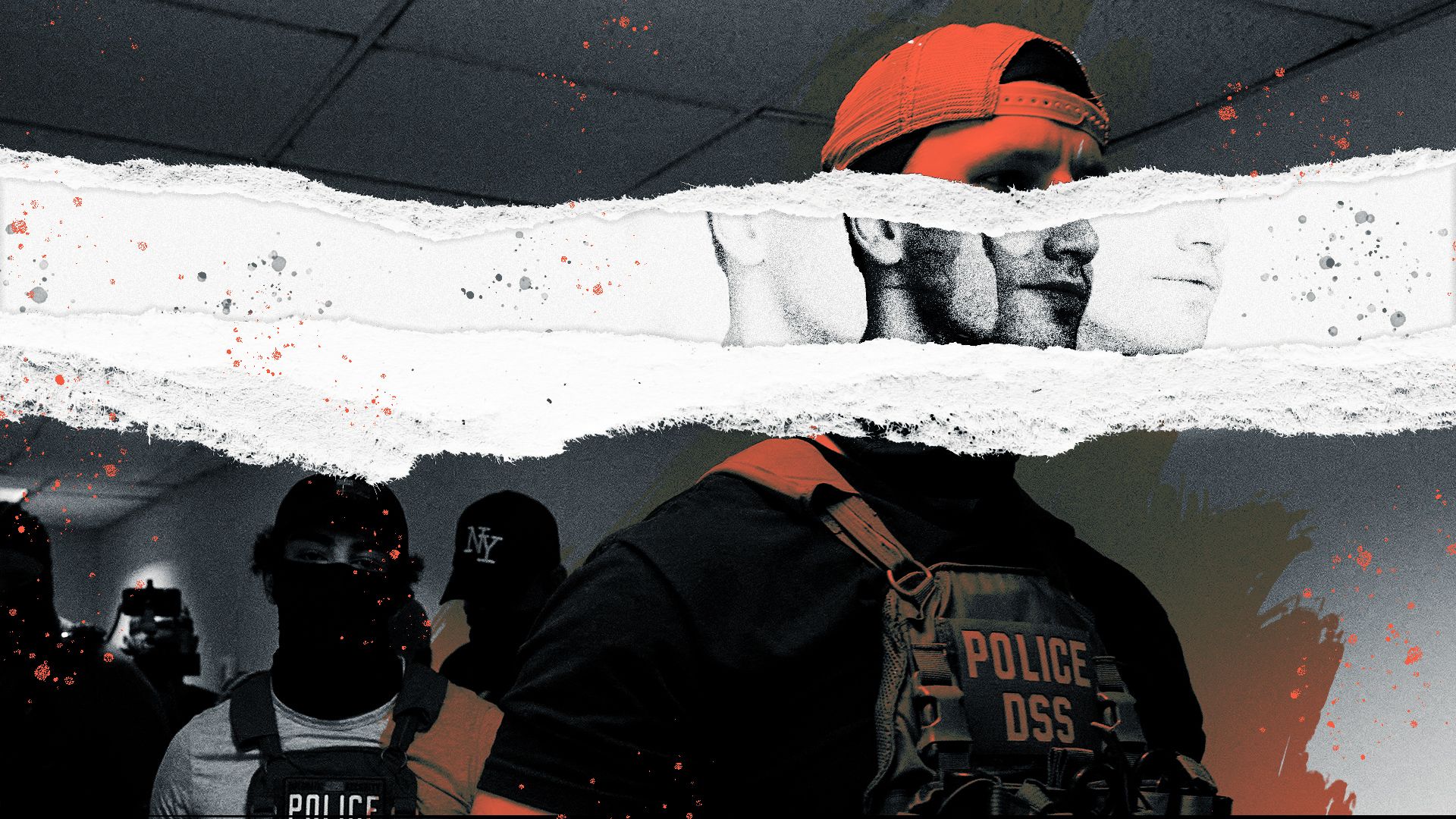
Photo illustration: Aïda Amer/Axios; Photo: Dominic Gwinn/Middle East Images/AFP via Getty Images
Virginia Democrats are testing how far a state can go to push back on federal immigration enforcement.
Why it matters: States can try to limit ICE's reach through legislation, but federal law ultimately controls how, and whether, ICE can be constrained.
The big picture: Immigration has become a flashpoint in this year's legislative session, especially after federal agents fatally shot two U.S. citizens in Minneapolis last month.
- The killings have intensified scrutiny of ICE tactics and prompted several Democrat-led states — like Colorado, Oregon and Illinois — to also attempt to limit ICE's actions.
Friction point: State lawmakers can't tell ICE how to enforce federal immigration law.
- But Democrats are saying that they can decide how state and local governments cooperate with federal agents — and whether ICE is welcome in state-run spaces.
Zoom in: These are five ways Virginia lawmakers are trying to rein in ICE through a package of bills advancing in the General Assembly.
1. No courthouse arrests
- Several bills aim to ban civil immigration arrests in and around courthouses unless federal agents have a judge-signed warrant.
- This follows a courthouse crackdown last summer in Chesterfield, after a policy shift allowed ICE to detain people after court appearances for the first time in years.
2. No local police cooperation
- Local officers would be banned from assisting with federal immigration enforcement unless required by law or presented with a judicial warrant.
- Nearly 30 local sheriff's offices in Virginia still have a cooperation agreement with ICE, according to federal data updated Tuesday afternoon.
- This bill would require those agreements to be terminated by Sept. 1.
3. Creating "protected areas"
- Immigration agents would be barred from the nonpublic areas of hospitals, schools, prosecutors' offices and other state-run facilities.
- If an employee of one of these "protected areas" allowed ICE agents through to these spaces, they could face a Class 1 misdemeanor.
- Of note: Before a policy shift in January 2025, ICE's internal guidance included avoiding schools and hospitals.
4. No polling places
- There's a push to ban federal immigration agents from conducting enforcement near voting sites.
- Republicans argue this bill is unnecessary because only U.S. citizens can vote.
- Democrats counter that ICE's presence could still intimidate lawful voters.
5. No face masks
- Under this proposal, it would be illegal in most cases for any law enforcement officer to use a face mask while on duty. The bill would also require officers to be clearly identifiable.
- The intrigue: California enacted a ban on federal agents wearing masks and was then sued by the Trump administration.
- A judge on Monday struck down the law, calling it discriminatory because it applied only to federal agents, reports the New York Times.
What we're watching: A bill to create a Virginia Accountability Commission to document the actions of federal agents in the state and assess their effect on communities was tabled until next year.