SNAP cuts may spike Virginia food bank demand as insecurity surges

Add Axios as your preferred source to
see more of our stories on Google.
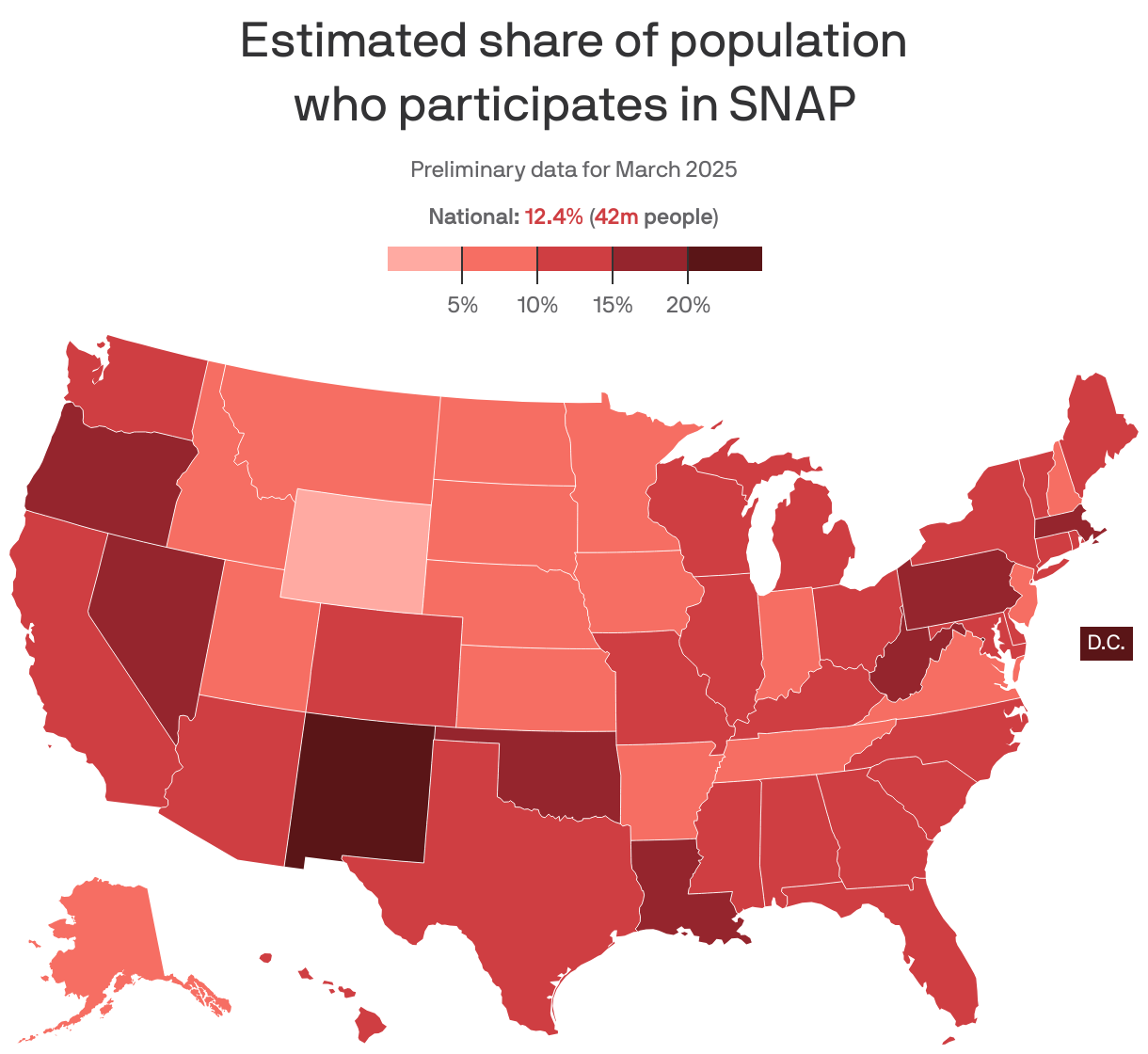
Around 50,000 Virginians are at risk of losing at least some of their food assistance as a result of President Trump's megabill signed into law last week, per estimates from the left-leaning Center on Policy and Budget Priorities.
Why it matters: The loss of those benefits will likely push more Virginians to food banks, which are already facing record-high demand and the loss of millions in federal funding.
- "It's going to be impossible for food banks to fill the gap," says Eddie Oliver, executive director of the Federation of Virginia Food Banks.
The big picture: The new law introduces several key changes to the Supplemental Nutrition Assistance Program (SNAP, commonly known as food stamps).
- Work requirements will now apply to most parents with children age 14 or older, requiring them to work at least 20 hours per week to maintain benefits.
- Age limits for work requirements rise to 64 (up from 54).
- Eligibility is removed for certain immigrant groups, including refugees and people granted asylum.
- State funding obligations will increase starting in 2028, with states covering a portion of benefit costs based on their rate of erroneous payments. Currently, benefits are 100% federally funded, though states share administrative costs.
With the new split, beginning in 2028, Virginia will have to come up with an estimated $250 million a year in administrative costs for SNAP, Oliver tells Axios.
Meanwhile, roughly 2,500 jobs could be lost in the state, per an analysis from the Commonwealth Fund.
By the numbers: More than 814,000 Virginians received SNAP benefits as of March 2025, per federal data. That's about 9% of the state population.
- If any of those lose benefits, they will join the 1 million Virginians (a record high), including roughly 125,000 people in the Richmond region, who are currently experiencing food insecurity, Oliver says.
The other side: The White House and congressional Republicans argue that cuts to these benefits are a way to push more people into the labor market and reduce dependence on government assistance, as well as an effort to reduce waste, fraud and abuse, Axios' Emily Peck reports.