Richmond to start charging 5 cents for plastic bags in 2026

Add Axios as your preferred source to
see more of our stories on Google.
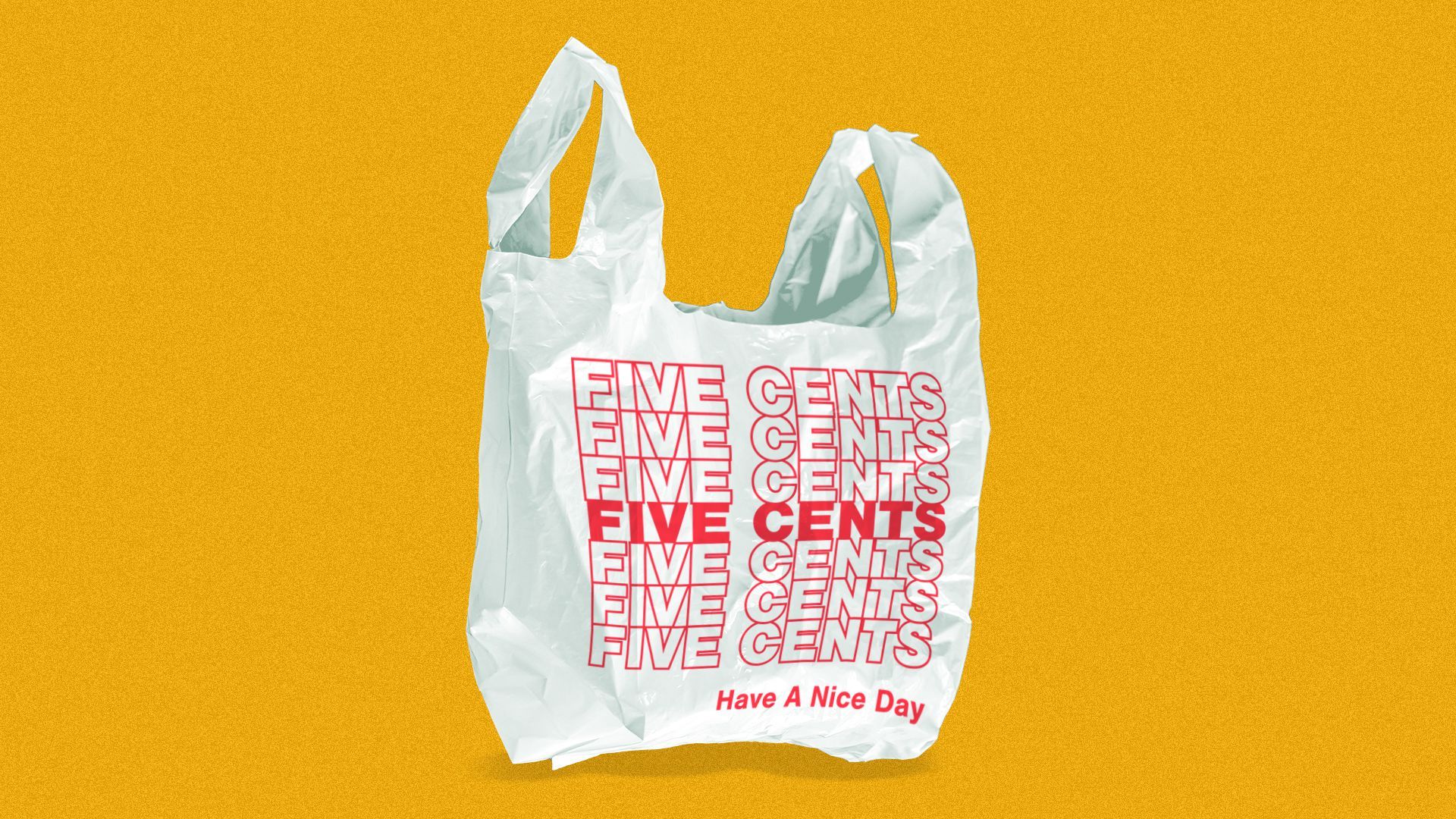
Illustration: Brendan Lynch/Axios
Richmond is about to start taxing your single-use plastic bags.
Why it matters: While City Council members lauded the effort to reduce waste and pollution, many shared concerns about how the tax will be passed on to residents on fixed incomes.
Driving the news: City Council approved the 5-cent tax, which takes effect Jan. 1, 2026, on Monday.
- The city is the first in the area, and the 11th locality in the state, to pass a tax like this since the legislature gave them the authority to in 2021.
Zoom in: Based on an estimated 8 million bags used in Richmond annually, the tax would generate $400,000 in revenue the first year, said Laura Thomas, director of Richmond's Office of Sustainability.
Between the lines: The city would technically receive about $320,000 of that since 1 cent per bag goes to retailers.
- The total annual revenue would drop to around $100,000 to $150,000 as people use fewer bags, Thomas told councilmembers.
- Per state law, the revenue can only go toward cleaning up and reducing pollution and providing reusable bags to SNAP and WIC recipients.
- Thomas also said the city would use some of its own funds to give reusable bags to residents who need them.
How it works: Grocers, convenience stores and drugstore retailers will report how many plastic bags they've sold to the state, which enforces the tax and then provides the revenue to Richmond.
- The tax doesn't include plastic bags used for dry cleaning, prescriptions, trash cans, your dog's poop or packaging meat or produce.
What they're saying: Retailers can choose whether they'd like to pass the fee onto consumers or absorb it, Thomas said.
- Some major grocery stores, like Lidl and Aldi, don't even offer plastic bags.
The other side: "Who's going to pay the most are the communities that we've neglected all along, that don't have a quality grocery store," said Councilmember Ellen Robertson, who voted against the tax.
- Councilmember Reva Trammell said she decided to also vote "no" after some older constituents who rely on delivery services for groceries, which often use plastic bags, raised concerns about pricier bills.
What's next: Richmond officials will spend the next six months educating people on plastic bag alternatives, talking to smaller convenience and grocery stores about their options and giving reusable bags to residents in need.