Richmond's water crisis was preventable, a new report finds

Add Axios as your preferred source to
see more of our stories on Google.
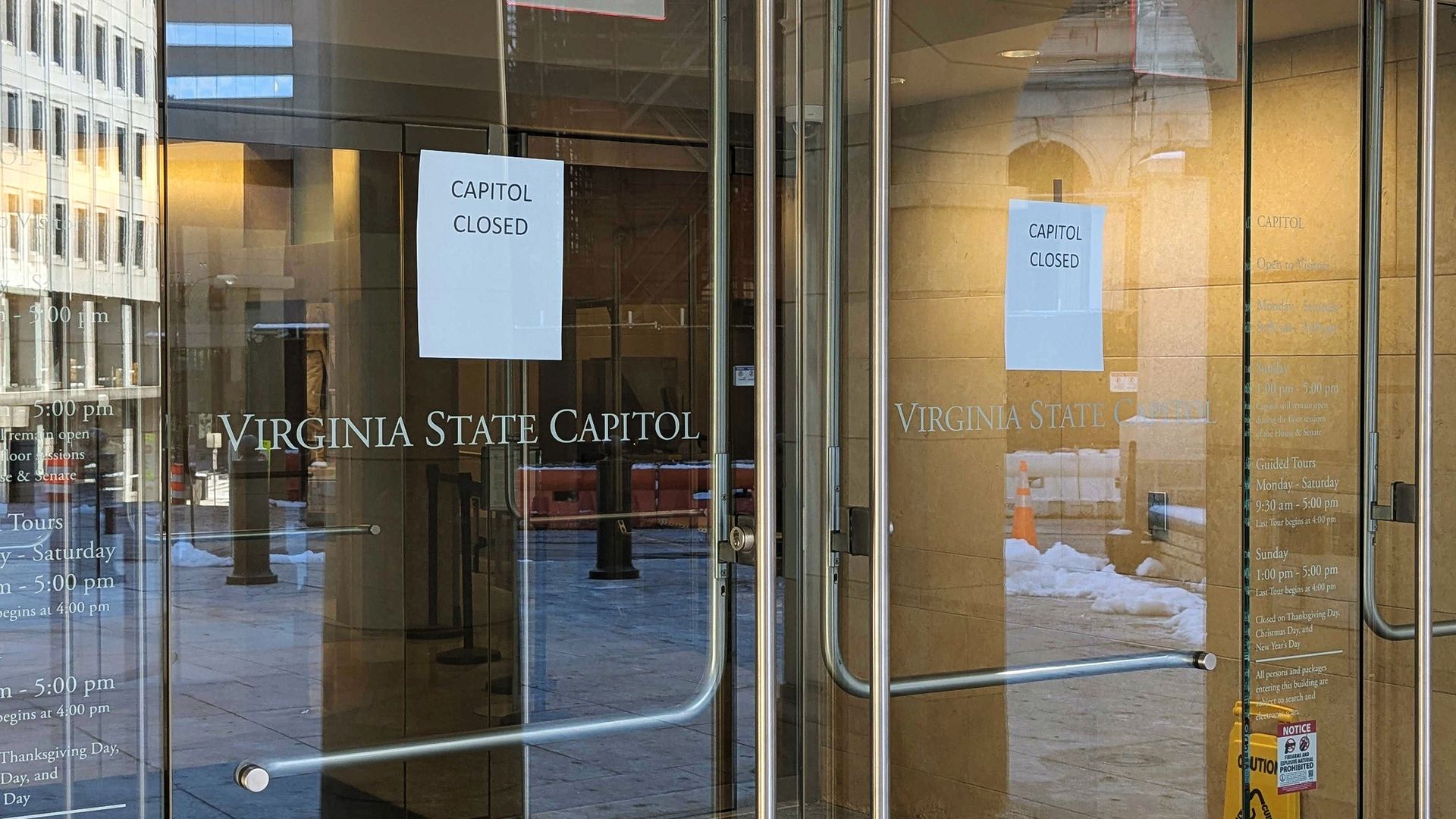
The Virginia Capitol and General Assembly Building closed during Richmond's water crisis Photo: Kate Seltzer/The Virginian-Pilot/Tribune News Service via Getty Images
The January water crisis that left much of the Richmond region without drinkable water for nearly a week was "completely avoidable and should not have happened."
- That's according to a letter from Virginia health commissioner Karen Shelton summarizing the state's independent investigation into the city water crisis, first reported by Graham Moomaw with The Richmonder.
The big picture: It's not a new assessment — Shelton's department findings echo the same takeaway in its "Notice of Alleged Violation," published and served to the city in January.
- But Shelton's letter and a state report identify the "root cause" of the problem: The city's failure to test and maintain the plant's backup batteries.
That, and what Shelton described as "faulty culture" inside the plant, ultimately led a brief power outage during a winter storm to turn into a days-long regional water crisis this January.
Zoom in: The plant's backup batteries, or uninterruptible power supply systems, are supposed to be the ultimate failsafe in the event of a power outage, according to the report via The Richmonder.
- If they were working, the batteries would've allowed the plant's valves to close and prevented the massive flooding that ended up damaging the plant's computer equipment.
- But the batteries weren't working, largely because plant staff didn't routinely test them, track maintenance on them or keep records for when they were last replaced.
- This was despite two previous reports in 2021 and 2022 that found issues with the backup batteries.
Plus, while adequate battery testing and maintenance caused the plant flooding and water crisis, the lack of emergency planning by DPU leadership, and allowing a "complacent and reactive culture to persist," exacerbated the issues inside the plant.
- "Known problems and flooding risks were not addressed or were allowed to exist for extended periods of time," Shelton wrote.
- The report did note that the city has already addressed many of the issues at the plant, including for battery testing and bringing in new leadership.
The fine print: The state's 314-page report was prepared for the Virginia Department of Health by infrastructure consulting firm Short Elliott Hendrickson Inc..
What we're watching: The state plans to send the city a second violation notice for 12 "significant deficiencies" regulators found at the plant, per The Richmonder.
- It will also put the city on "a corrective action plan."