Richmond needs to ditch its lead pipes, and property owners can help

Add Axios as your preferred source to
see more of our stories on Google.
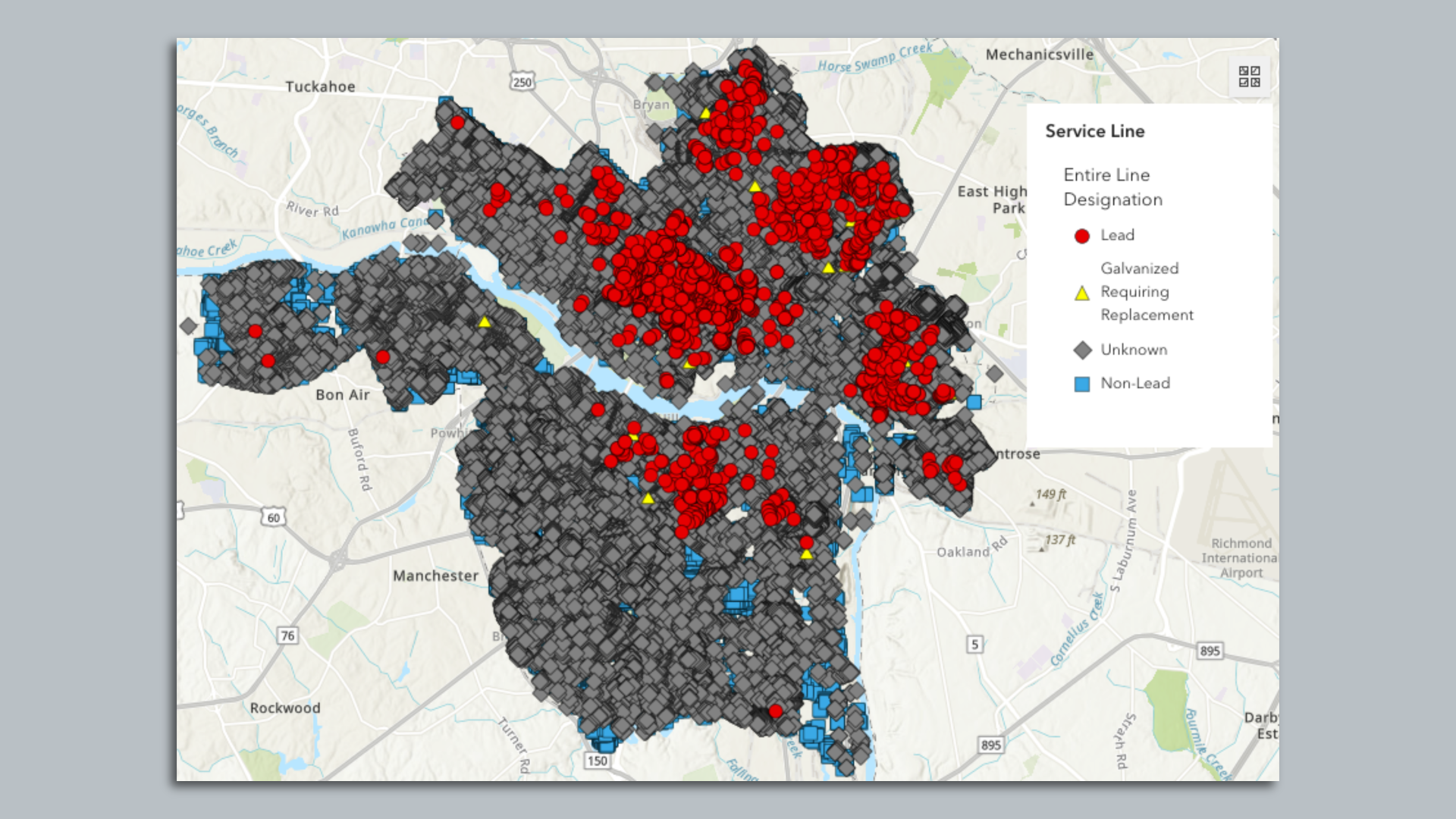
The city of Richmond's lead pipe map. Image: Courtesy of the city of Richmond
Richmond-area officials need the public's help finding all of the lead pipes possibly connected to residential homes.
Why it matters: New federal rules require Richmond — and all cities — to remove and replace toxic lead water lines within 10 years.
The big picture: The EPA estimates up to 9 million homes and businesses across the country, including 187,883 in Virginia, still get their water through lead pipes.
- Earlier this month, the agency unveiled new rules and $2.6 billion more in funding to support its ongoing efforts to locate and replace lead pipes across the U.S.
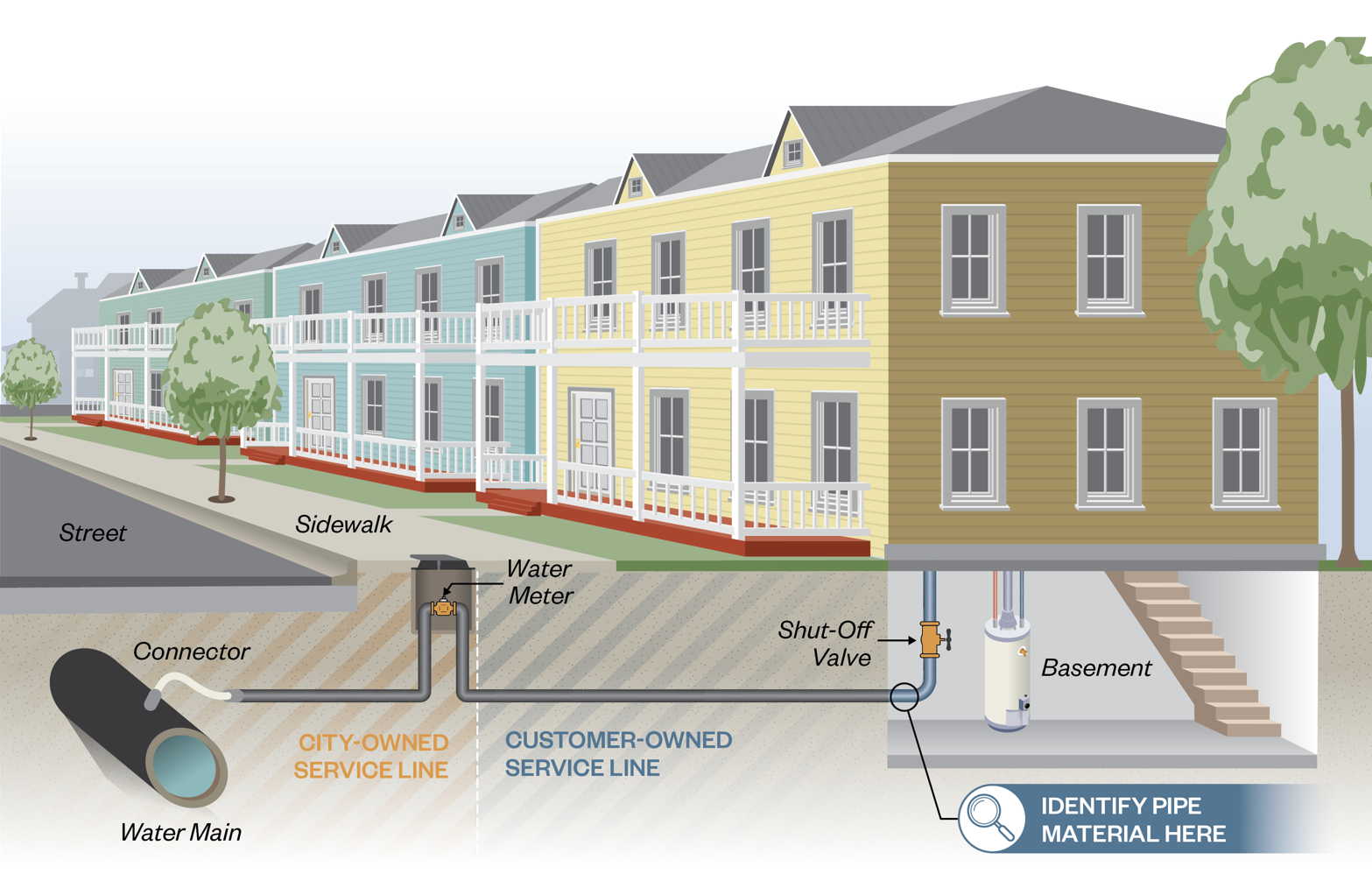
Zoom in: In the Richmond area, the city and Henrico are on top of checking the material of the public lines — the ones that run from the water meter to the street — that each owns.
- Henrico has cleared its public lines as lead-free, per the county.
- The city has identified around 3,700 public lead pipes and replaced nearly 600 of them since 2018, the Times-Dispatch reported. It's also cleared more than 60,000 pipes as not-lead.
Yes, but: Neither locality knows the pipe material for tens of thousands of other pipes, most of which are connected to residential properties.
- That's where homeowners come in.
- Richmond and Henrico would like homeowners to check their own pipes and complete an online survey with the results (Richmond's. Henrico's.).
How it works: Homeowners should find where water pipes enter their home — usually in a crawlspace or basement — and check their pipes with a magnet and scraping tool (a penny or key) to determine whether they're lead.
- The surveys walk homeowners through the process with examples of what to look for.
If you have lead pipes, grant funding administrated by Richmond and Henrico is available to help pay for most of the cost
- Virginia also just got $35 million more in funding toward its lead pipe replacement effort.
Of note: Chesterfield completed all of its surveys and declared the entire county lead-free, but it uploaded an interactive map for residents who want to double-check their status.
Be smart: Lead piping was used on a large scale in U.S. building projects from the late 1800s through 1930, according to the National Institute of Health, so homes built in that period are the most likely to have them.
- But, but, but: Lead pipes could be in any home built before 1986, when their use was banned.
The bottom line: Lead pipes are toxic, and drinking water that runs through them is very bad, so get thee some coveralls and a headlamp, crawl under your house and get to work.