Virginia universities struggle to compensate descendants of enslaved people

Add Axios as your preferred source to
see more of our stories on Google.
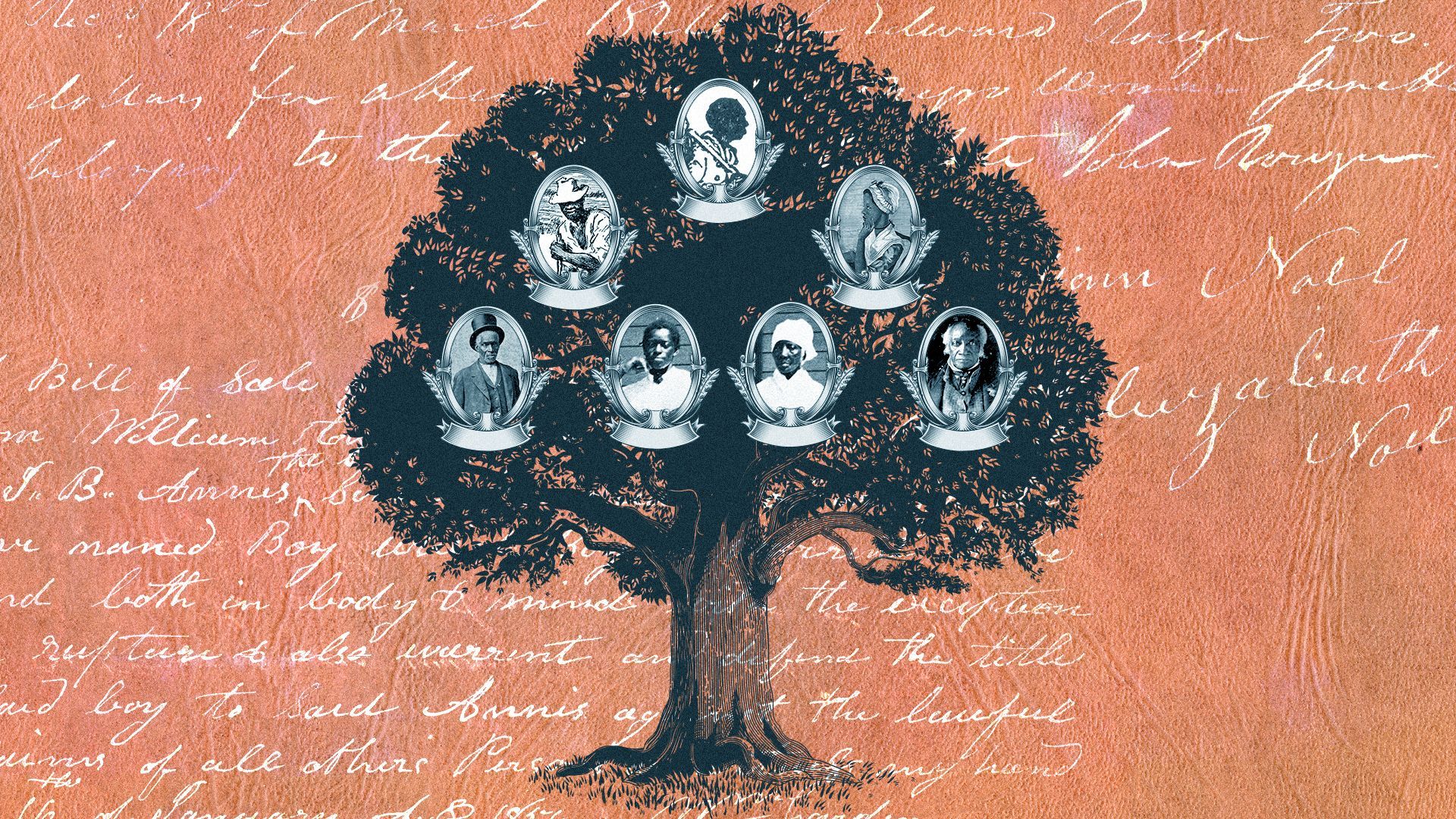
Photo illustration: Lindsey Bailey/Axios. Photos: Photo 12, Heritage Images, Interim Archives, Hulton Archive, Michael Ochs Archive via Getty Images.
Virginia was among the first states to require some universities to provide scholarships to descendants of enslaved people who helped build the institutions.
Why it matters: Three years later, those schools are struggling to figure out how to do it — possibly signaling the challenges other states will face as they consider compensation for their history of slavery.
Catch up quick: Lawmakers established the program in 2021 to reckon with Virginia's past by focusing on the higher ed institutions that benefited from enslaved people's labor.
- The five universities chosen were VCU, UVA, VMI, Longwood and William & Mary.
- UVA, W&M and Longwood are collectively giving scholarships tied to this law to five students each year, per the Chronicle of Higher Education, while VCU and VMI haven't offered any to date.
Between the lines: The law says each school is required to continue its efforts for either:
- a number of years equal to how long it used slavery,
- or until it's given scholarships to a number of students equal to the number of enslaved people who worked on its property.
Friction point: A list of every person enslaved by these universities is often incomplete or doesn't exist, reports the Chronicle.
- Even schools like UVA, which has dedicated staff to oversee the work, had identified only about 570 of the estimated 4,000 enslaved people who worked on Grounds, per a December 2023 report to the General Assembly.
- That's roughly 14%.
- Longwood, which was known as Farmville Female College in the mid-19th century, noted in the report that the Union Army burned some of its early records in April 1865. VMI is still trying to figure out how many the institute hired.
Zoom in: Then there's the bureaucratic process.
- VCU has a commission called "Project Gabriel" after Gabriel Prosser, an enslaved man who organized a rebellion in 1800 in Henrico, that recommended five to eight scholarships per year last September.
- The annual scholarships would go on for at least 27 years, the period of time VCU used enslaved labor.
- VCU hasn't acted on those recommendations yet, but as of last December, had spent $36,550 on fulfilling the law's requirements. VMI, meanwhile, has spent money investing in a local business incubator, the Chronicle of Higher Ed noted.
What's next: The next annual report on the program is due Nov. 1.
What we're watching: Virginia lawmakers this year also approved a commission to look into how the state's public universities have had a role in displacing Black communities.
- They'll be weighing whether to compensate property owners or their descendants, too.