Why Richmond isn't healthier than most of the U.S.

Add Axios as your preferred source to
see more of our stories on Google.
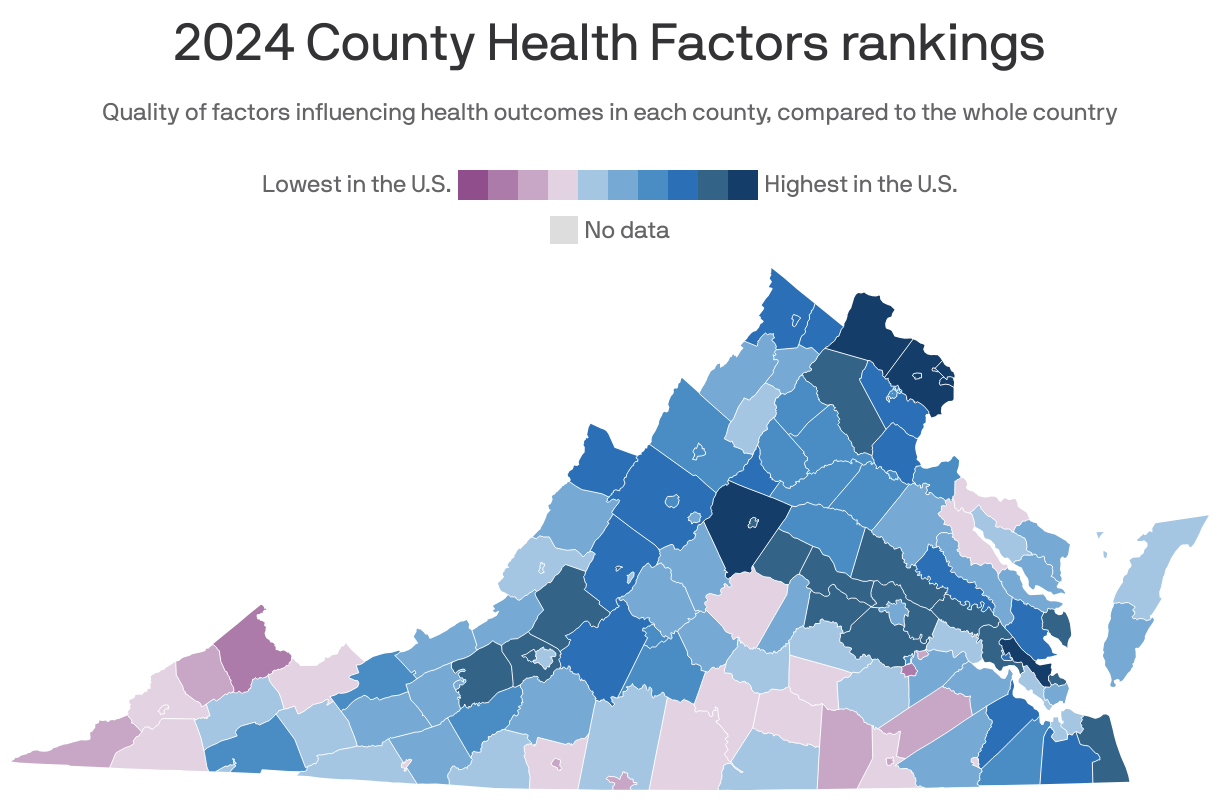
Richmond's health outcomes are worse than the average U.S. county.
Why it matters: Health outcomes affect how long people live and the quality of their physical and mental health while they're alive.
The big picture: The rating comes via a new report from County Health Rankings & Roadmaps, which looks at the factors that influence health outcomes, like smoking, poverty, housing and injury deaths.
- The health outcomes include premature death, poor physical or mental health and child mortality.
Richmond's strengths, compared to Virginia and the U.S., include access to exercise and ratios of primary care physicians, dentists and mental health providers to residents.
The city's setbacks:
- The percentage of child poverty is more than double Virginia's.
- Higher income inequality than the state and U.S. and severe housing issues like high costs or overcrowding.
- More per capita deaths due to homicides, suicides, car crashes and poisonings.
Zoom out: Richmond's health factors are slightly better than the U.S. average — as are 65% of Virginia's localities.
Yes, but: Richmond's health outcomes are worse in part due to the aftermath of discriminatory housing policies in the 1930s, leading once-redlined neighborhoods to have high rates of poverty and chronic diseases and a shorter life expectancy almost a century later.
- The result is an average life expectancy of 75, a child mortality rate that's double the state and U.S. rates and more premature deaths.