Regional planners recommend extending Pulse to Parham

Add Axios as your preferred source to
see more of our stories on Google.
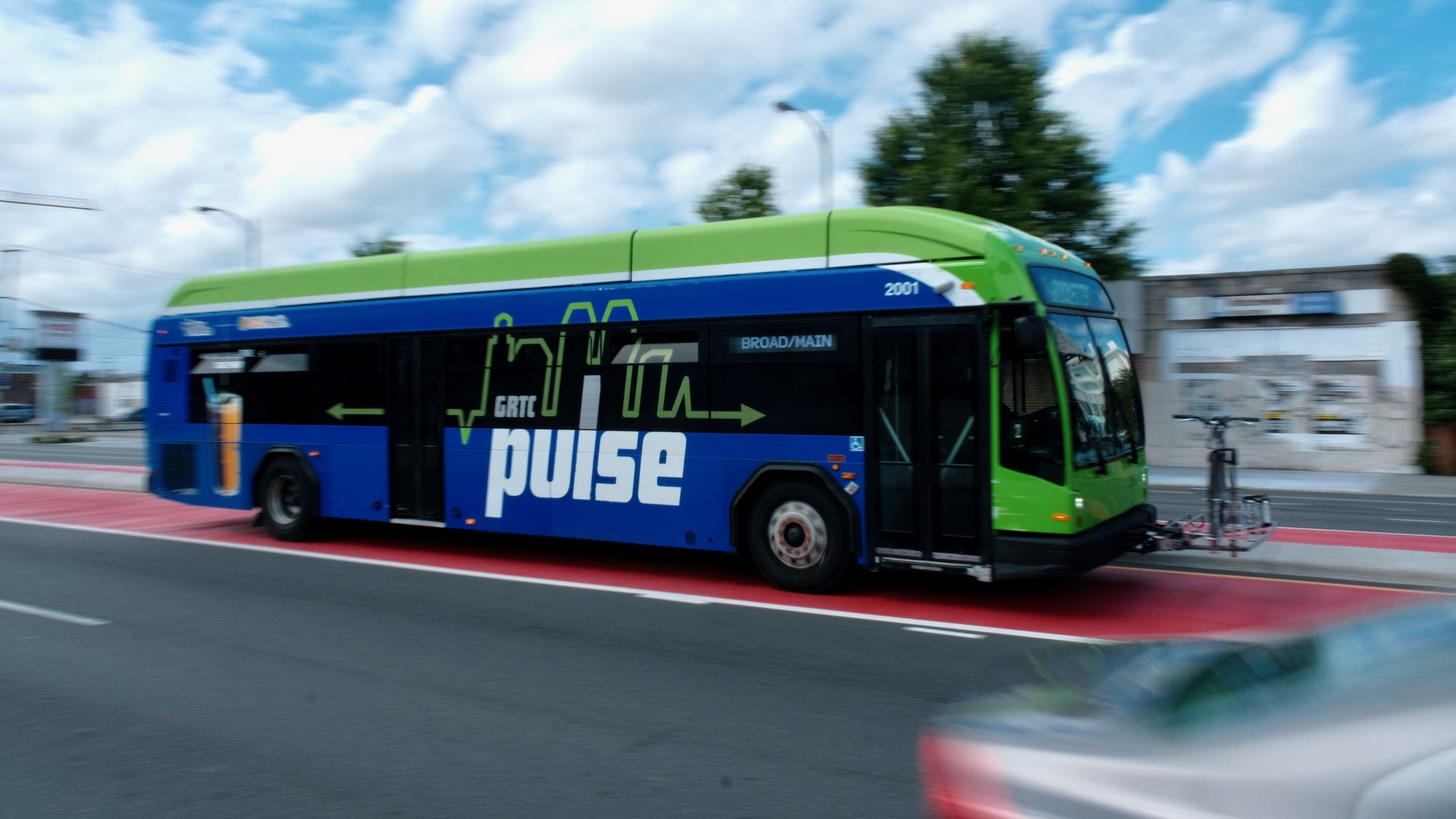
The Pulse makes its way down Broad Street. Photo: Ned Oliver/Axios
The region isn't ready for bus rapid transit service all the way to Short Pump, a new study by the regional planning commission Plan RVA, found.
What's happening: The review recommended extending the Pulse an additional four miles down West Broad Street to Parham Road — about five miles short of the regional shopping destination.
Why it matters: Advocates have long been lobbying for better service to Short Pump, citing a plethora of job opportunities it would open up to commuters.
What they found: While the study found strong public support for service to Short Pump, it concluded there isn't enough business activity, housing or development between Parham and Short Pump to make high-frequency service worth the cost.
- It recommended Short Pump be considered again "as the next phase after this initial extension."
What they're saying: RVA Rapid Transit, an advocacy group that has been advocating for high-frequency service to Short Pump by 2040, expressed disappointment at the recommendation.
- But the group's spokesperson, Richard Hankins, told Axios it's "a great next step for frequent and far-reaching transit in the Richmond region."
State of play: Currently the Pulse stops at Willow Lawn, requiring riders hoping to get further to transfer to a local bus.
- GRTC requested the Plan RVA study, which surveyed bus riders and analyzed roadways and existing development, at the end of last year as county officials began to talk more seriously about extending the Pulse.
🚸 Of note: The study says that even for an extension to Parham Road to be successful, the county would need to install basic pedestrian infrastructure along most of the route so passengers can safely navigate from bus stops to their final destinations.
- Among other things, it noted that between Glenside Drive and Parham Road, only one intersection includes a crosswalk, per the study.
Details: "Because of how the West Broad Street corridor was built out 50-plus years ago, it has been largely auto centric," Dan Motta, a transportation planner at Plan RVA, told VPM News.
- "So, things like sidewalks, crosswalks, and for transit, bus shelters, benches, even things like trash cans have not really been prioritized in the past."
What's next: More studies. Motta told VPM he expects GRTC to begin applying for grant funding next year for a review of the environmental impact of extending the bus line.