Closing North Carolina's talent gap starts with early STEM access

A message from: Thermo Fisher Scientific
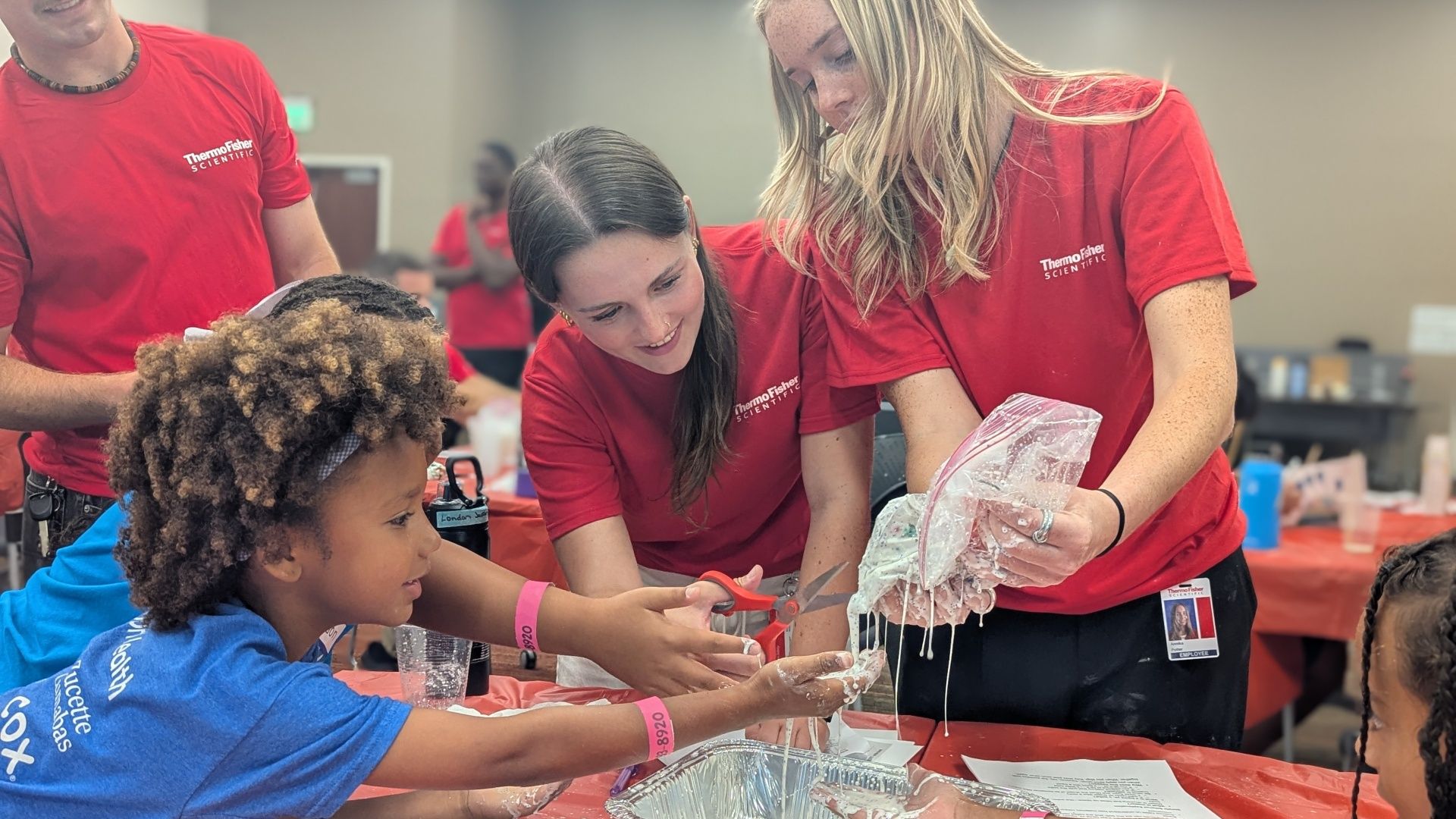
The Triangle continues to attract college graduates, research investment and companies that need highly skilled workers — but North Carolina's next challenge is ensuring that enough young people can eventually enter the industries driving that growth.
The story: North Carolina expects to add roughly 260,000 jobs by 2034, but employers could still need 5,000–10,000 more college graduates each year than the state currently produces, according to a 2026 UNC System workforce study.
- The state needs to help young people — especially populations who continue to be underrepresented in STEM fields — build the awareness, confidence and skills to pursue these specialized roles.
The challenge: Access to high-quality learning experiences, mentors and real-world career exposure remains uneven.
Interest and ability alone cannot carry students into STEM careers when they lack opportunities to explore the breadth of these fields and understand how to prepare for the roles within them.
The solution: Thermo Fisher Scientific and Boys & Girls Clubs of America have worked together since 2016 to expand access to STEM learning and career exploration beyond the classroom, reaching young people in communities across the country.
- Over the last decade, the partnership has supported the expansion of Boys & Girls Clubs' DIY STEM program, strengthened STEM training for Club staff and connected young people with Thermo Fisher employees — in Clubs and at Thermo Fisher sites — who work across various scientific disciplines.
"Our goal is to broaden young people's sense of what's possible through STEM and give them meaningful opportunities to explore where their interests can take them," said Meron Mathias, vice president of Corporate Social Responsibility & Sustainability at Thermo Fisher Scientific.
- "By creating those experiences early, we can help more young people understand the role they can play in a thriving industry that continues to grow around them."
Here's how: Club staff and Thermo Fisher volunteers guide students through hands-on STEM activities that help them test ideas, solve practical problems and build confidence with scientific topics like chemistry, engineering and genetics.
- Thermo Fisher volunteers take students beyond hands-on activities by showing how those same principles are applied across scientific research, medicine development, advanced manufacturing and other technical fields.
Why now: Boys & Girls Club members already show substantial interest in STEM.
- 77% want to learn more about science, computers or technology.
- 52% would like a STEM-related job in the future.
- Two-thirds know the steps required to pursue a science-related career.
Young people also benefit from sustained relationships with organizations and people who can help them keep exploring, asking questions and seeing where their interests could lead.
- A decade of collaboration between Thermo Fisher and the Boys and Girls Clubs has allowed both organizations to build relationships that extend beyond any single STEM activity or volunteer event.
- As Thermo Fisher colleagues return to local Clubs over time, they build familiarity with Club staff, spaces and communities, making it easier to tailor experiences and pilot new approaches in response to what will be most meaningful for youth.
The local impact: In North Carolina, Boys & Girls Clubs provide the critical scale needed to extend STEM opportunities across communities, as more than 43,000 young people attended one of their 176 local Clubs in the last year.
Thermo Fisher also has a significant local footprint, employing approximately 7,500 people across North Carolina in diverse fields like clinical research and pharmaceutical services.
"With thousands of colleagues and continued investment across North Carolina, we have a real stake in the communities and talent that will shape the state's future," said Kevin Economos, vice president and general manager, Pharma Services and Greenville, N.C. site leader for Thermo Fisher Scientific.
- "Through this partnership, our colleagues bring that commitment to life by returning to local Clubs, building relationships over time and helping young people begin to see a place for themselves in the future of our industry."
The takeaway: Meeting the state's future talent needs will require more young people to encounter STEM early, build confidence through practice and understand the many paths from curiosity to career.
"At our Clubs, we see firsthand how hands-on STEM experiences spark curiosity and build confidence," said Matt Taliaferro, president and CEO of Boys & Girls Clubs of Wake & Johnston Counties. "When young people have opportunities to explore, experiment, and learn alongside caring mentors, they begin to see new possibilities for themselves.