A Blue Dog comeback in North Carolina

Add Axios as your preferred source to
see more of our stories on Google.
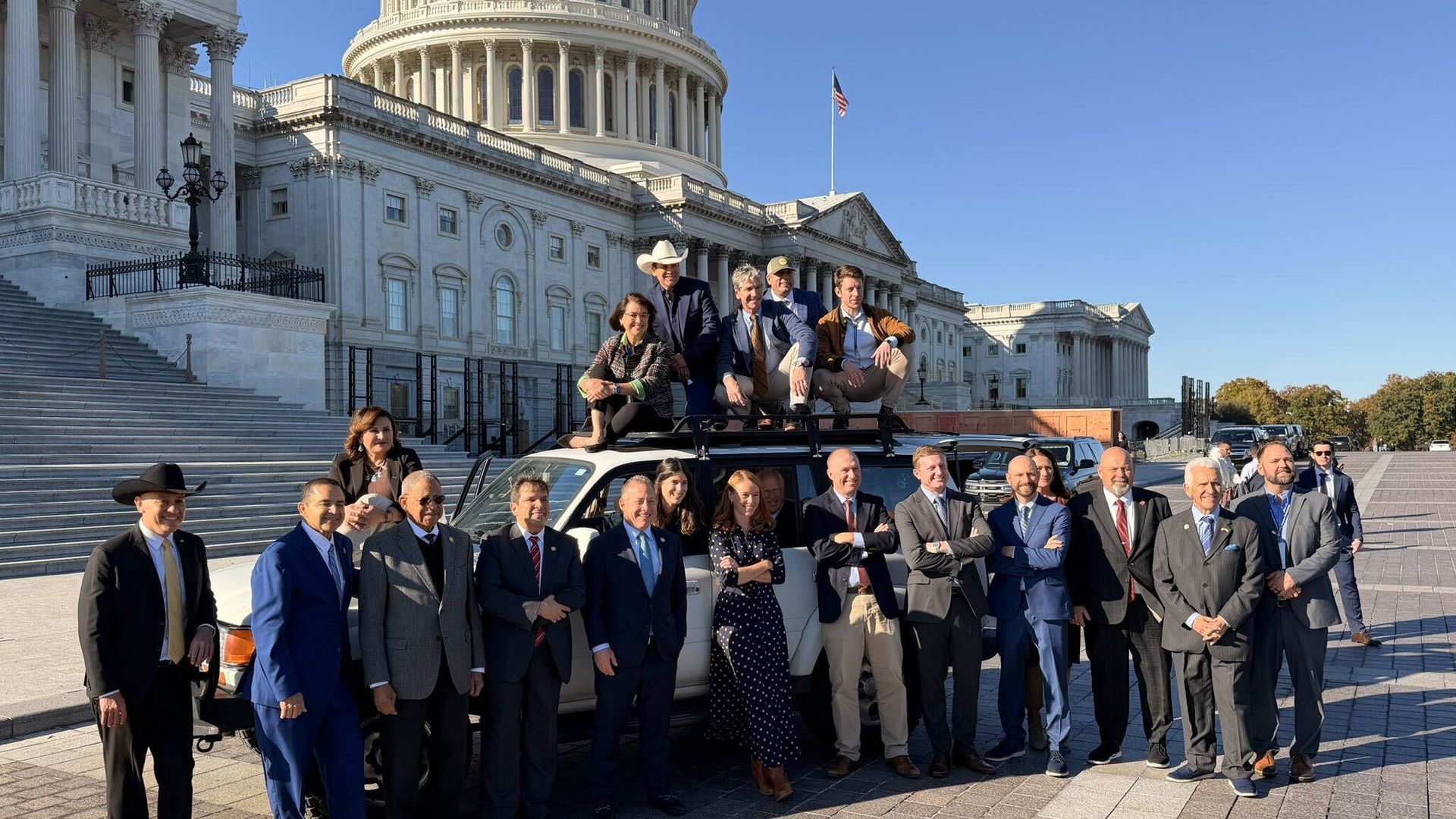
The Blue Dog Coalition's newly elected members. Reps.-elect Jamie Ager and Paul Barringer, of North Carolina, can be seen on top of the car. Photo: Andrew Solender/Axios
Blue Dog Democrats are making a comeback in North Carolina, riding the 2026 Blue Wave that potentially ousted six incumbent Republicans.
- Jamie Ager, who won the mountain-based 11th District, and Paul Barringer, who won the 13th District around the Triangle, will join the Blue Dog Coalition, a moderate Democratic caucus focused on fiscal responsibility.
Why it matters: The Blue Dog revival broadens a Democratic caucus stretching from Democratic socialists to fiscal conservatives — and could make legislating more complicated.
Flashback: North Carolina's Blue Dogs once included former NFL quarterback Heath Shuler, a coalition co-chair who represented the Asheville area until 2013. He retired after Republicans redrew his district to favor the GOP.
- Other members included Mike McIntyre, who represented southeastern North Carolina until 2015, and Larry Kissell, who represented the Sandhills until 2013.
- More recently, Wiley Nickel joined the coalition in 2023. He left Congress in 2025 when his district was redrawn into the one Barringer just won.
What they're saying: "To me, it's about common sense approaches that work across the partisan divide and get at or move us towards a more fiscally sustainable and responsible future," Barringer told Axios in a phone call from Washington about his decision to join the Blue Dogs.
- Barringer, who was a Republican until 2016, said he believes the election proved that Democrats who ran as moderates can win red areas. Barringer, for example, won a majority of votes in Johnston County, which has long been a bastion of Republican voters.
- "It shows a lot of people around the country would like to find elected leaders that are willing to work together to get things done."
State of play: Chris Cooper, a professor at Western Carolina and author of "Anatomy of a Purple State," said it is notable the Blue Dogs seem to be having a moment at the same time as there is a rise in progressives.
- "I think the lesson is that Democrats let their candidates fit their districts," Cooper told Axios. "Jamie Ager fits his district like a glove, and Paul Barringer does as well. But they're not going to work in downtown Durham, for example."
Between the lines: Rep. Don Davis (N.C.-1), who won re-election, fits the moderate mold without the Blue Dog label. By GovTrack's measure, he ranks as the most conservative House Democrat.
- His willingness to vote with Republicans and agree with President Trump has drawn criticism from fellow Democrats.
- Cooper expects that tension to persist as Davis weighs a 2028 Senate bid: "You already see some of the Democrats pop up and say, 'Well, he's a little bit too conservative.'"
Zoom in: The Democratic Socialists of America did not make any endorsements in North Carolina. Neither did the Congressional Progressive Caucus, though it does count Reps. Alma Adams (of Charlotte) and Valerie Foushee (of Hillsborough) as members.
- But newly elected LaKesha Womack, who beat Rep. Tim Moore, appears to be among the more progressive to win this cycle, telling Axios she supports Medicare-for-All.
- Chuck Hubbard, who is leading Rep. Virginia Foxx, told Axios he would describe himself as "probably center-left," saying he "might rate conservative, even, financially" but that "when it comes to social issues, I probably skew to the left."
- High Point Mayor Cyril Jefferson, who bested Rep. Addison McDowell, told Axios he believes there are areas where he is on the side of progressives and other areas where he is not.
What's next: That dynamic will likely play out in full force when Democrats from across the spectrum try to legislate in Washington and North Carolina next year.
- Healthcare could be one of the first areas they will need to come to consensus on in Washington. Barringer, for his part, said he has major concerns about the country's deficit and believes it requires major reforms.
- But at the same time, "We have to make sure people have access to healthcare and cuts from the [One Big Beautiful Bill Act] need to be addressed immediately," he said.