There's a high chance your flu vaccine was made in Wake County

Add Axios as your preferred source to
see more of our stories on Google.
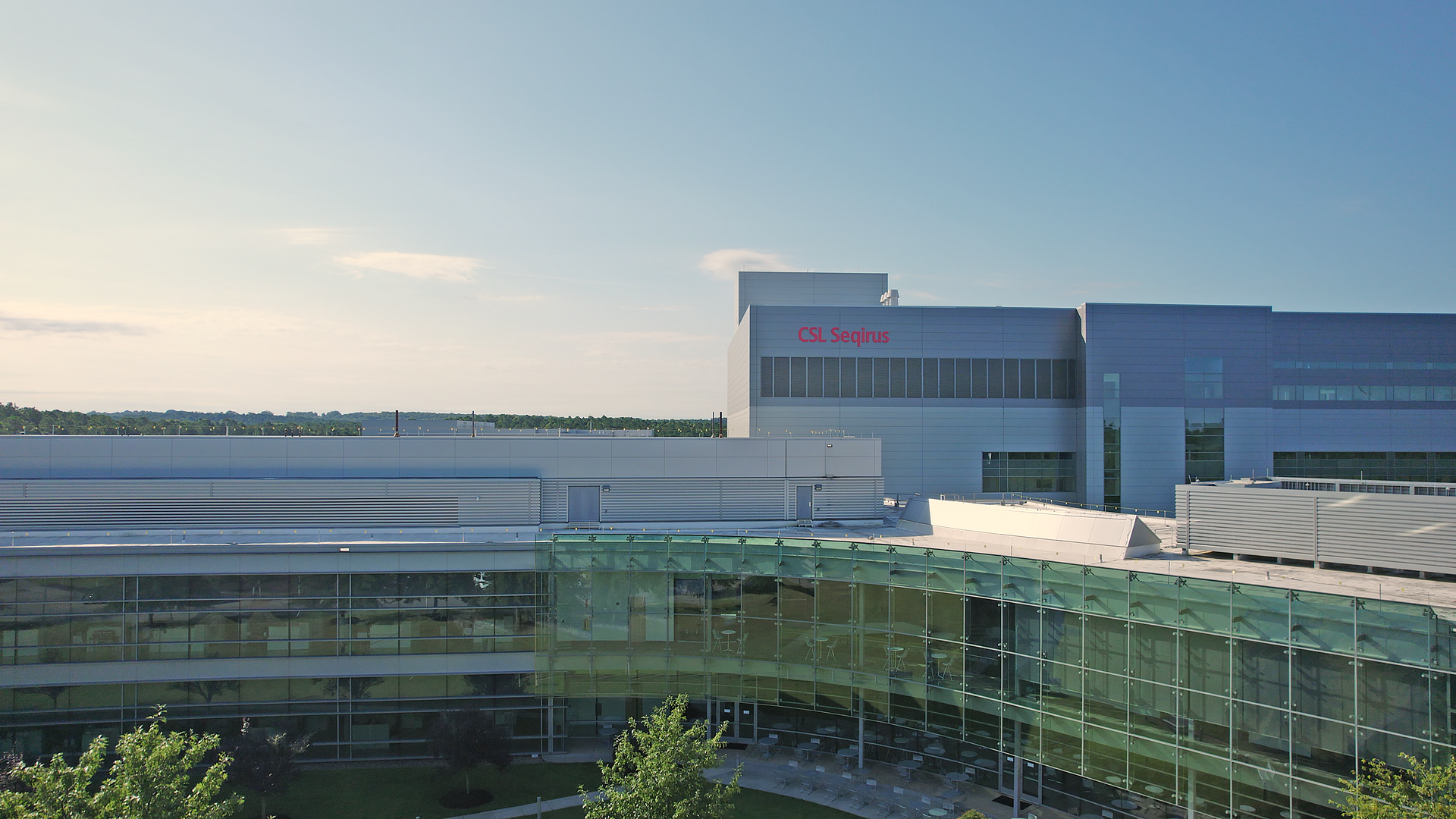
CSL Seqirus' manufacturing facility in Holly Springs. Photo: CSL Seqirus.
Nestled into the pines of southern Wake County is the largest cell-based flu vaccine maker in the world.
Why it matters: CSL Seqirus, one of the largest employers in the booming town of Holly Springs, has become a linchpin of the world's response network to influenza.
- If a flu pandemic were declared, the Holly Springs site could ramp up its production to 150 million flu vaccines within six months, according to a contract it has with the federal government.
How it works: Axios Raleigh recently got a tour of CSL's nearly 700,000-square-foot Holly Springs campus as flu season gets underway in North America.
- The Holly Springs site makes cell-based vaccines — one of the four main vaccine delivery mechanisms, along with egg-based, recombinant and the newly available mRNA — for the entire world.
- Throughout the year, CSL receives targeted flu strains from health organizations across the world. The company then begins the months-long process of formulating a vaccine that will be effective against each strain.
- It's a dance that is continuous. As flu vaccine season ramps up in North America and Europe, CSL is already working ahead on formulating vaccines for the Southern Hemisphere.
State of play: CSL's site in Holly Springs dates back to 2009, when it was opened by Novartis. CSL, an Australian biotech company, bought the site from Novartis in 2015.
- CSL has invested heavily in the site, completing a $156 million expansion in 2022, which has helped grow its workforce there to roughly 1,000 employees — most of whom are hired after doing local certification programs, according to Baron Fulk, head of fill finish at CSL.
- CSL, in many ways, is a pioneer for the biotech industry in Holly Springs, which has grown significantly in the town since 2020. Firms like Amgen, Fujifilm Diosynth, Genentech and Janssen Pharmaceuticals are pumping billions of dollars into the area.
Zoom in: Last year, some 35 million doses were filled at the Holly Springs site, according to Fulk.
- The current production translates to around a third of the flu vaccines in the U.S. coming from Holly Springs and then distributed to health agencies or major customers, including Walgreens.
Between the lines: This year's flu season comes as the number of Americans getting inoculated remains below pandemic-era numbers, according to Stefan Merlo, CSL's vice president of commercial operations in North America.
- Vaccination rates in 2025 hit their lowest levels in seven flu seasons, according to AARP. Merlo said a combination of vaccine fatigue post-pandemic, a lack of confidence in vaccines and mixed messaging from elected leaders has contributed to the decline.
- "As a result, you've seen two of the worst flu seasons in a row," he said. "Last year alone had the most pediatric deaths [from the flu] that we've seen [since 2009]."
- The virus will continue to exist regardless of vaccination rates, he added, and the best way to reduce your risk from the flu remains vaccination.
What's next: Merlo said early tracking numbers indicated that this year's vaccination rate will track similarly to the past few years.
- Merlo believes the U.S. has hit a bottom on vaccination rates.
- "We would love to be producing 300 million [vaccines] and get them all in arms," he said. "That's not realistic, but slowly I think it will bounce back to what it was" prior to the pandemic.