Triangle mushroom boom sends foragers into the woods

Add Axios as your preferred source to
see more of our stories on Google.
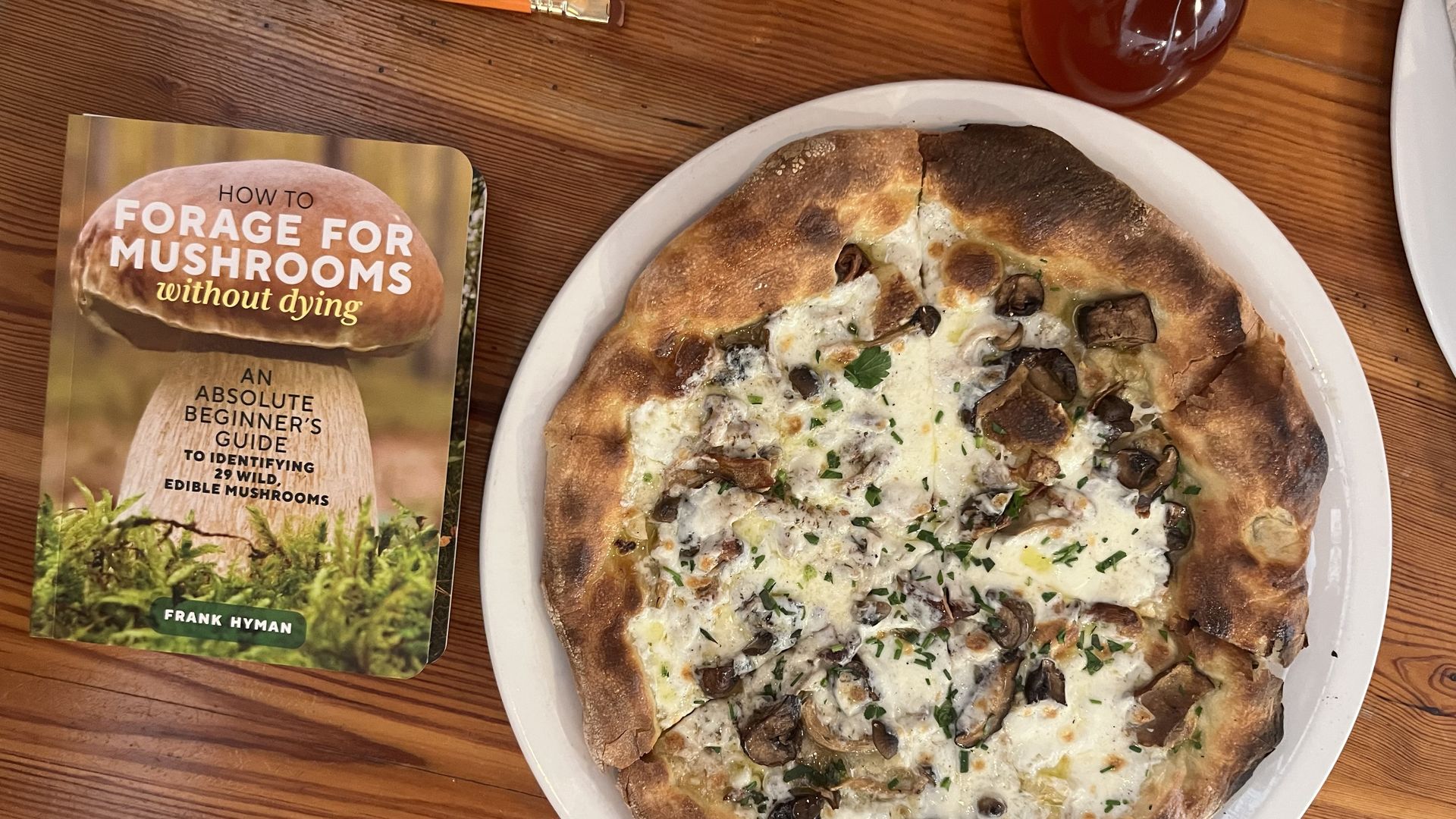
Pizzeria Toro had locally foraged lobster mushrooms, porcini and chanterelles on its mushroom pizza on Monday. Photo: Mary Helen Moore/Axios
A couple weeks ago, mushrooms exploded into view in the Triangle after rains soaked the ground following months of drought, popping out of trees and up from the ground in great numbers.
Why it matters: Many of those mushrooms are edible, local forager Frank Hyman will tell you.
Zoom in: Hyman wrote a book on mushroom hunting, so we went to one of his classes in Durham last weekend to see what we could learn.
The intrigue: Hyman says he makes $200 an hour selling wild mushrooms to local chefs in the Triangle — including at spots like Pizzeria Toro.
- We tried Toro's mushroom pizza on Monday, the final day of August, and it had a lovely depth of flavor. Our server told us the pizza included lobster mushrooms, chanterelles and porcini.
How it works: In North Carolina, foragers who sell wild mushrooms to restaurants must be an "approved mushroom identification expert."
- There's no state-run certification program, according to the Department of Health and Human Services, but experts must have training on things like identification and best handling practices.
- Many in the Southeast, including Hyman, recommend courses taught by South Carolina's Tradd Cotter.
But let's back up. Before you can think of selling mushrooms, you must learn to ID them.
- Eating the wrong mushrooms can cause illness or death.
Yes but: Hyman argues that there are plenty of easily learned edible mushrooms.
- When he took up foraging decades ago, he says he would learn about a dozen a year.
- His book — "How to Forage for Mushrooms without Dying" — covers 29 edible species of mushrooms, including chanterelles, oysters, morels, puffballs, black trumpets, beefsteaks and lobsters.
While teaching, Hyman carries a pocketknife in his faded blue jeans. It's an essential tool for harvesting, he says.
- Several mushrooms can be sliced open to help confirm their identities — including chanterelles (orange outside and white inside) and puffballs (fully white inside).
Threat level: The novice should always err on the side of being too cautious, he says, since no mushroom tastes good enough to justify the risk.
- On the topic of mushrooms that are difficult to tell apart — "My advice to you is: who gives a shit about those?" Hyman told the class.
- Foraging groups can help beginners meet other mushroom hunters and build their identification skills.
The bottom line: And, as Hyman puts it: "A bad day of foraging is a great day outdoors."