North Carolina's defense boom draws Silentium to Apex

Add Axios as your preferred source to
see more of our stories on Google.
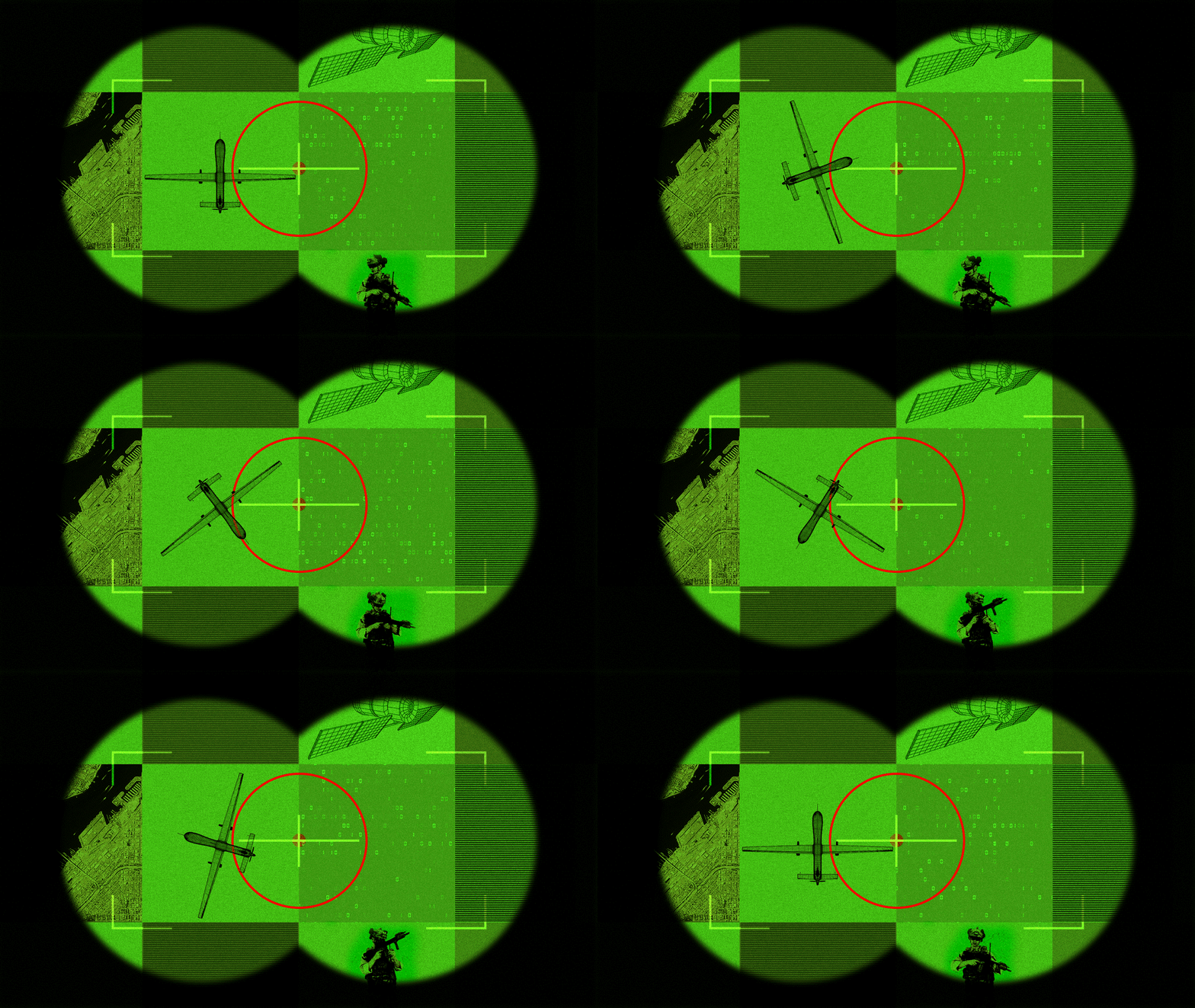
Illustration: Annelise Capossela/Axios
Australian defense contractor Silentium is establishing its North American headquarters in Apex.
Why it matters: North Carolina is gaining momentum as a defense industry hub, and Silentium says that growing ecosystem helped draw it to Wake County.
- The move is also being framed as strengthening U.S.-Australian cooperation amid heightened global tensions.
What they're saying: "Today [the U.S.-Australia] partnership extends far further than military cooperation," Australian Embassy representative Amy Beck said at the ribbon-cutting in Apex on Tuesday.
- "Increasingly, it's deep collaboration between our defense industries, research institutions and technology innovators."
Zoom in: Silentium spun out from the Australian military in 2017. The company builds difficult-to-detect radar systems that can track aircraft and drones, as well as underwater objects.
- It says it contracts with both government and commercial entities — or subcontracts, in the U.S. military's case.
- Silentium aims to have 30 to 50 employees in Apex by next summer.
Company executives say they chose the Triangle for its HQ because of North Carolina's growing prominence in defense and aerospace and its educated workers and proximity to research institutions. Silentium also considered Huntsville, Alabama.
- "North Carolina was absolutely the top of the pile," co-founder and CEO James Palmer told reporters on Tuesday. "It just offered so much in terms of access to customers and talent."
- U.S. Rep. Pat Harrigan, a Republican member of the House Armed Services Committee from North Carolina, said there has been $5 billion in new defense investment in the state over the past year.
Context: North Carolina has large Army, Marine Corps and Air Force installations, and its workforce includes hundreds of thousands of veterans and active-duty service members.
- Wake County had the state's highest population of veterans in 2025, with more than 54,000, per state demographers.
How it works: Silentium makes "see without being seen" tech, according to Matthew Ratnesar, CEO of North American operations and a veteran of the U.S. Army Special Forces.
- Products include portable systems soldiers can carry in backpacks, as well as large sensors capable of detecting items in low-Earth orbit.
The big picture: Cheap drones are quickly redefining modern warfare.
- "When you have a technology that actually allows you to see without being seen … you actually increase the political viability of our ability to exert force around the globe," Harrigan said.
The bottom line: Silentium's arrival gives North Carolina another foothold in the international defense industry.