Alzheimer's drug gives Duke patients hope — and risks

Add Axios as your preferred source to
see more of our stories on Google.
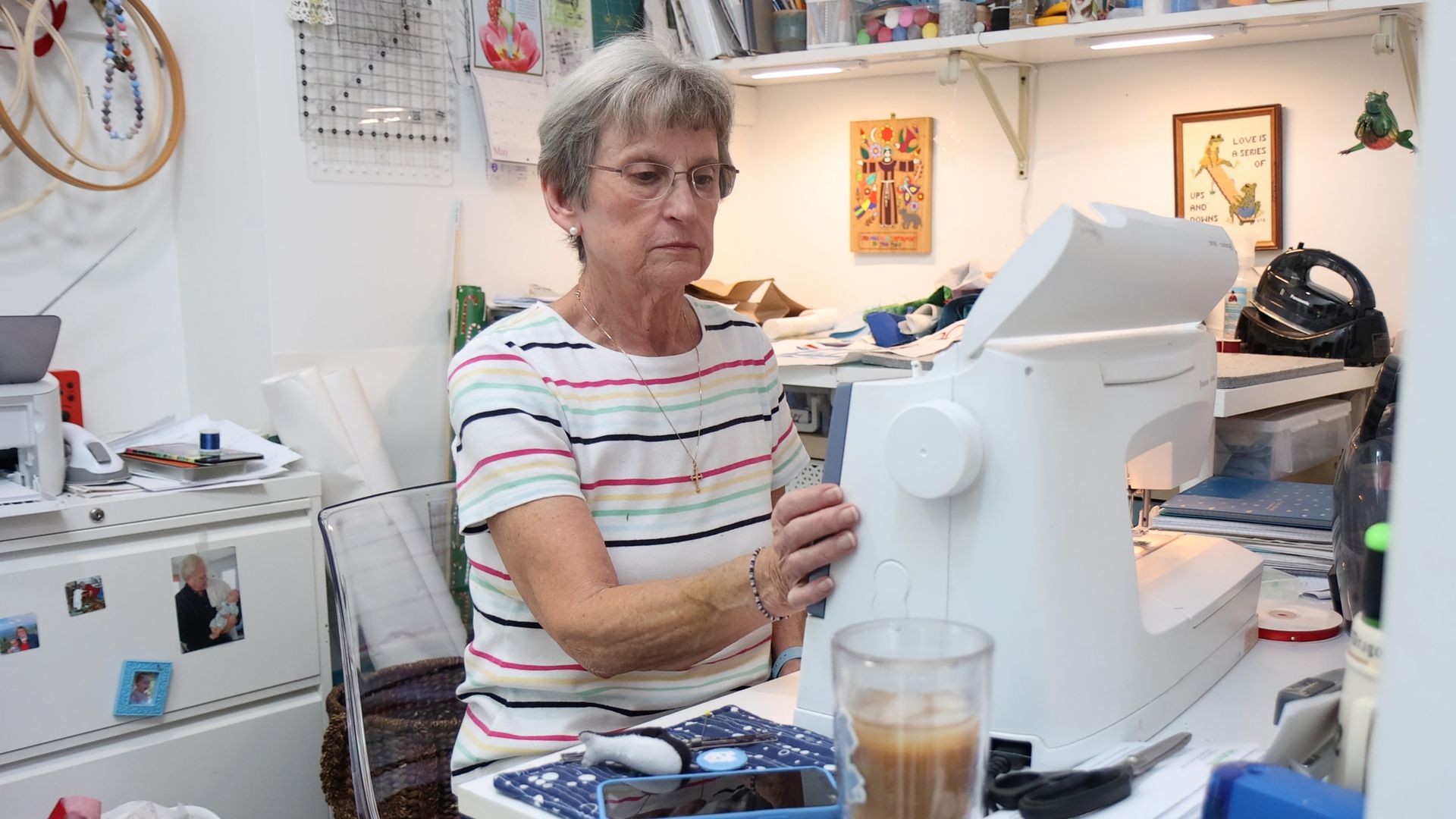
Sally Osmer received the treatment at Duke and says it gave her hope. Photo: Courtesy of Duke Health
Duke researchers are finding promise in an Alzheimer's drug first approved for patients three years ago.
Why it matters: The treatment can't cure Alzheimer's disease, but it can slow its progression.
- “This is about buying time in a disease that takes it away,” Andy Liu, an associate professor at Duke University School of Medicine, said in a press release describing new research into Duke patients' experiences with the drug.
How it works: The drug, an anti-amyloid therapy called lecanemab, is "designed to remove a protein linked to Alzheimer's disease from the brain," the news release from Duke states.
- Amyloids are proteins that can build up in the brains of Alzheimer's patients, disrupting normal brain function.
Zoom in: Sally Osmer accepted the treatment after receiving the "pretty devastating" diagnosis of early-stage Alzheimer’s at 74.
- “The prospect of having a slow decline but being physically healthy is very frightening. We were fortunate to catch it early," Osmer said in the news release.
- She began the infusions at Duke within a month and said it "definitely gives me a sense of hope and a promise for a better future than we’ve assumed about Alzheimer’s in the past."
Driving the news: The journal Neurology Open Access published the Duke study on Friday.
What they did: Duke Health researchers studied how around 230 patients responded to treatment with lecanemab between 2023 and 2025.
- Researchers closely monitored side effects, including with regular MRI scans, and performed cognitive tests.
- They found that 79% of patients could continue it for a full year, though 21% stopped, mostly because of side effects. Those real-world results matched what clinical trials showed prior to FDA approval in 2023.
What they're saying: “There’s been a lot of fear about this medication, especially around brain swelling and bleeding,” Liu said.
- One in four patients developed those side effects, although they were "not associated with rates of change in cognitive performance at 12 months," per Duke.
- These abnormalities were about four times more likely among patients with a specific high-risk Alzheimer's gene.
Yes, but: Seven common tests failed to reliably predict who would develop brain swelling and bleeding, known clinically as amyloid-related imaging abnormalities (ARIA).
- "Our study highlights the urgent need to develop better tests to predict who will develop serious ARIA and to know when it is safe to resume treatment," stated co-author and fellow Duke professor P. Murali Doraiswamy.
State of play: To receive the treatment, patients must be in the early stages of the disease, with mild memory impairment. About 400 patients have now received the therapy at Duke.
The bottom line: The drug is no cure, but it can give some Alzheimer's patients time and provides doctors while helping doctors identify where more research is needed.